How to Teach Text Structure by Having Students Write Like Authors
In middle school, we eventually have to move students beyond simple identification and into thinking like an author.
It’s not enough for students to say, “This is problem/solution article.”
They need to understand how articles are constructed, the thinking that goes into organizing information, and how those choices connect to the author’s purpose.
When students understand why an author organized information a certain way, they also understand the text more deeply.
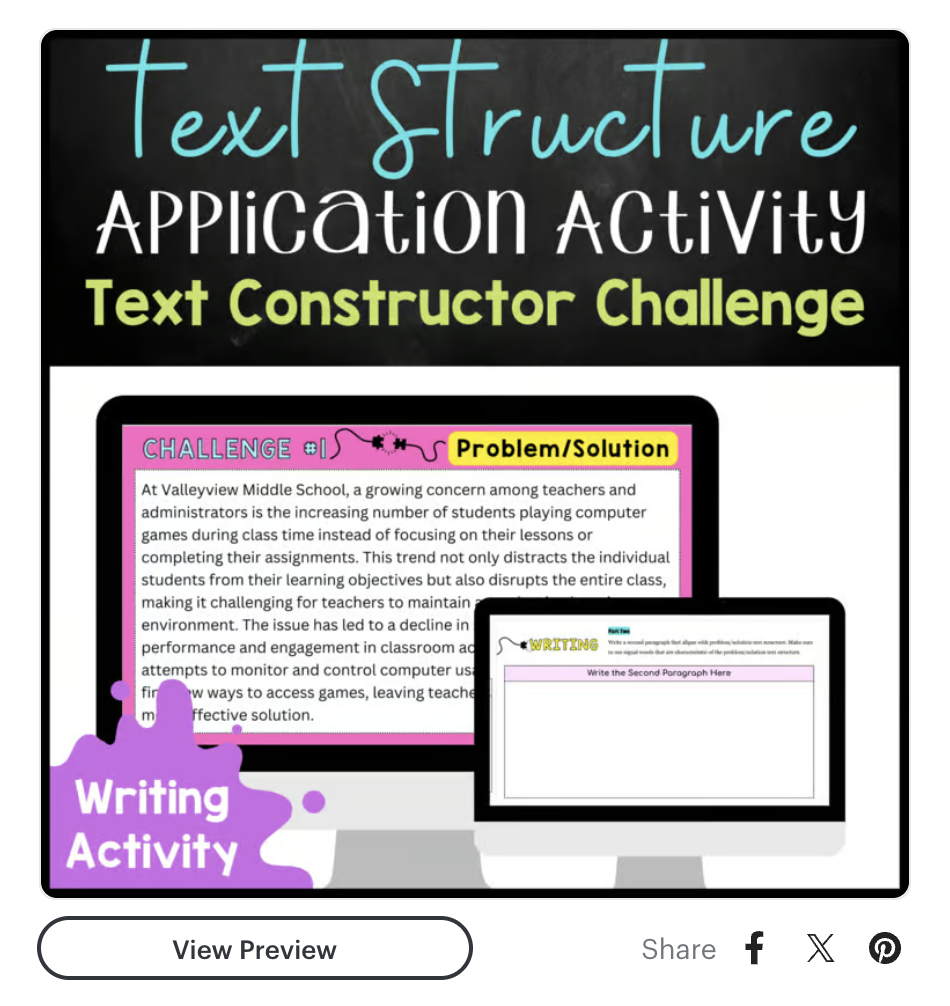
One activity I use to shift students into this kind of thinking is called the Text Constructor Challenge.
This activity moves students from identifying text structure to writing with it, while still giving them support.
Here’s how you can run it in your classroom.
Step 1: Create ability-based partners
I pair students based on what I’ve already seen during the mini lesson or text structure stations. If you’ve done stations, they can keep the same partner.
I like ability-based pairs because it helps me quickly see:
✅ which groups are ready to work more independently
✅ and which groups will need more targeted support during the activity
Step 2: Use article introductions only
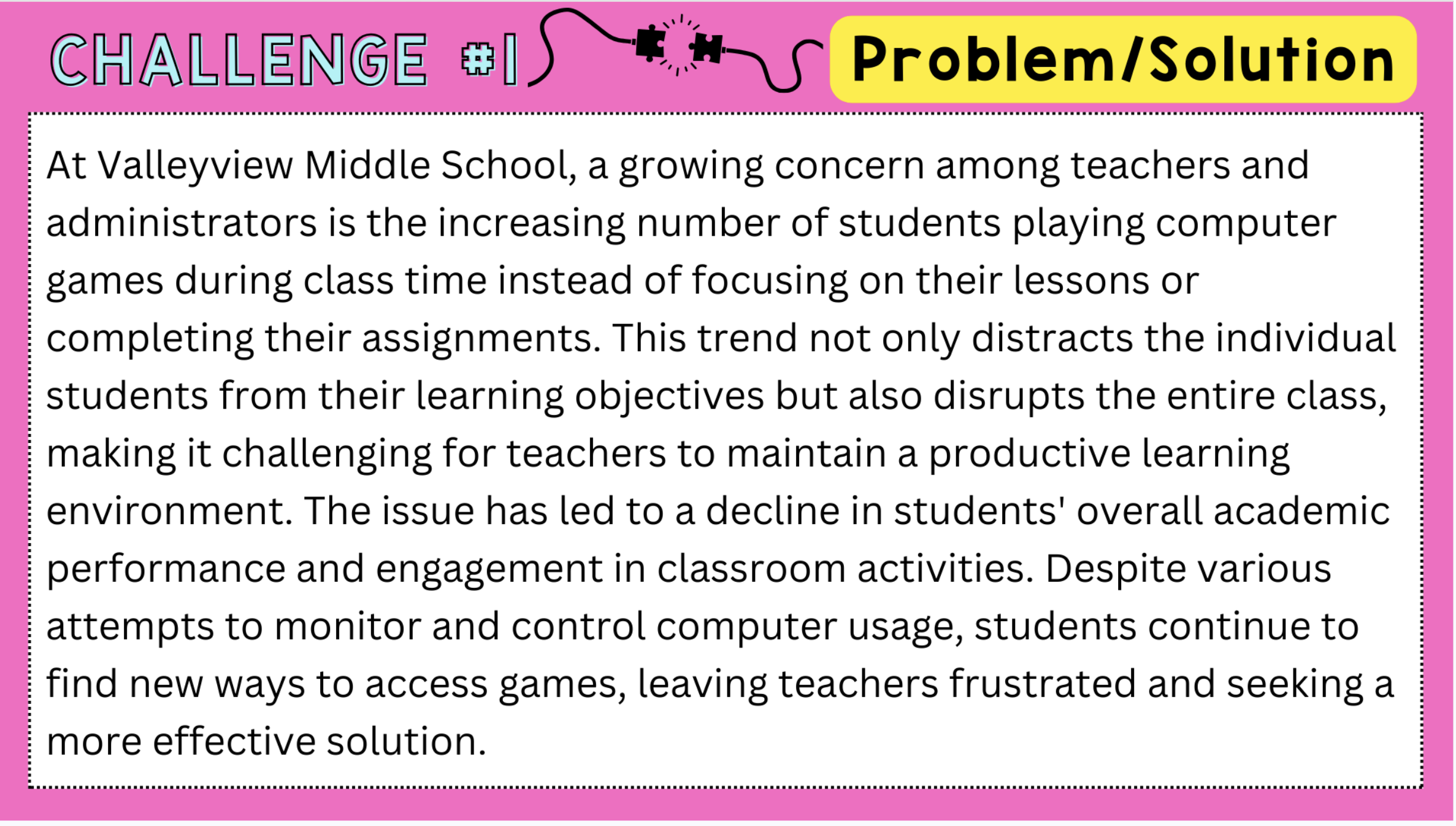
Next, I select five articles, one for each text structure.
Here’s the key part: I only use the introduction of each article.
The introduction gives students enough information to understand the topic without overwhelming them, and it sets them up for the writing task that comes next.
For example, one article I use introduces the problem of students playing games on their Chromebooks instead of completing assignments.
That introduction is the only text students read before writing.
I also recommend giving students one article at a time. This keeps the activity manageable and allows you to check for understanding before moving on to the next structure.
Step 3: Provide the matching graphic organizer
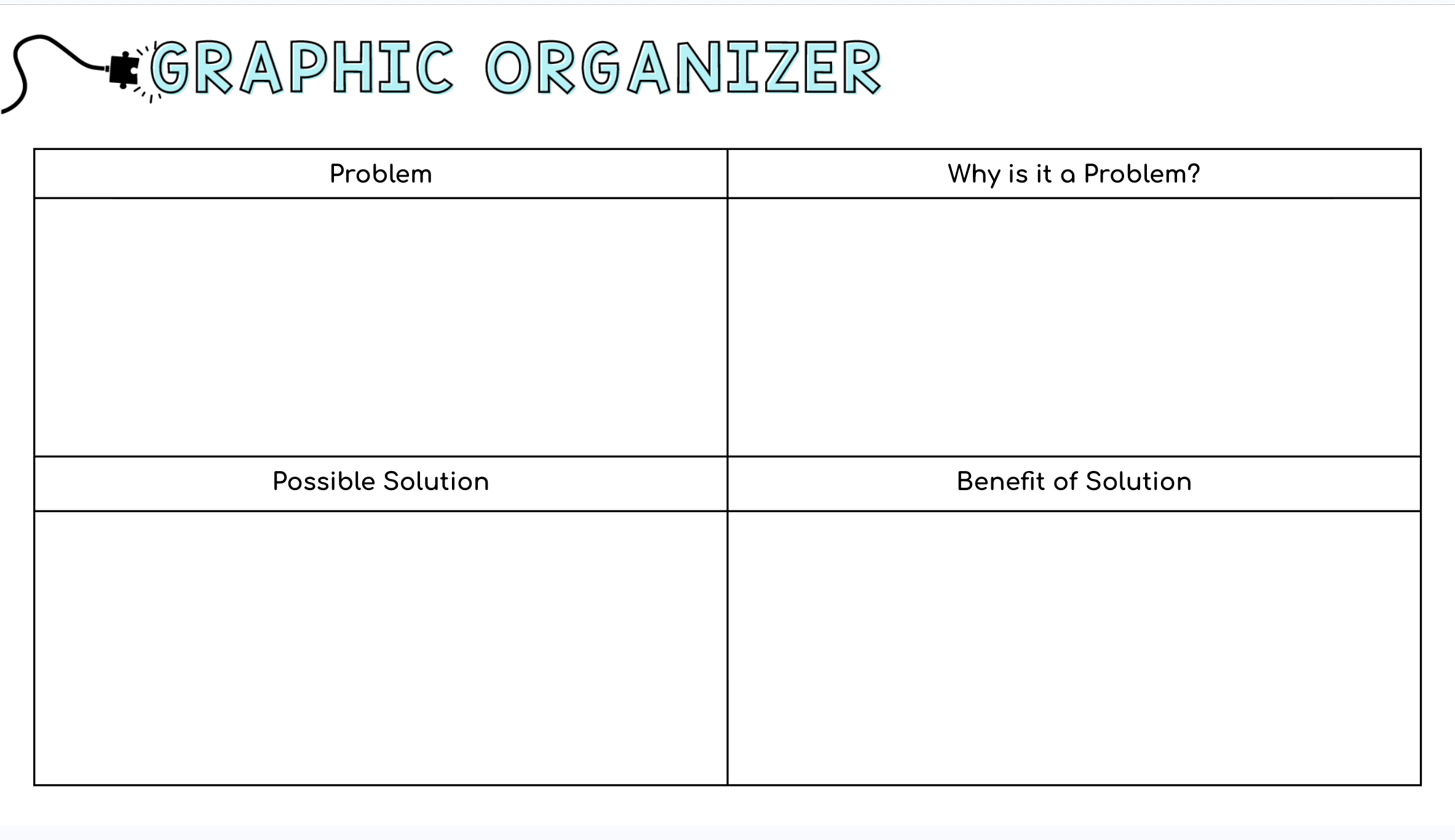
After reading the introduction, students complete a text structure graphic organizer that matches the structure of the article.
They pull information directly from the introduction to fill it in.
This step helps students organize their thinking before they write and reinforces how information is structured within that text type.
For example, this is the graphic organizer I would give for the problem/solution article.
Step 4: Give a structure-based writing prompt
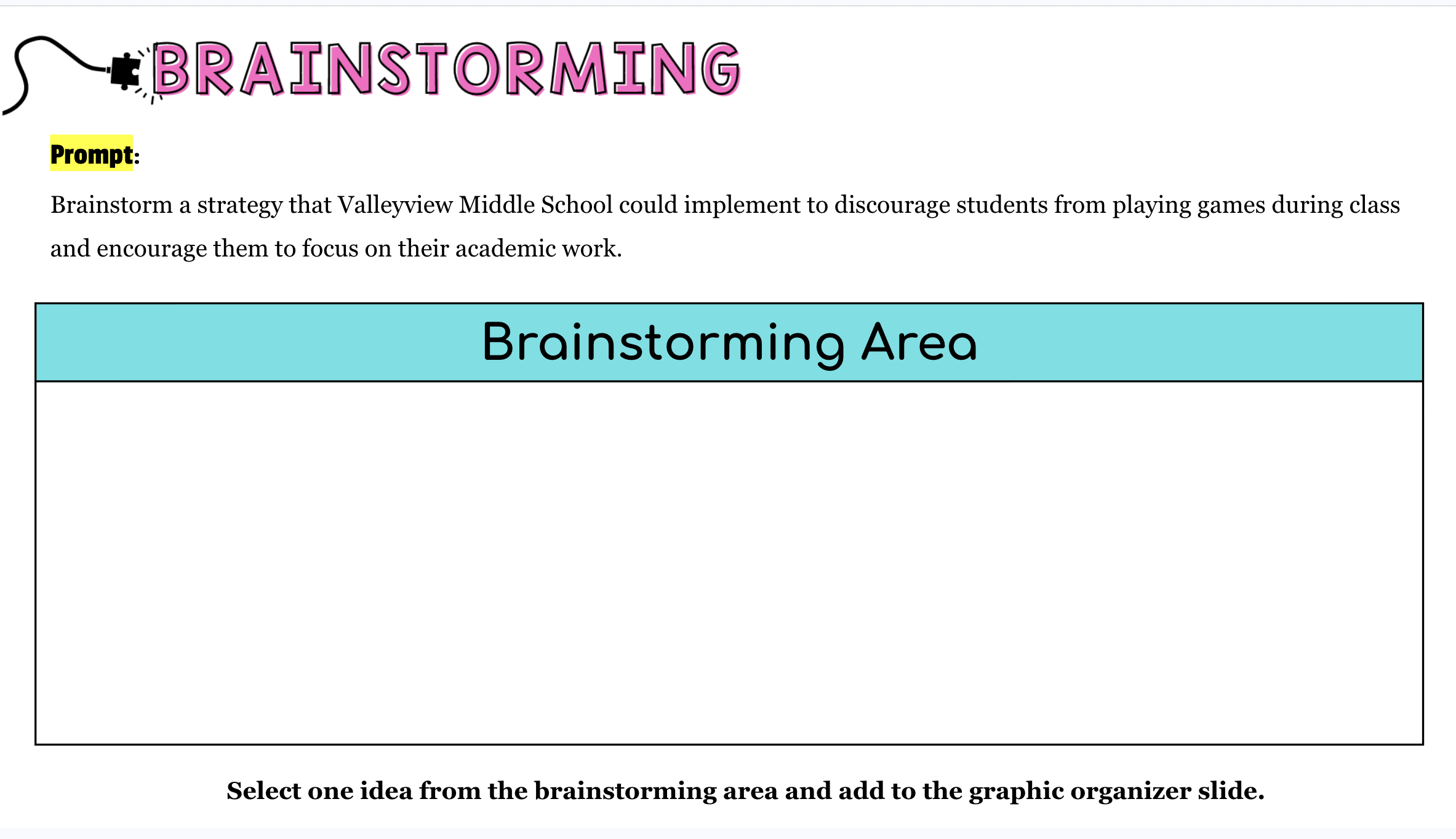
Once the organizer is complete, give students a clear prompt that aligns with both the article and the text structure.
For example:
Brainstorm a strategy that Valleyview Middle School could implement to discourage students from playing games during class and encourage them to focus on their academic work.
Students brainstorm ideas together, discuss options, and select one idea they feel confident writing about.
Step 5: Write the next paragraph
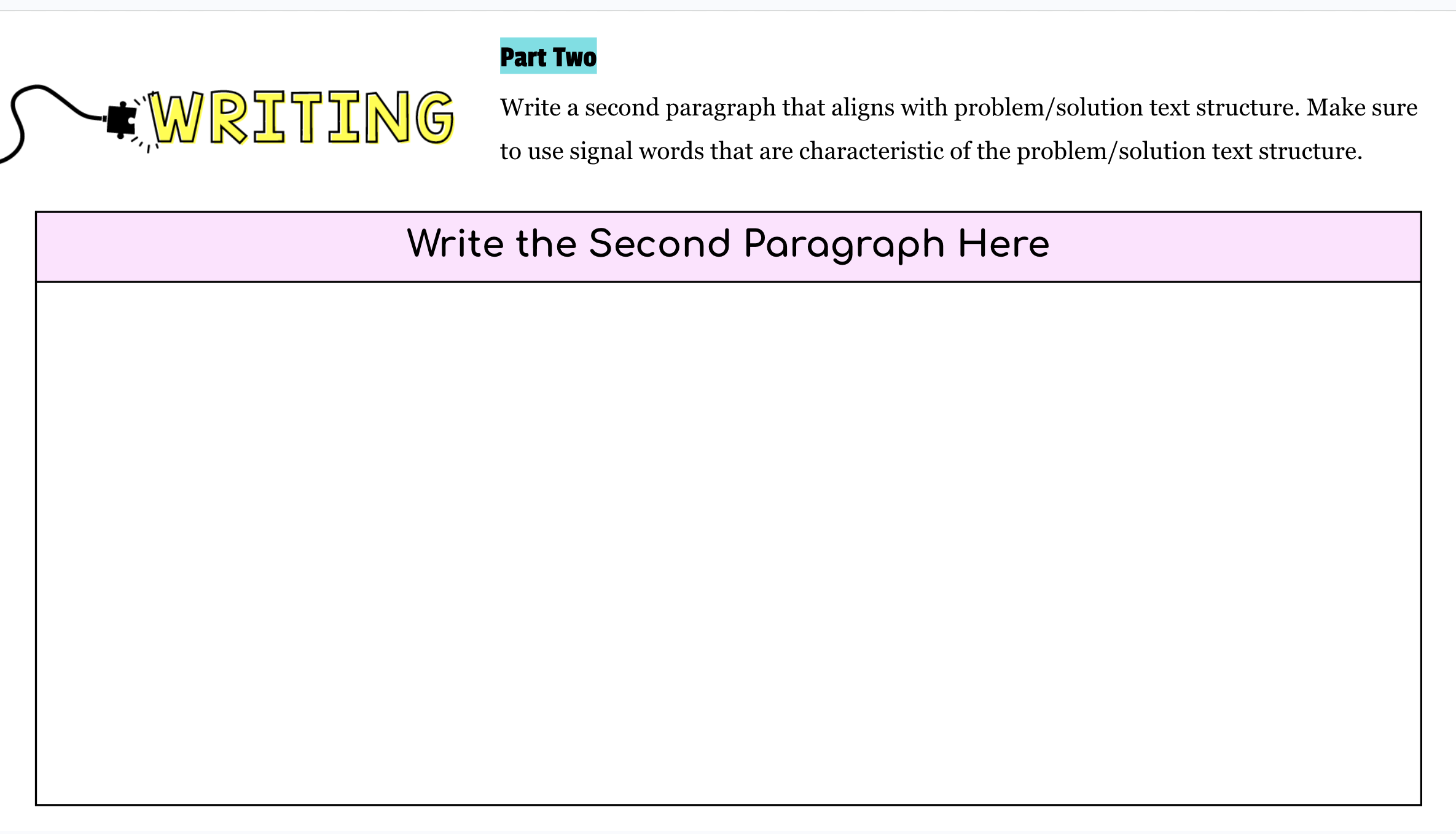
Finally, following the text structure provided, students write the next paragraph of the article.
These are the instructions I give them:
Write a second paragraph that aligns with the problem/solution text structure. Make sure to use signal words that are characteristic of the problem/solution structure.
This is where everything comes together. Students aren’t guessing anymore. They’re intentionally organizing information the way an author would.
Why This Works
This activity helps students see that text structure isn’t just something they identify on a worksheet. It’s a tool authors use to communicate ideas clearly, and it’s something students can use themselves.
Resources to Help You
To help you try this without recreating everything, I’m sharing the Problem/Solution Text Constructor Challenge for FREE.
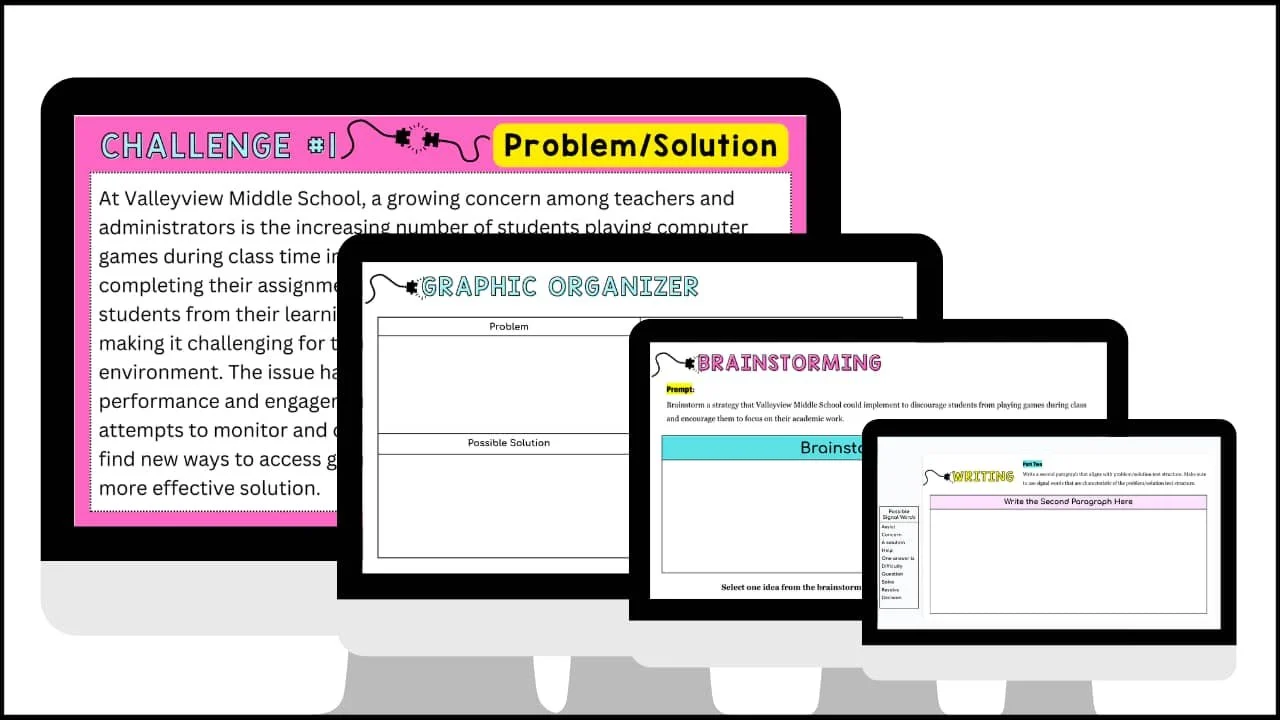
This freebie includes:
✅ The problem/solution article introduction
✅ The matching graphic organizer
✅ The writing prompt and directions
It’s everything you need to walk students through this process once and see how it works before expanding to other text structures.
Want the full resource?
Option One: ELA Unlimited
If this clicks with your students, the complete Text Constructor Challenge with all five text structures is available inside ELA Unlimited. That way, you can reuse the same routine across the unit without rebuilding the activity each time.


Option Two: Teachers Pay Teachers
If you prefer to purchase this activity on its own, the Text Constructor Challenge is also available on Teachers Pay Teachers.
This option works well if you’re just looking for the writing activity without access to other resources.