How to Teach Cause and Effect Connections
I didn’t plan on creating a new mini lesson this month.
But then we got our quarter check-in scores back from the state.
My students averaged a 32.5% on questions that asked them to explain how events, people, and ideas connect in informational texts. (RI.3)
Cue the eek moment.
And honestly? That one’s on me.
They knew what cause and effect meant.
They could point to an event.
But when they had to determine how things interacted, what led to what, how one decision influenced another, they were a little clueless .
That told me I wasn’t being intentional enough about teaching how to make those connections.
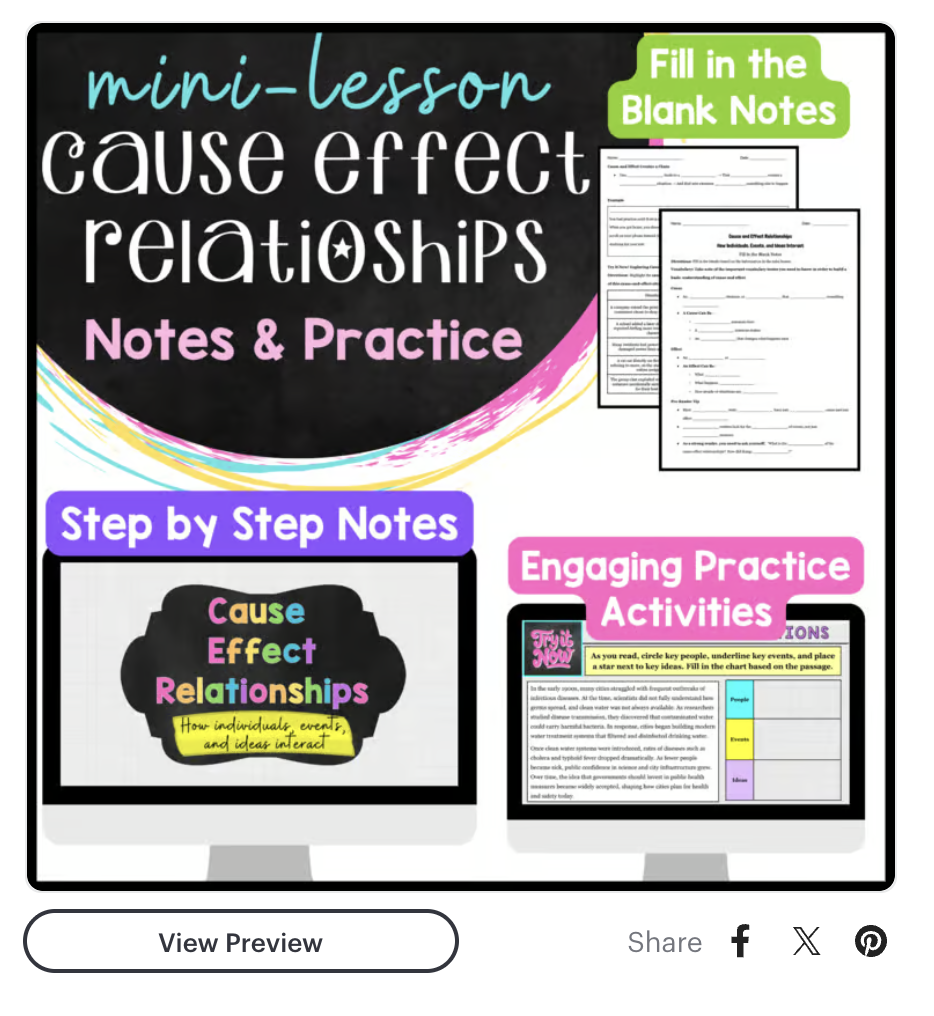
So I built a short, focused mini lesson to fix that.
[FIRST NAME GOES HERE],
I didn’t plan on creating a new mini lesson this month.
But then we got our quarter check-in scores back from the state.
My students averaged a 32.5% on questions that asked them to explain how events, people, and ideas connect in informational texts. (RI.3)
Cue the eek moment.
And honestly? That one’s on me.
They knew what cause and effect meant.
They could point to an event.
But when they had to determine how things interacted, what led to what, how one decision influenced another, they were a little clueless .
That told me I wasn’t being intentional enough about teaching how to make those connections.
So I built a short, focused mini lesson to fix that.
Here’s how I’m teaching it now 👇
Step 1: Go Back to Basics
We start by clearly defining cause and effect and showing students that most informational texts don’t just have one cause and one effect; they have a chain of events.
To help them see this, I give students short cause-and-effect scenarios and ask them to highlight the cause, highlight the effect, and brainstorm one possible impact that might happen next.
For example:
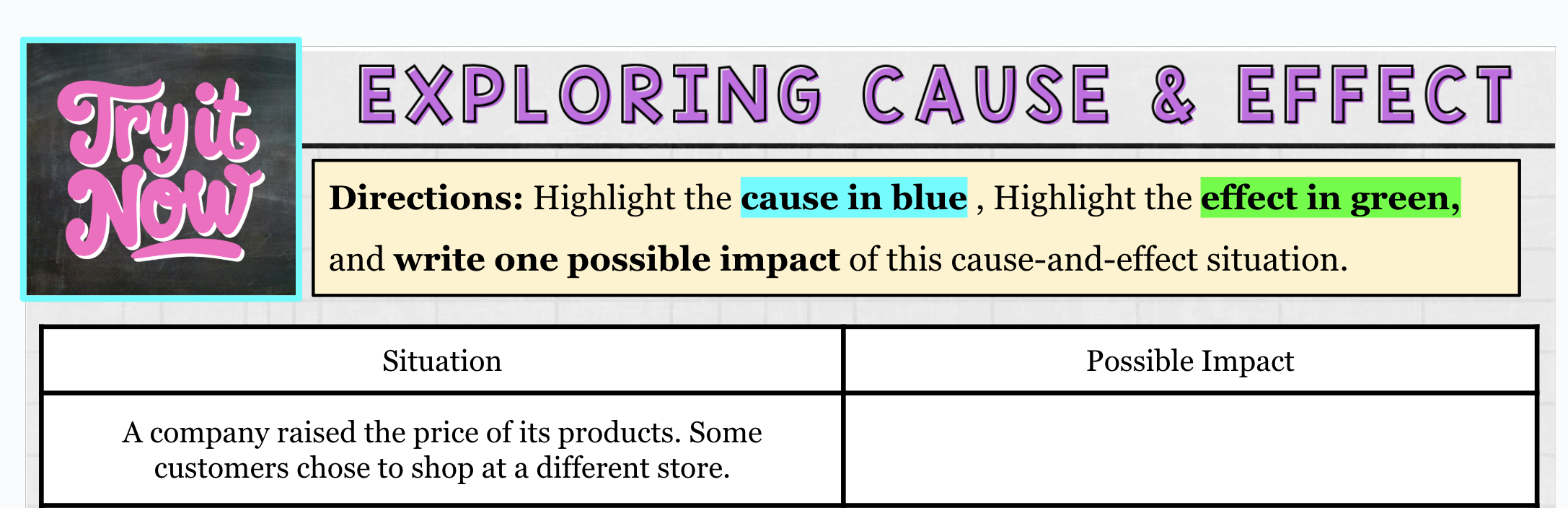
I think that this step is essential because it helps students realize that cause and effect never happen in isolation. One action sets another in motion, which leads to another.
Understanding this is what prepares them for the deeper work we do next.
Step 2: Give Them Steps
Now that students understand the idea of cause-and-effect chains, I give them concrete steps they can follow while reading.
Think of this as a bridge. It's a simple routine that helps them move from “I kind of get it” to actually seeing how individuals, events, and ideas interact.
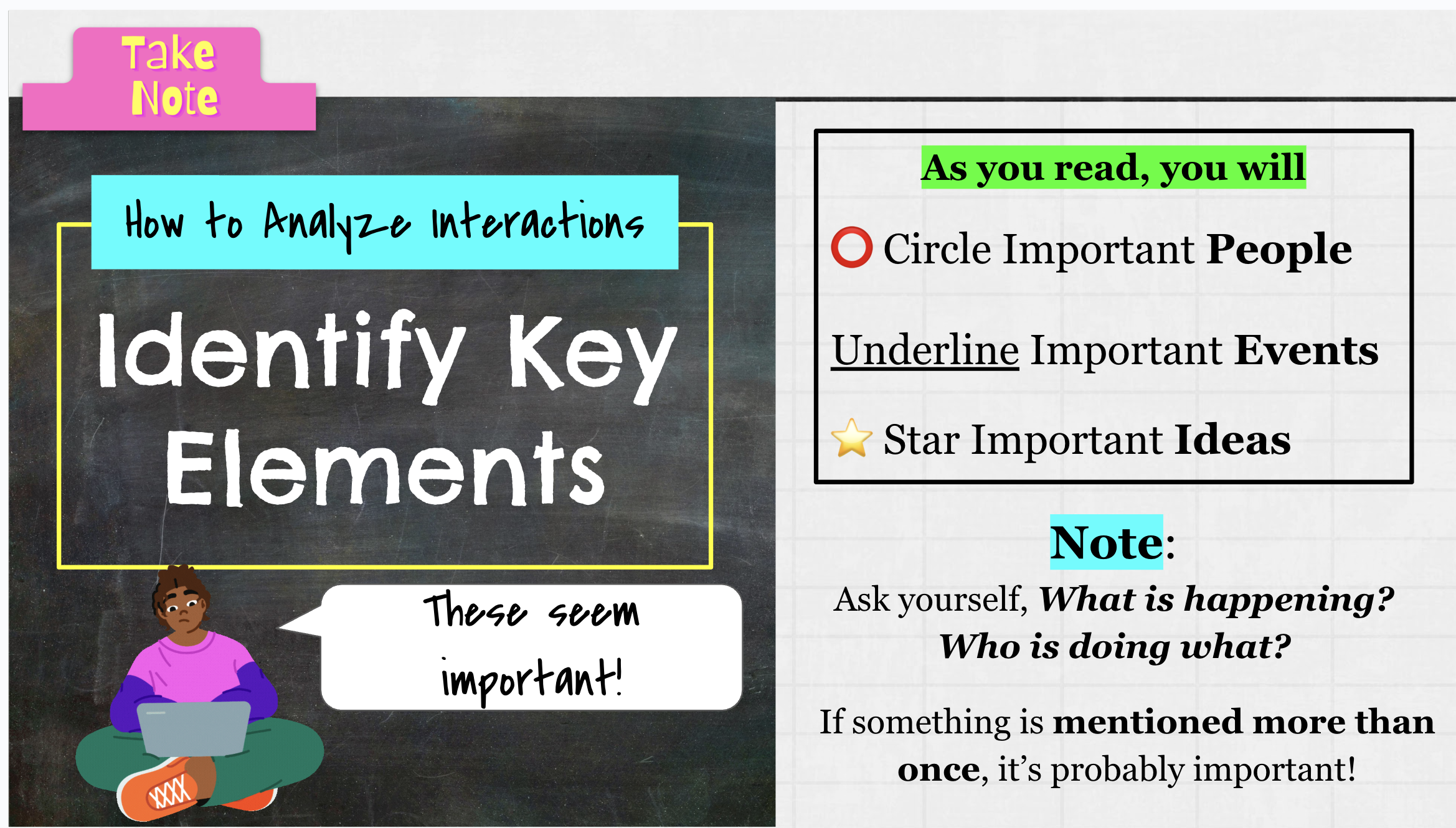
I always preach active reading, so I want students doing something while they read, not just staring at the text.
For this activity, I teach them a simple marking strategy:
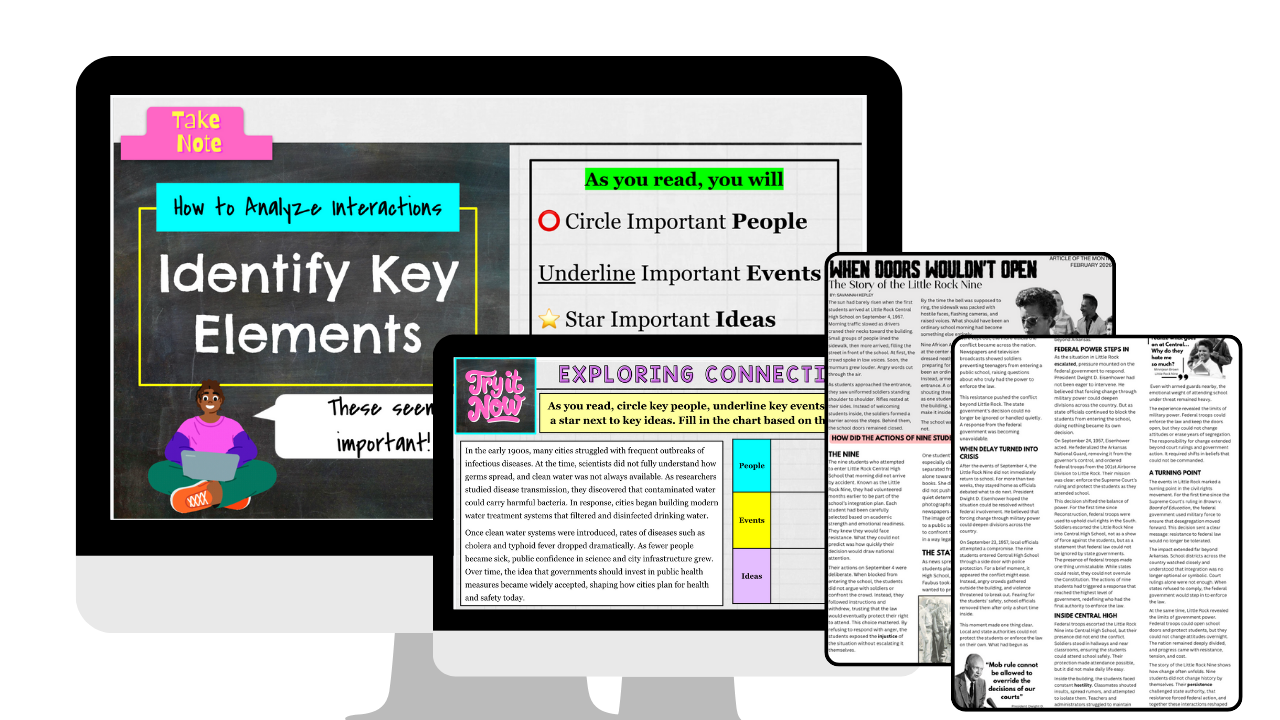
Circle important people
Underline important events
Star important ideas
This gives students a structured way to track key information and begin noticing patterns that lead to deeper connections.
Step 3: Make the connection explicit
Now it’s time for students to actually make the connections.
If I asked them, “So how do the people, events, and ideas interact in this passage?” most of them would stare at me like I just asked them to explain the meaning of 67.
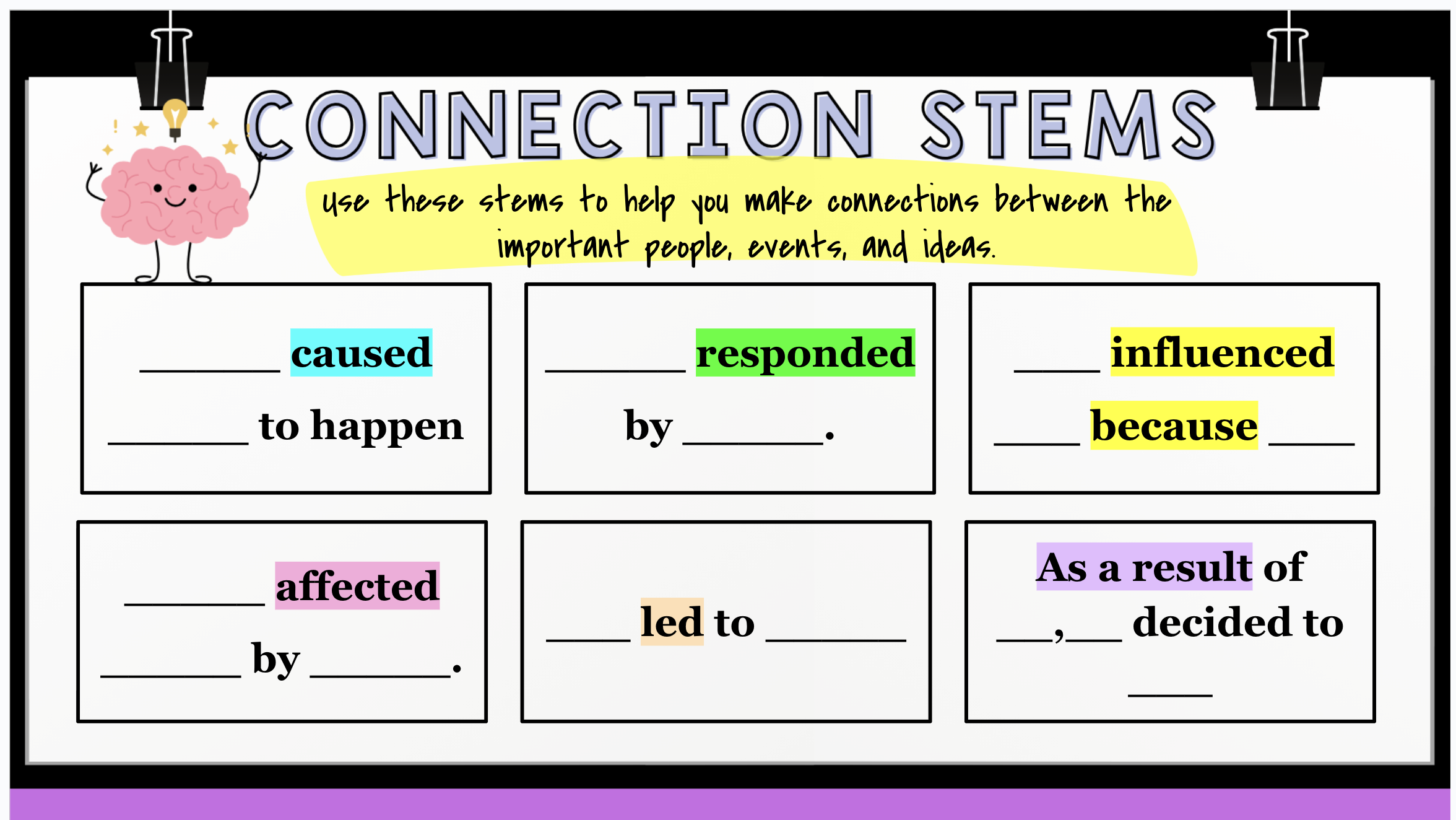
So I give them a scaffold.
These fill-in-the-blank connection stems are designed to help students clearly explain how one thing affects another. It gives them the vocabulary and sentence structure they need to start seeing how everything is linked and to communicate it accurately.
Once students begin using these stems, their thinking immediately becomes more organized, more specific, and more aligned to what our standards actually measure.
Step 4: Model then Do
Sometimes the classic methods really are the best.
When students are learning a new skill, especially one as abstract as analyzing how individuals, events, and ideas interact, explicit modeling and gradual release are absolutely essential.
For this standard, I’m leaning heavily on I do → We do → You do because students need to see the thinking before they can do the thinking.
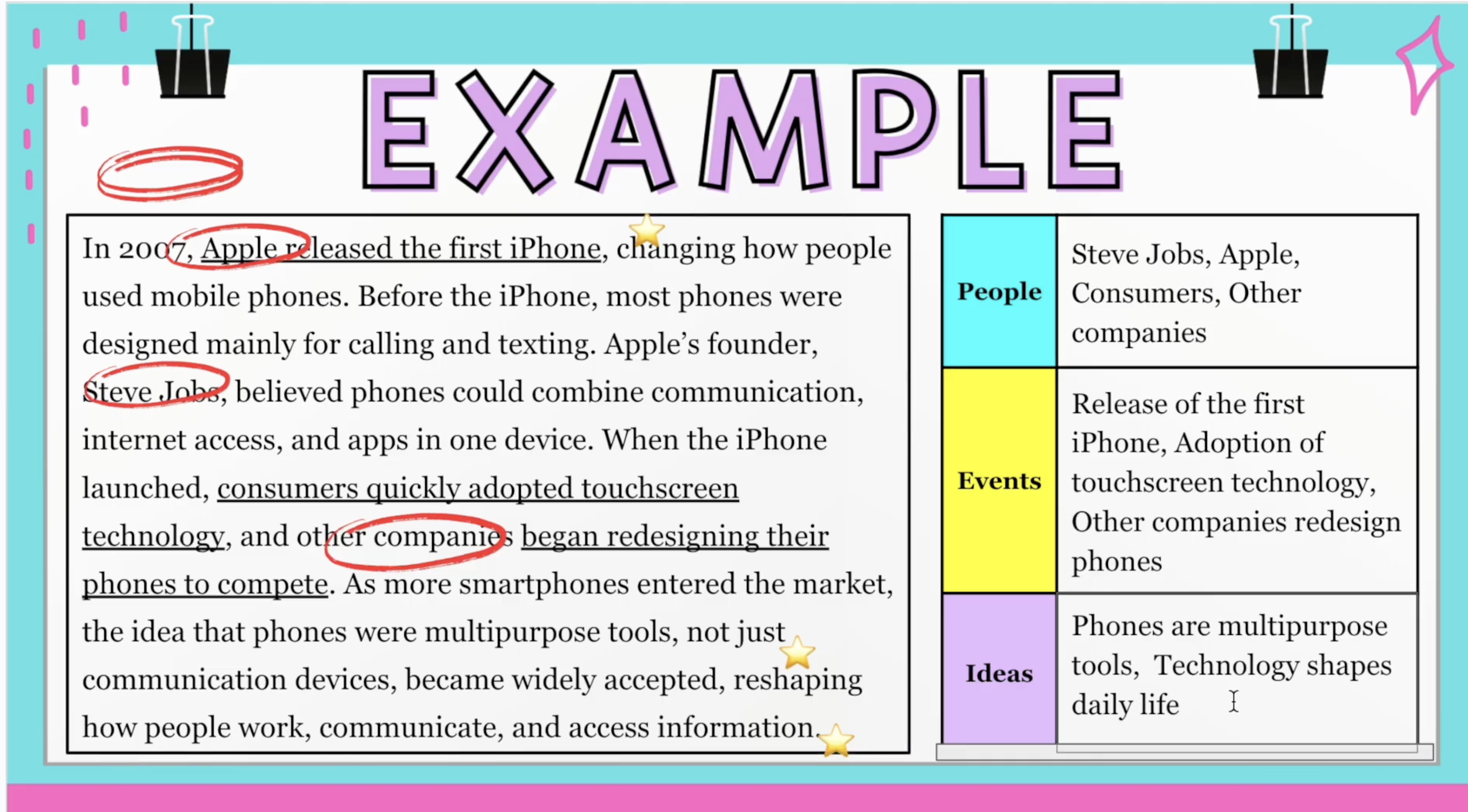
So first, I am going to model how to read a passage and annotate it for the key people, events, and ideas.
For my example, I’m using a short article about Steve Jobs and the iPhone. As I read it aloud, I’ll mark it up and narrate my inner thinking. After reading, we’ll chart everything together as a class so students can visually see how all the pieces connect.
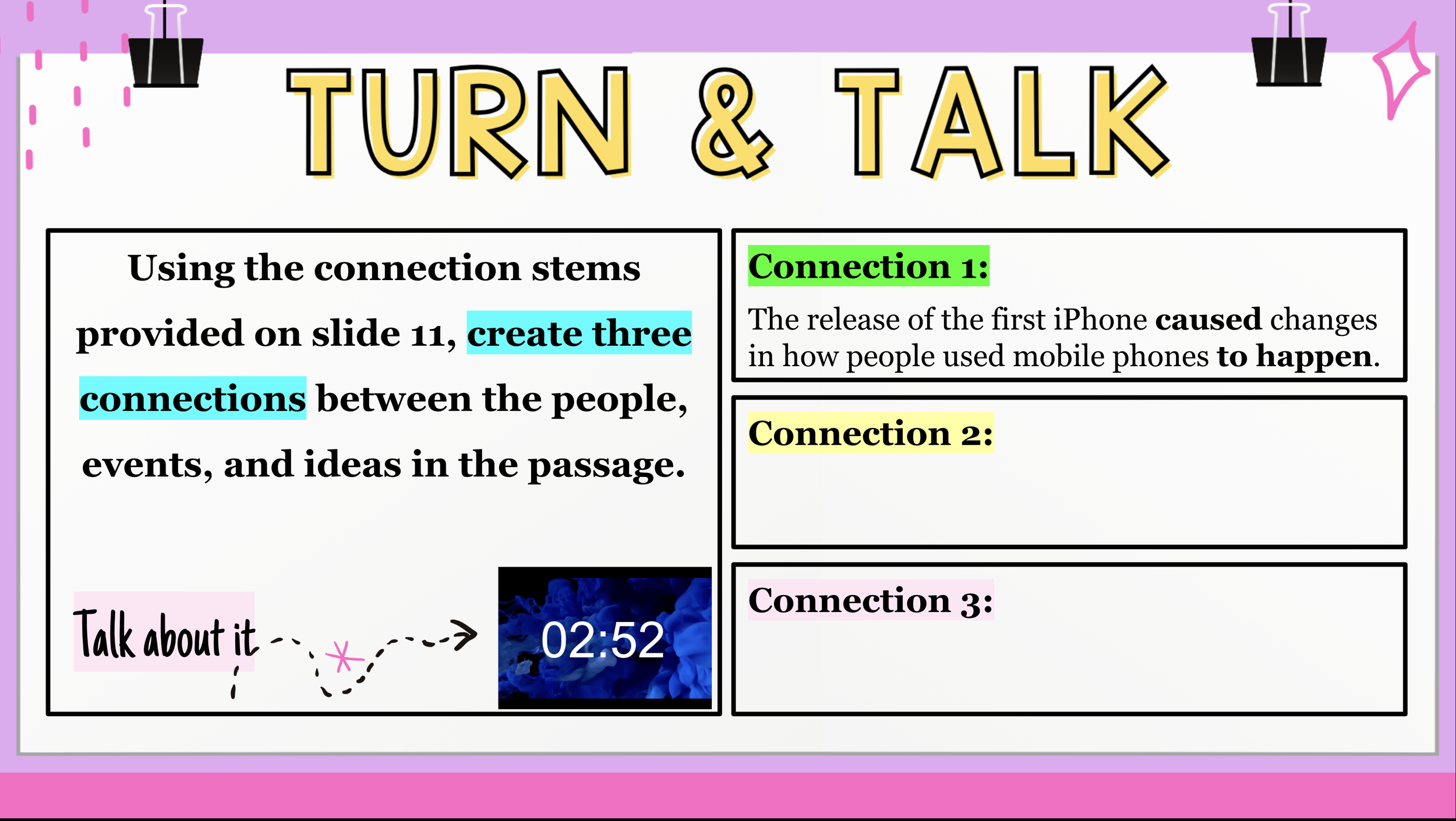
Next, I’ll print the connection stems and place them on each table. We’ll complete one connection together as a whole group. Then, students will turn and talk with a partner to create additional connections using the stems.
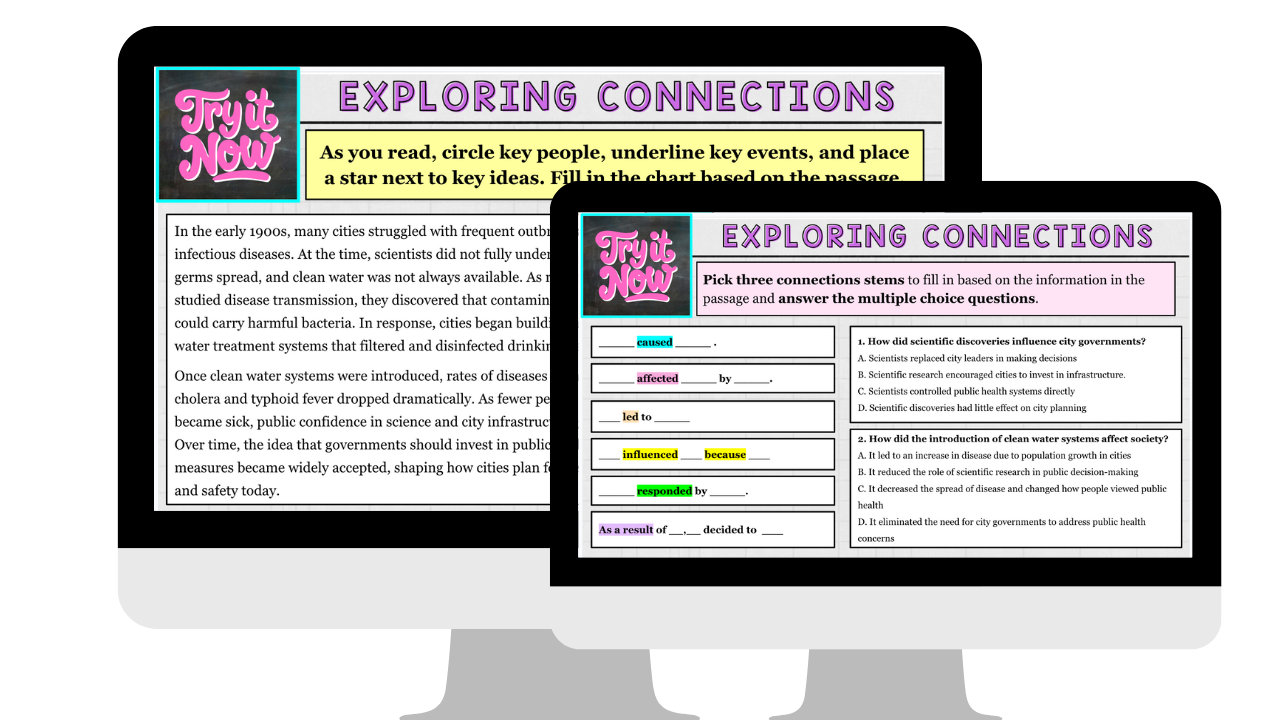
After this guided practice, students will apply the same skills with a partner using a brand-new example. This one follows the exact same structure, but includes multiple-choice questions so they’re practicing the type of thinking required on state assessments.
Step 5: Apply It to a Longer, More Complex Text
Now that students have the foundation, the scaffolds, and the guided practice, it’s time to stretch their thinking with a longer article. This is where everything we’ve practiced starts to click.
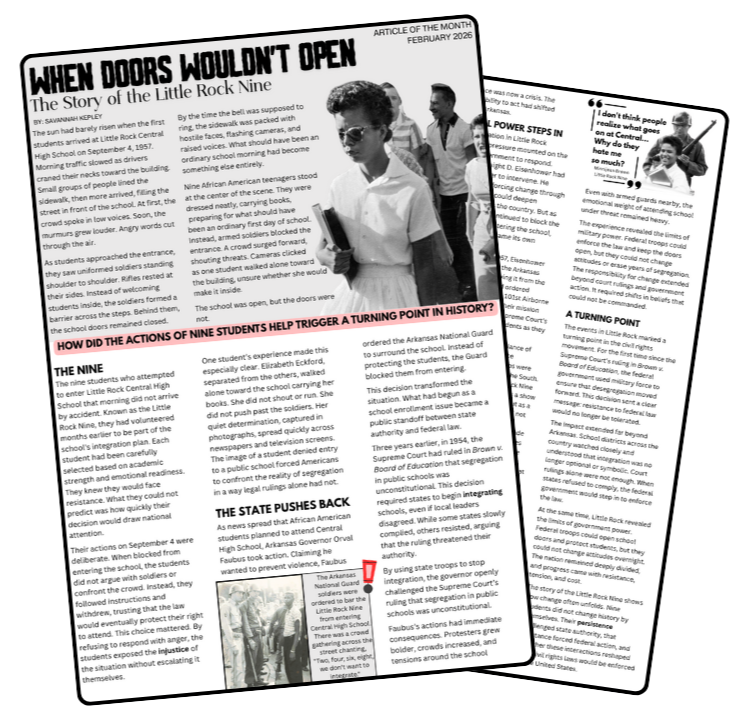
For this final step, I’m using our Article of the Month, “When Doors Wouldn’t Open.”
This article is perfect because:
It includes multiple individuals whose decisions shaped the outcome
It’s built around key events that create a clear chain of cause and effect
It introduces big ideas that students need to trace throughout the text
It mirrors the level of complexity they will see on state assessments
Before students read, I remind them of the exact same steps we’ve practiced:
⭕ Circle important people
Underline key events
⭐ Star important ideas
Use connection stems to explain how those pieces interact
As they work through the article, I want them actively noticing how one decision leads to the next, how people respond to challenges, and how ideas shift as events unfold.
This step is about helping them transfer the skill. Moving from short, controlled examples to an authentic, real-world informational text. And because they’ve built confidence with the earlier steps, they’re much more prepared to tackle something this substantial.
A Freebie to Help You Get Started
After digging into this standard and rebuilding my approach, I know how powerful it is when students finally see how people, events, and ideas are connected.
And I also know how much time it takes to pull everything together on your own.
So to make this easier for you, I’m sharing a free Connections Pack you can use right away.
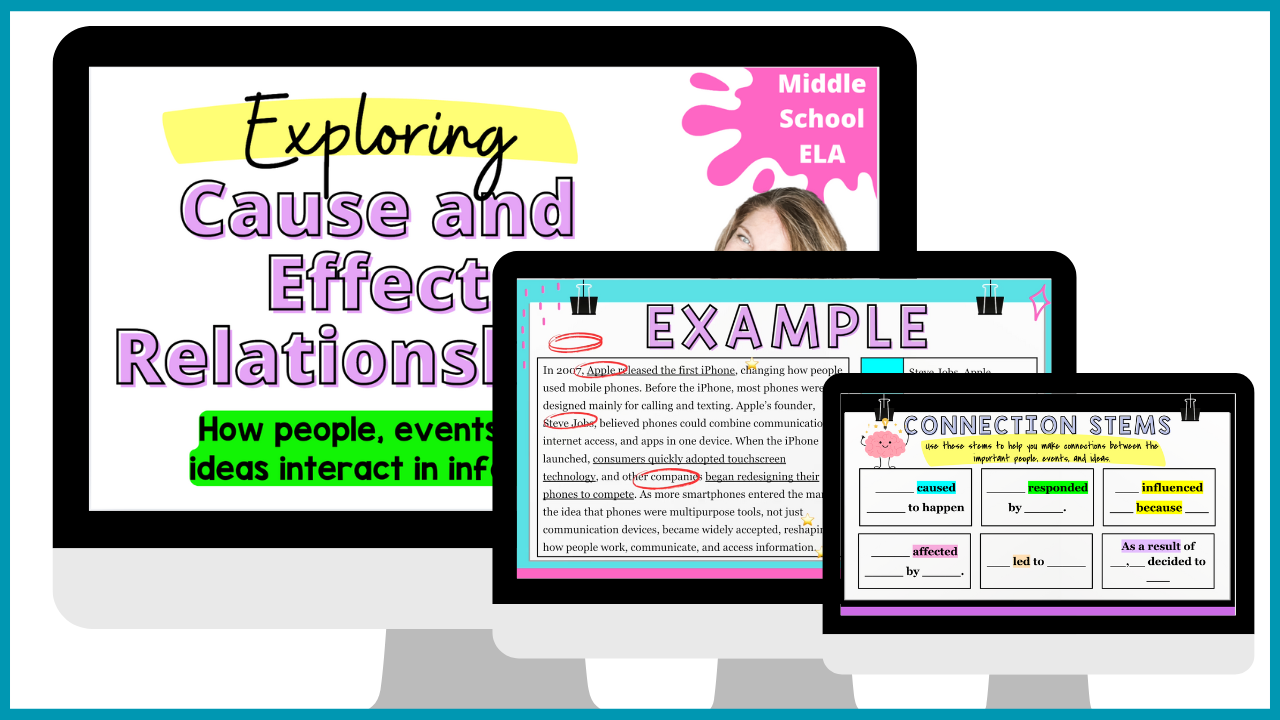
Inside the pack, you’ll get:
💡 The instructional video
🔗 Connection Stems Page
📄 The Whole-Class Example
Just fill out the form to get your resource! 👇
Resources to Help You
I hope this lesson gives you a clear path forward and lifts a little weight off your plate because you deserve that support just as much as your students do. There are two support options.
Option One: ELA Unlimited
Here you will find the mini lesson with the instructional video, slides, fill in the blank notes, practice activities, AND the “When Doors Wouldn’t Open” article. Along with hundreds of other creative, engaging, and standards-based resources ready to download! And the best part - there is no limit on downloads!
Option Two: Teachers pay Teachers
If you want the mini lesson that includes the instructional video, slides, fill in the blank notes, and practice activities, you can find that on TpT.
Click the image to access 👇