How to Teach Editing and Revising for Personal Narratives
There are a lot of things I don’t want to do, but I know are good for me. Like...
🚶♀️ Going for a walk when it’s freezing outside.
🥤 Ordering the unsweet tea at Chick-fil-A instead of the cookies-and-cream milkshake.
👚 Folding the laundry as soon as it comes out of the dryer.
None of those are my first choice. But I also know how I’ll feel later if I skip them.
Editing and revising feels the same way to students.
The second they put a period on that last sentence, they’re ready to be done.
They told the story. It’s on the page. Why go back?
But just like choosing to dry my hair instead of going to bed with it wet, revising and editing is what makes things better in the long run
—even if it’s not the most exciting part.
That’s why I don’t treat editing and revising as an afterthought or a checklist.
I teach it as a process with clear steps, so students know exactly what to look for and what to fix without feeling overwhelmed.
Here's How You Can Structure It:
Step One: Teach Students How to Revise
Before we talk about spelling, punctuation, or grammar, we stop and talk about revising.
Because this is where students usually get tripped up.
Most kids think revising means “fixing mistakes.”
So they hunt for words they forgot to capitalize… and completely miss the point.
I tell them this instead: Revising is about making your story stronger, not cleaner.
We look at what revising actually means:
Adding details where the moment feels thin
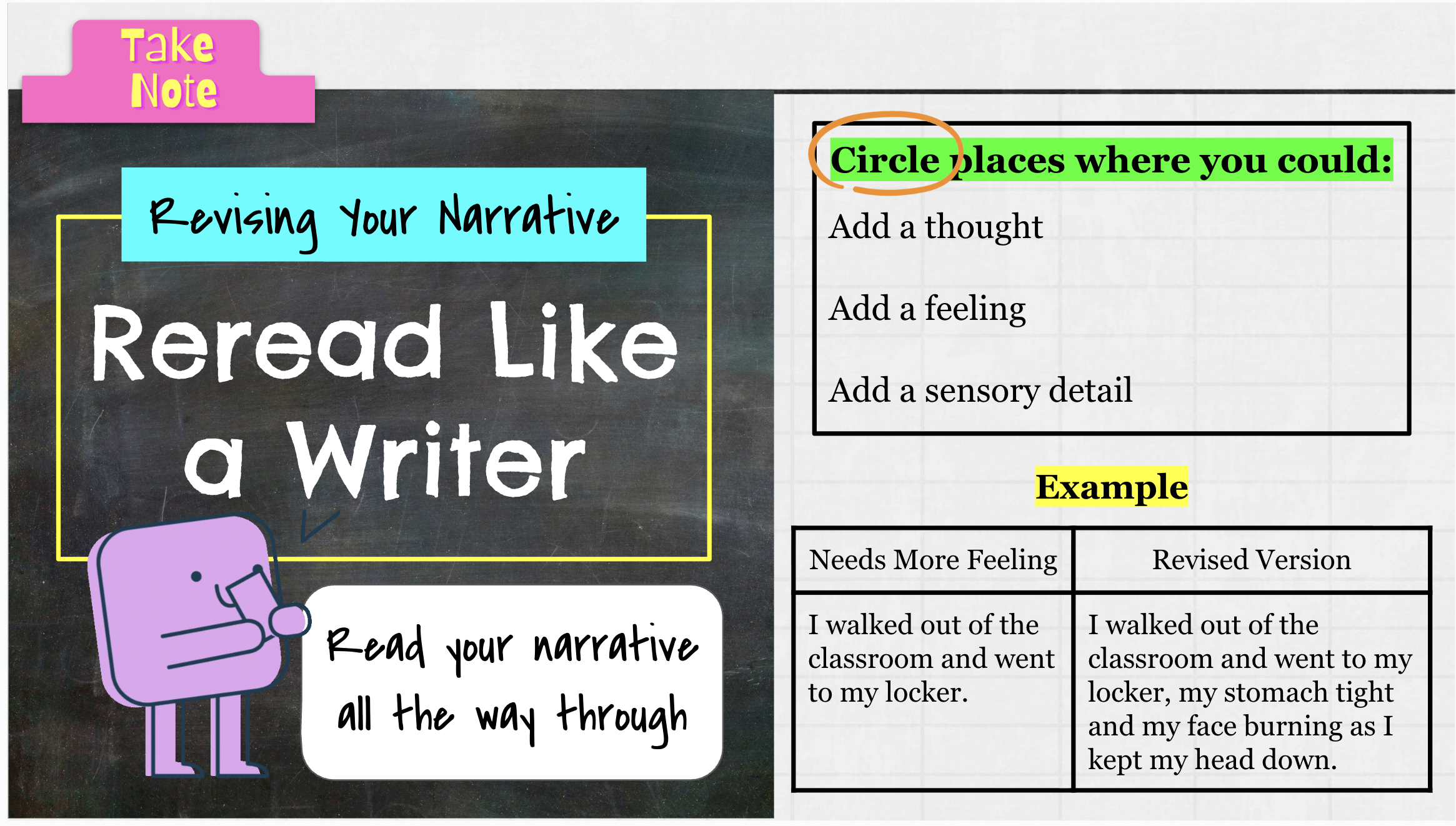
Strengthening the beginning, challenge, or change

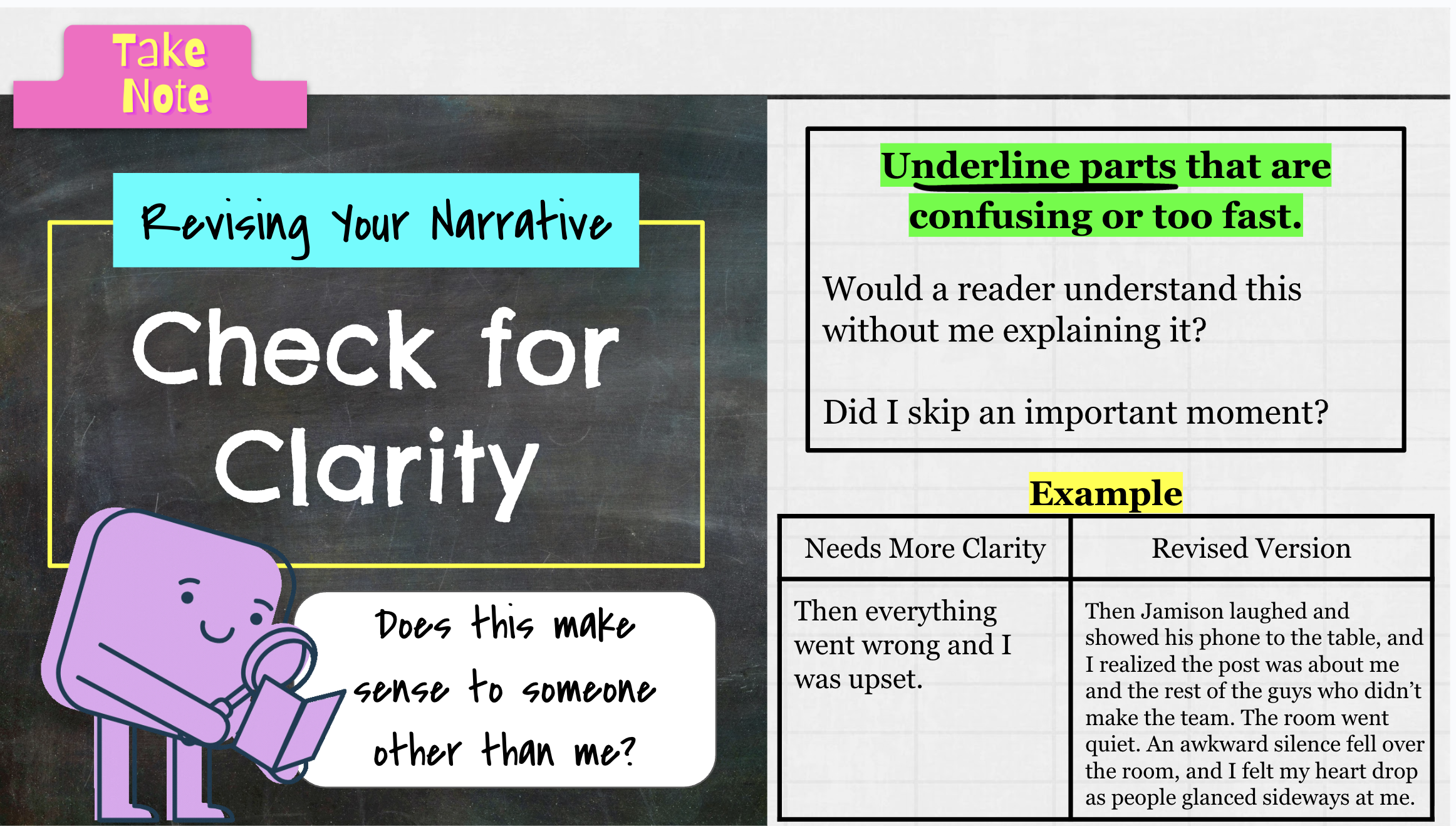
Clarifying ideas that feel rushed or confusing
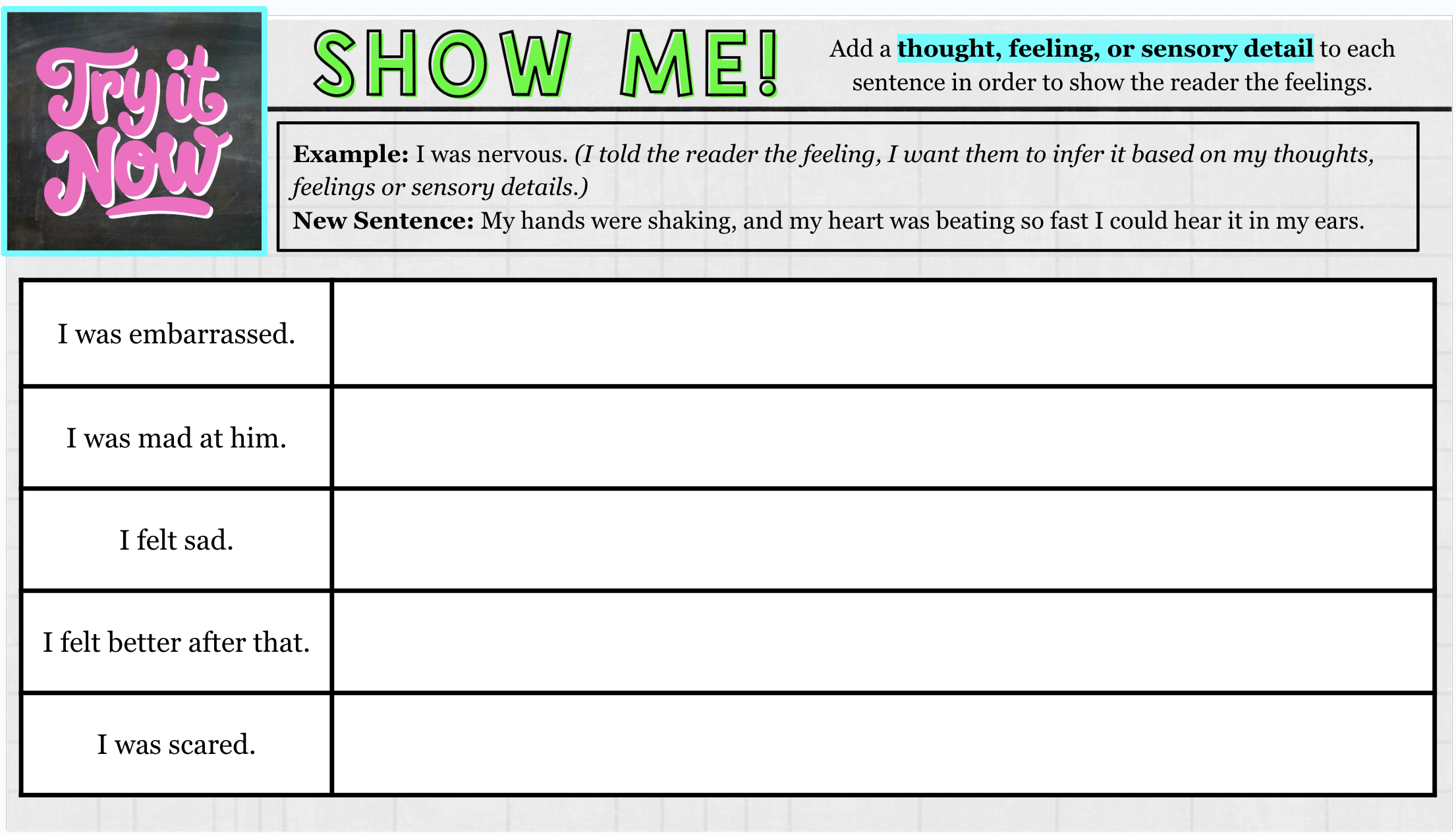
Next, students do a practice activity where they show emotion instead of telling (a common issue with middle schooler writing).
As soon as they finish this activity, I transition them to revising their personal narrative.
To avoid overwhelm, encourage students to focus on revising one section at a time.
Step Two: Teach Students How to Edit
(Now We Polish)
Once the big parts of the story are solid, then we move into editing.
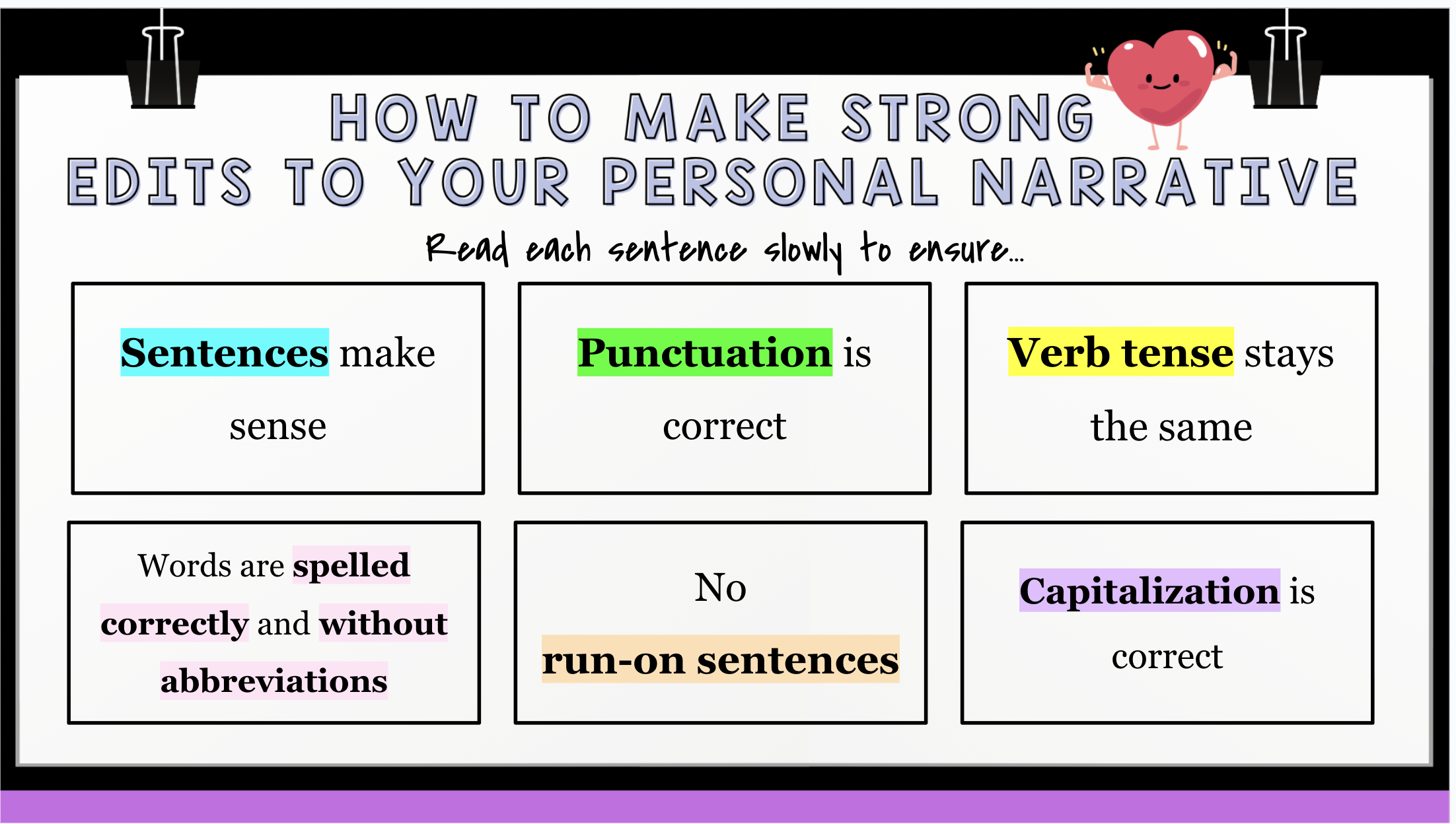
We talk about editing as polish:
Fixing grammar and spelling
Correcting punctuation
Checking capitalization
Making sure sentences are clear and readable
For this step, I give students a simple editing checklist and a clear order. A lot of student need structure when editing.
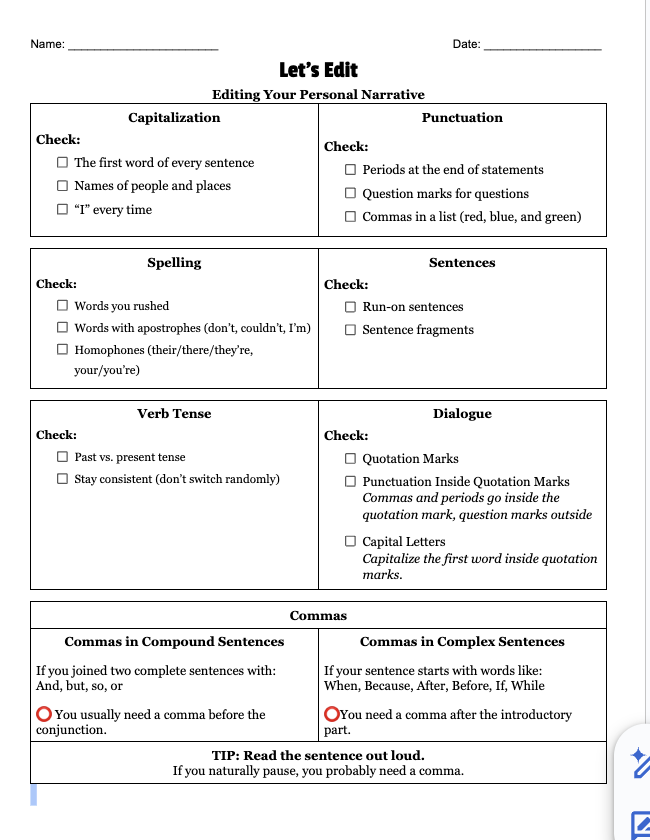
The goal is simple: Students mark the errors first and fix them as they write their final copy.
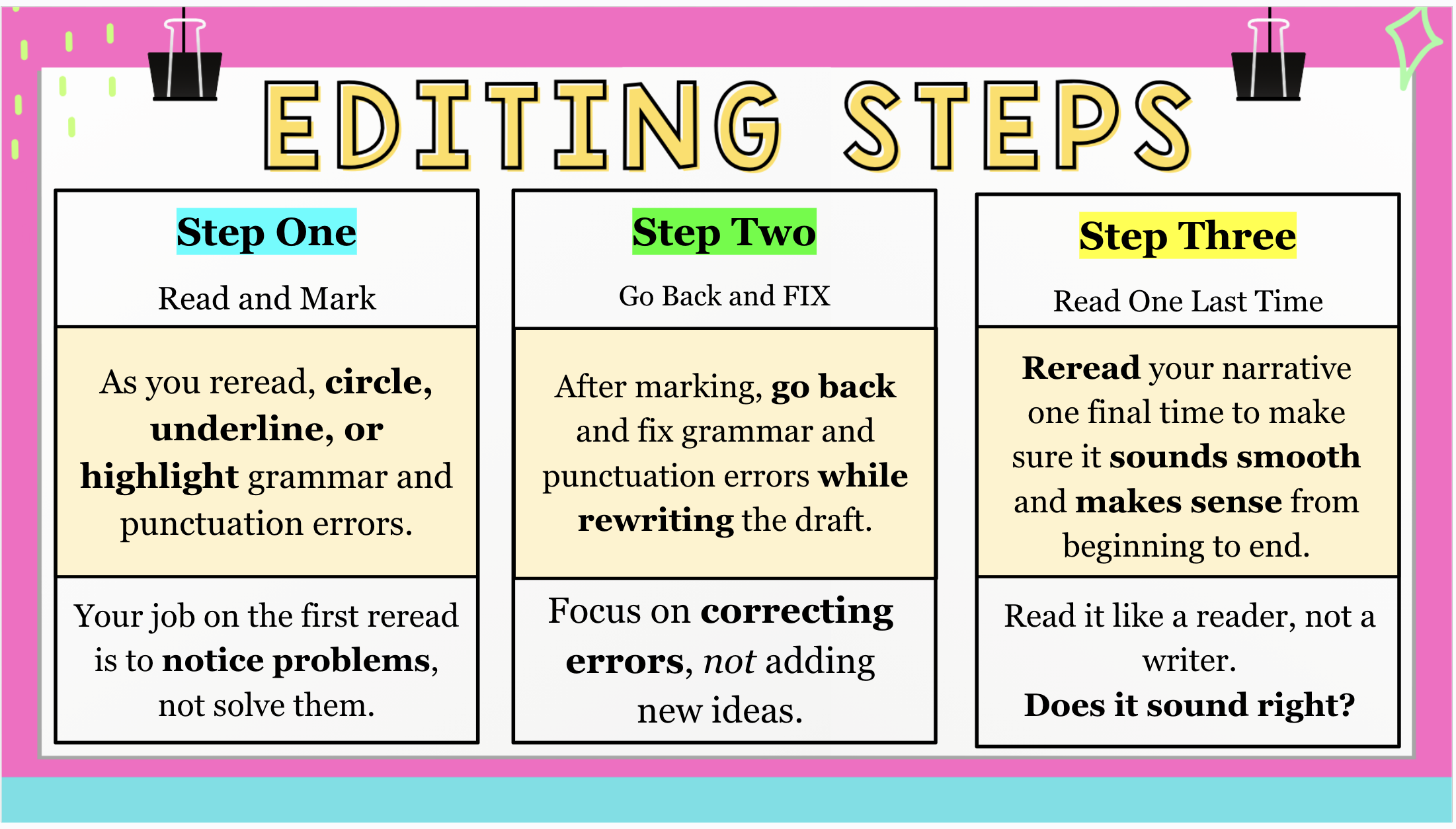

If you want to see how I'm teaching it to my students, check out the FREE instructional video here:
Resources to Help You
If you’re reading this thinking, Yes… my students need help going back and making their writing better (and not just calling it “done”), I’ve got you covered.
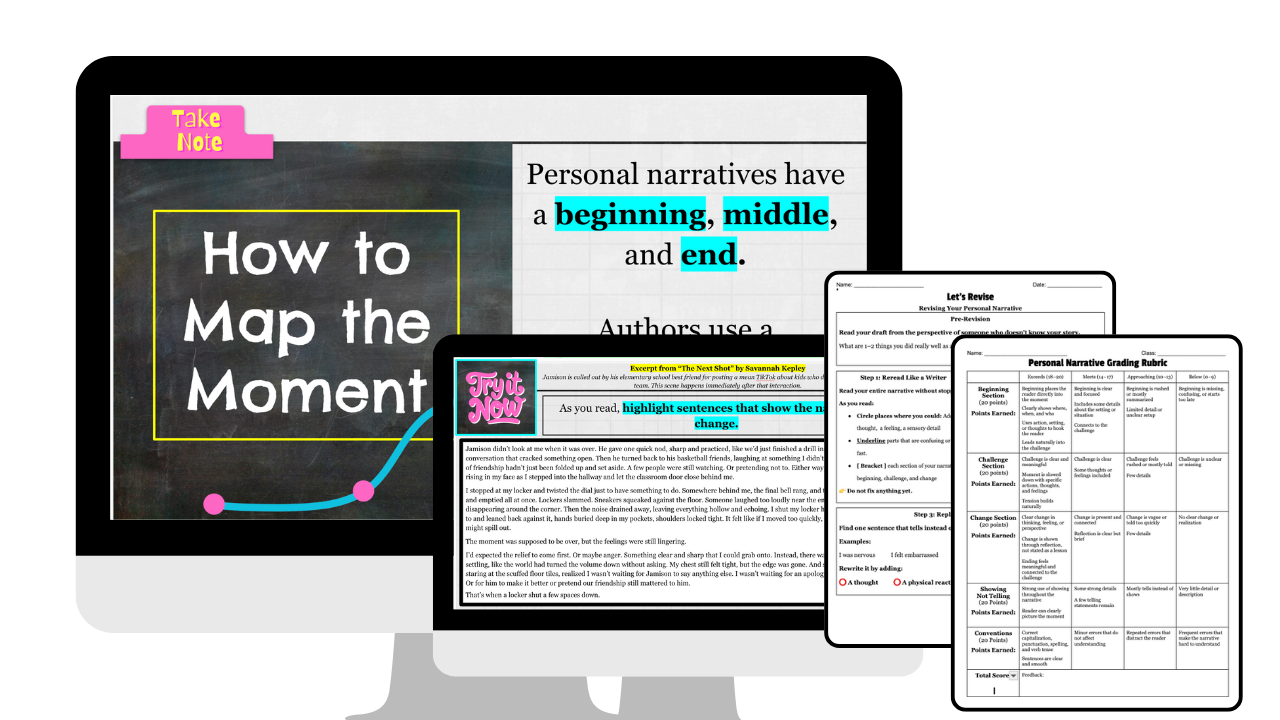
I turned revising and editing into a clear, student-friendly lesson that walks them through the process step by step:
✅ Slides that clearly explain the difference between revising and editing
✅ Revision activities that help students strengthen ideas, clarity, and detail
✅ And editing practice that keeps them focused on correctness—not rewriting everything
You have two options for download:
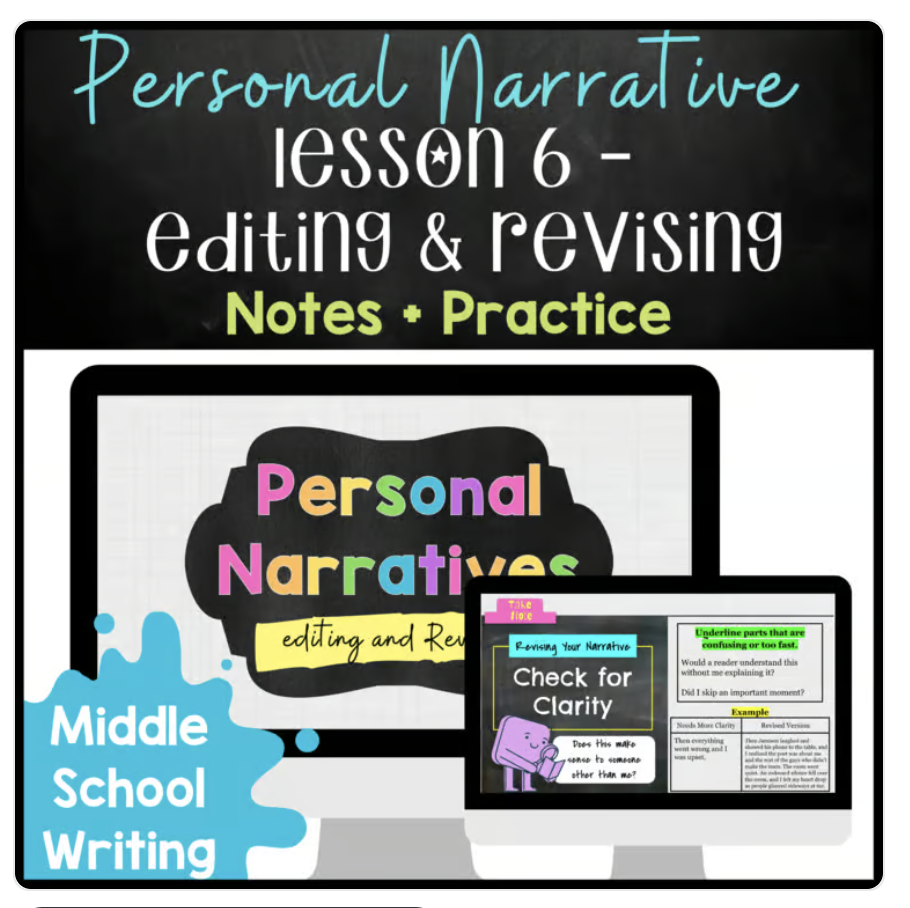
Option One: Teachers Pay Teachers
If you’re interested in just this lesson, check out the listing on Teachers pay Teachers. Click the image to access.
Option Two: ELA Unlimited
If you want the complete package, the full personal narrative unit is available inside ELA Unlimited.
This is the spot to go if you want to immediate access to unlimited downloads of creative and engaging resources for your middle school classroom.

And just like that… we’ve made it to the end.
Your students are ready to finish a personal narrative, and you’re ready to guide them through it!
Doesn't it feel good to have a plan?
If you have any questions, please let me know! I would love to help you nail down this process!
Happy Teaching,
Savannah