A Simple Way to Introduce Text Structure in Middle School
I like to tell my students that once they hit middle school, they’re no longer just readers. They’re learning to think like authors.
That means we start asking different questions.
Why did the author organize the information this way?
Why did they choose this structure instead of another one?
That mindset shift is exactly how I approach teaching text structure.
Over the next four posts, I’m going to show you how I break this down for students so they can move from simply recognizing text structures to actually using them.
By the end, students aren’t just identifying structures in passages. They’re thinking like authors and creating their own informational pieces using different text structures.
In each post in this series, I’ll also share a freebie to help you implement these ideas in your classroom without adding more to your plate.
Today, we’re starting where I always start in my own classroom: with a clear, foundational text structure mini lesson that gets everyone on the same page.
Here’s how I actually use this text structure mini lesson in my classroom:
Step One: Teach each structure one at a time
Description, chronological, compare and contrast, cause and effect, and problem/solution.
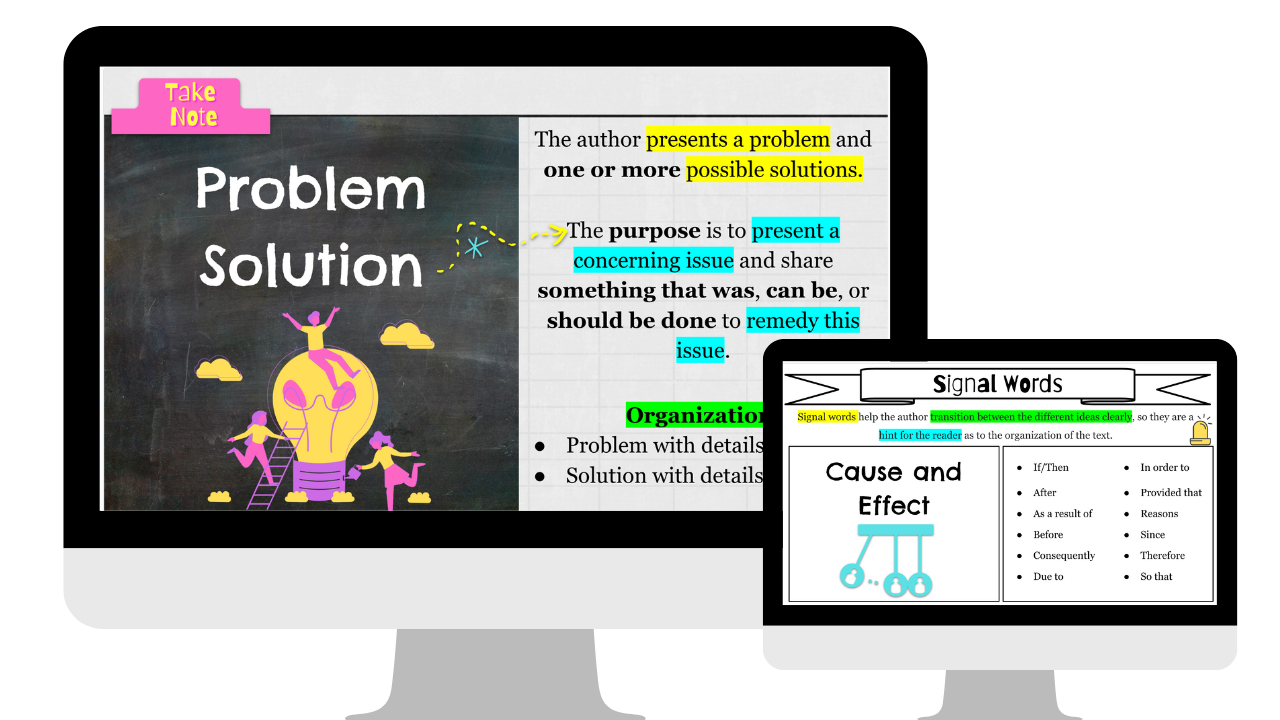
For each one, we focus on the same four things:
• what it is
• why an author would use it
• how the information is organized
• and common signal words
I’m very clear with students that text structure is simply the author’s choice for organizing information in an informational text. It’s not a trick. It’s not something brand new. It’s a decision the author makes.
To help that click, I connect it to things they already do every day.
I ask questions like:
How many times today have you noticed similarities and differences between things?
How often do you think about causes and consequences, like the consequence of getting your phone out in class?
How many problems have you already solved today?
How many things have you had to remember so far? Have you made mental lists?
How often do you talk about things that happened to you in order?
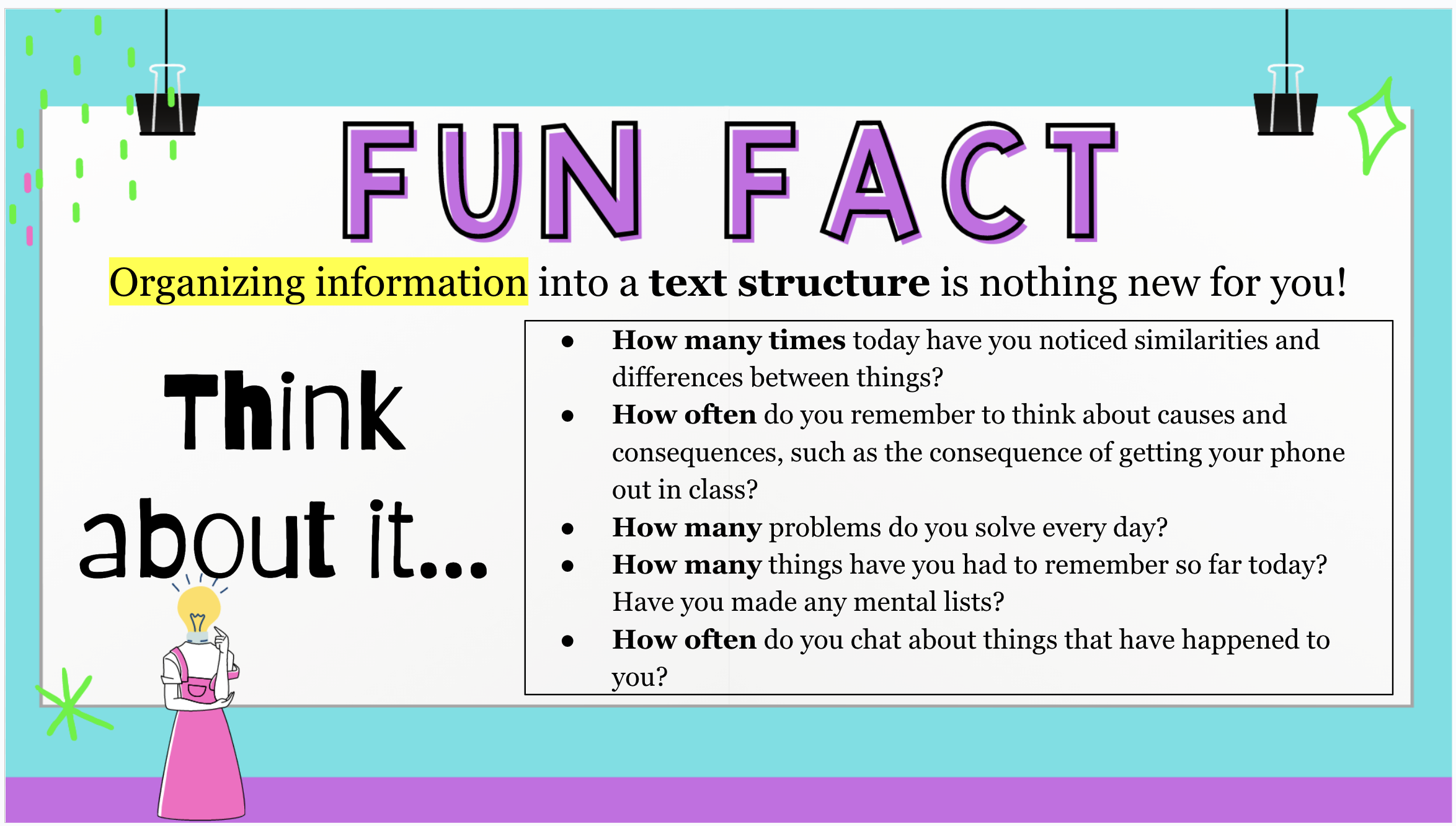
Once they realize they already organize information this way, the whole concept feels a lot less intimidating.
Then I give them the why.
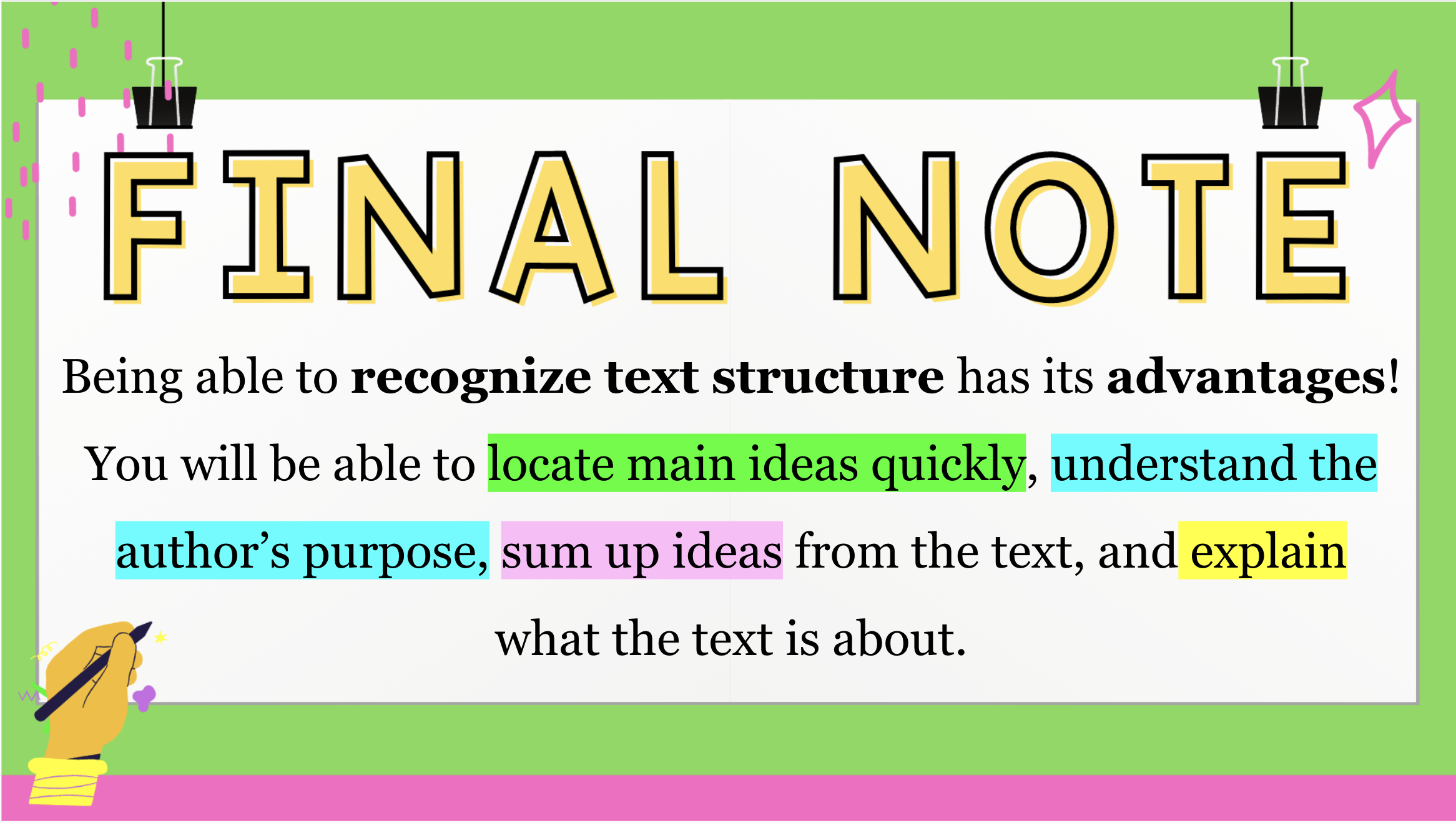
Being able to recognize text structure has real advantages. It helps students:
locate main ideas more quickly
understand the author’s purpose
summarize information more clearly
and explain what a text is really about
Step Two: Show Me!
After the mini lesson, we play a quick game to make sure the basics are solid.
I display a short paragraph and ask students to determine the text structure.
They write their answer on a whiteboard without showing anyone else. They’re allowed to refer back to their notes.
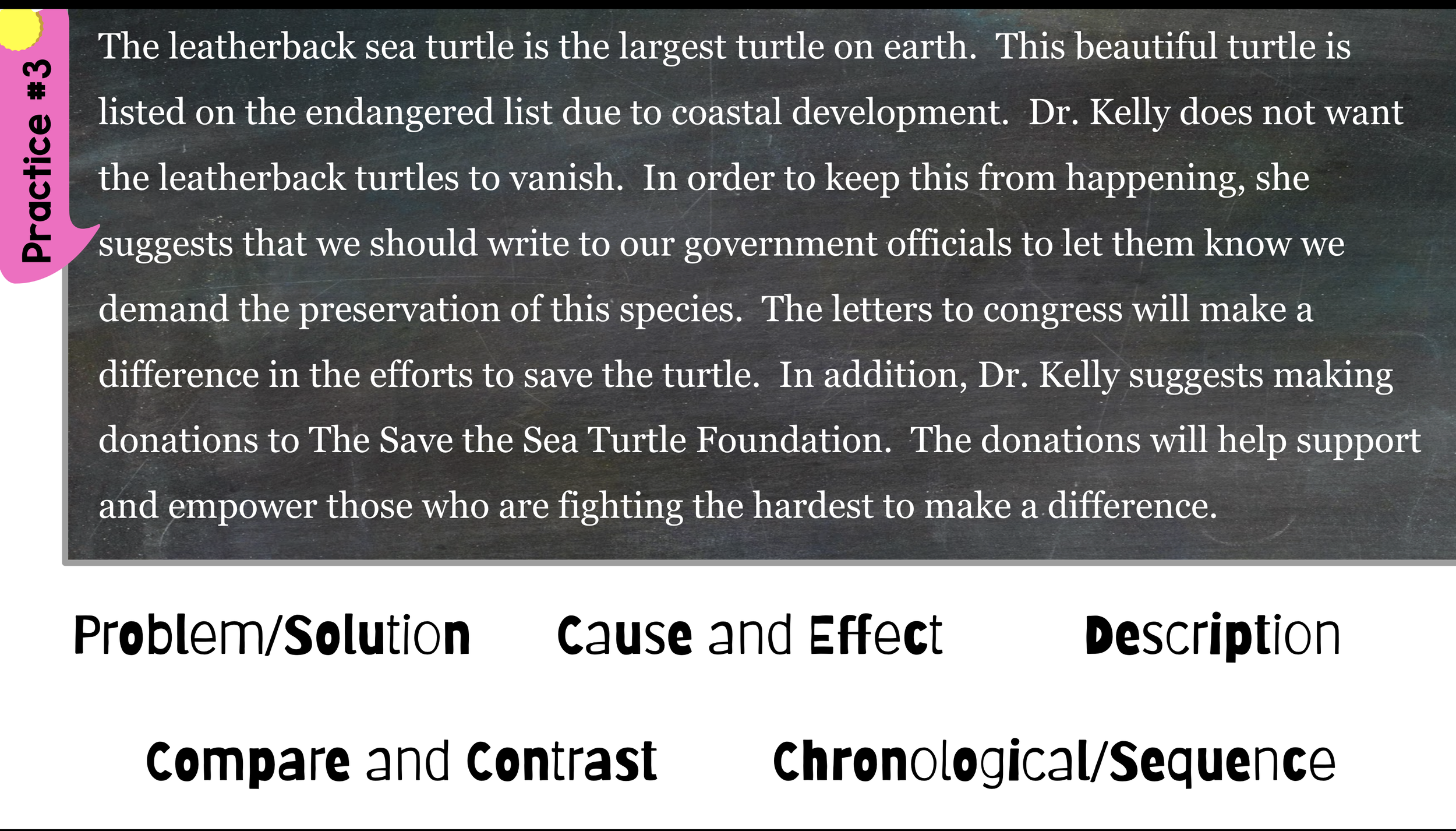
Then they quietly compare answers with their table group and agree on one response.
When I say, “Show Me!”, each table holds up one whiteboard.
✅ If they’re correct, they earn a point.
❌ If they’re not, we pause and talk through why the paragraph fits a certain structure.
The table with the most points earns a small prize. Nothing fancy. Just enough motivation to keep them engaged.
Step Three: Independent Practice
To make sure students truly understand, I give them a low-pressure practice that mirrors the class activity.
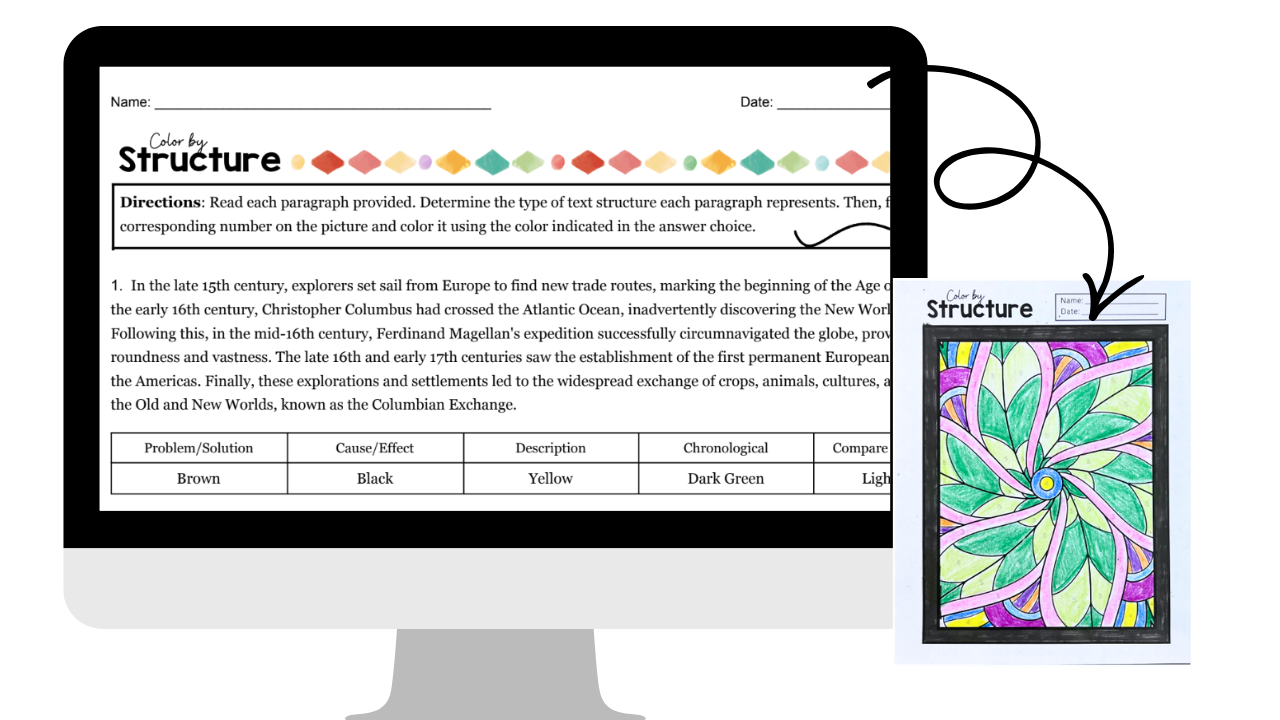
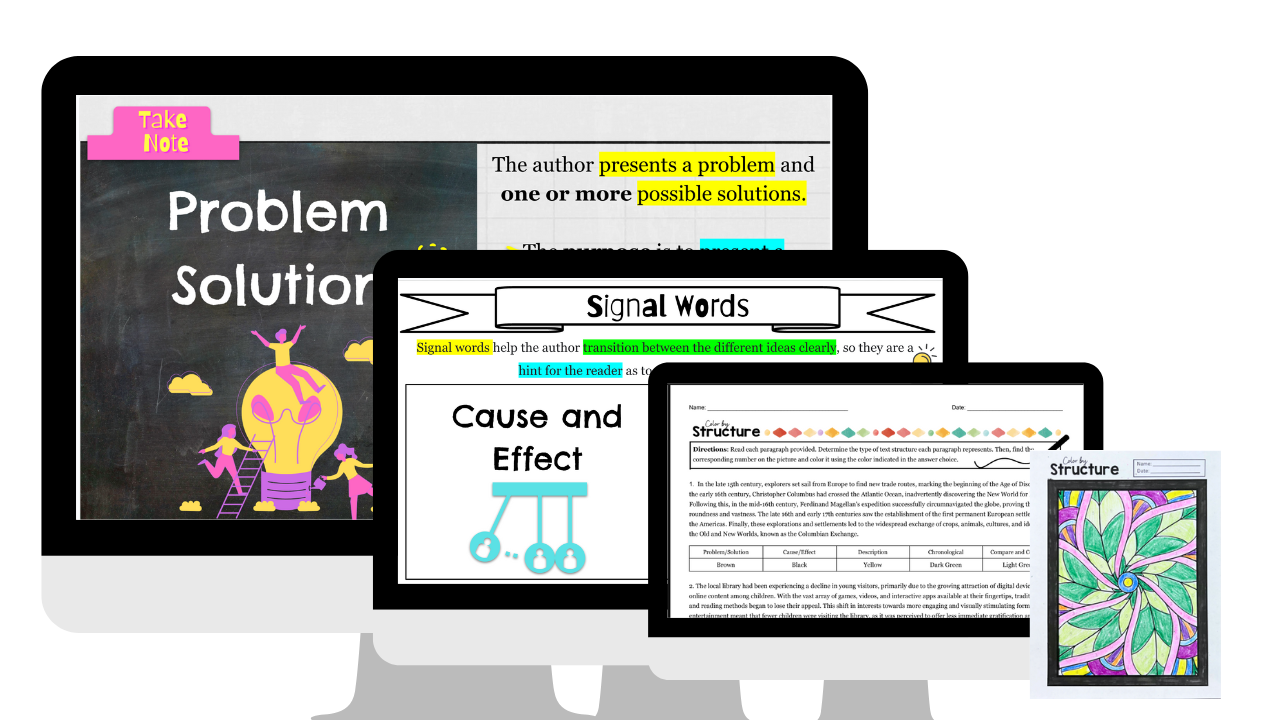
Students read a short passage, identify the text structure, and color the picture based on their answer. It’s engaging, but it’s also checking real understanding.
Resources to Help You
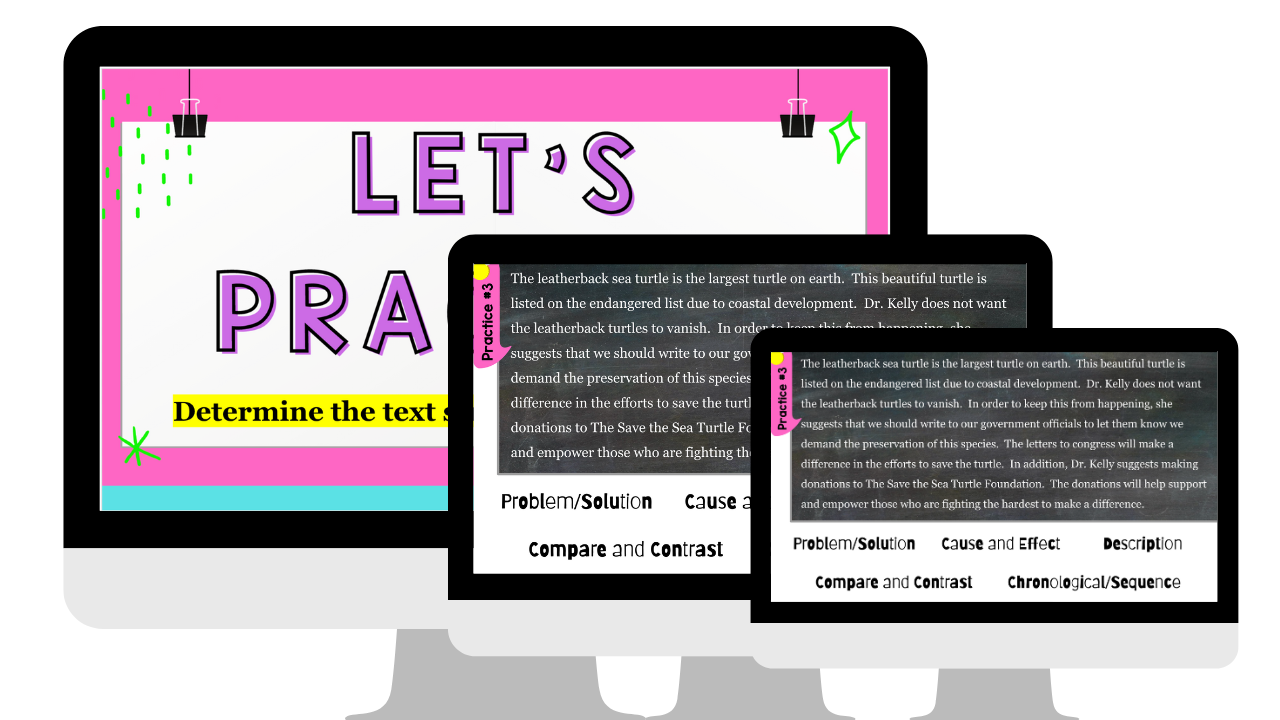
To help you check for understanding right away, this post’s freebie is the “Let’s Practice” text structure activity.
This is the same type of practice I use after the mini lesson.
Students read short informational paragraphs and determine the text structure for each example. It’s quick, focused, and lets you see immediately who’s getting it and who might need a little more support.
Want to see how I teach this in my classroom,
check out this video 👇
If you’re reading this thinking, I love this, but I don’t have time to recreate it, you don’t have to!
Option One: ELA Unlimited
If you want the complete text structure mini lesson:
✅ Ready-to-use slides
✅ Fill-in-the-blank notes for students
✅ Instructional Video
✅ Color by Structure Text Evidence Activity

Option Two: Teachers Pay Teachers
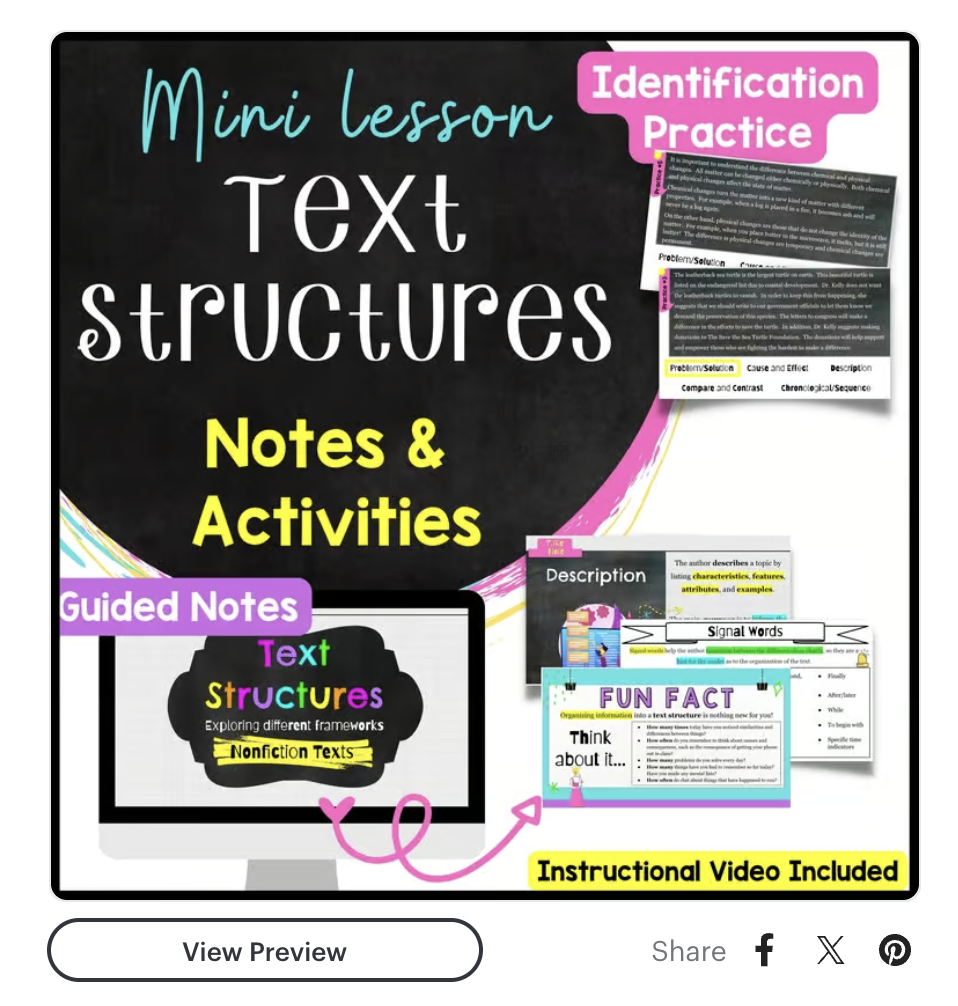
If you want just the mini lesson that includes the instructional video, slides, and fill in the blank notes you can find that on TpT.
Click the image to access 👇
Either way, the goal is the same: giving students a clear foundation without adding more work to your plate.