How to Compare and Contrast Multiple Articles
One of our most important roles as ELA teachers is helping students become critical thinkers and readers.
And honestly? Sometimes I get a little worried about them.
I think about students who read something or watch a video and just... believe it.
Without questioning it.
Without wondering if there's another side to the story, a different perspective, or a piece of the picture they're not seeing.
That's a skill they need long after they leave our classrooms.
But here's what I love about being an ELA teacher...
We are literally the ones who can teach them to slow down, question, and think.
And it fits right into our standards.
Here's one of my favorite ways to do it...
Step One: PRepare the Articles
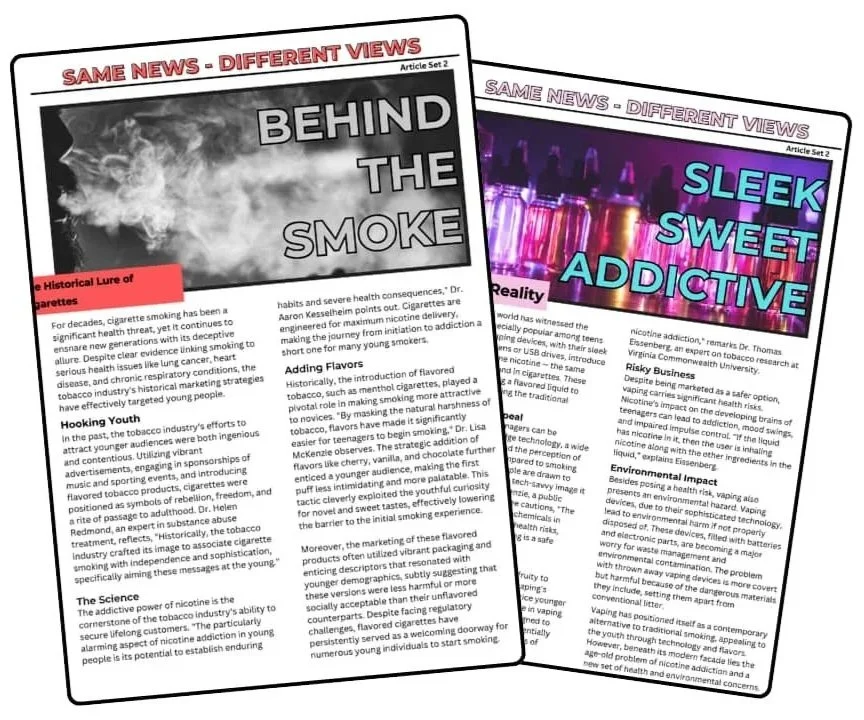
Find two articles on the same topic with differing viewpoints. They don't have to be opinion pieces even two informational texts can frame the same topic very differently.
Think about a topic like the four-day school week. One article might focus on the benefits like more rest, cost savings, better engagement. Another might argue it shortens instructional time and widens achievement gaps. Same topic, completely different picture.
Other ideas: social media and mental health, school uniforms, AI in the classroom, or climate change.
The key is helping students realize that an author has a position and that position isn't automatically fact. There is always another side of the story.
Step Two: Active Reading
Have students read each article and jot down the big idea of each section as they go.
When students write as they read, they're processing the information more deeply not just moving their eyes across the page.
Right now, they're practicing the skill of acknowledging their inner thoughts by writing them down. Hopefully, with practice, they'll be able to recognize this automatically without needing to write it down at all.
Encourage students to pay attention to the author's word choice and tone as they read too! Those little clues often reveal a lot about the author's position.
These notes also set them up perfectly for the next step and give them something to reference during a class discussion.
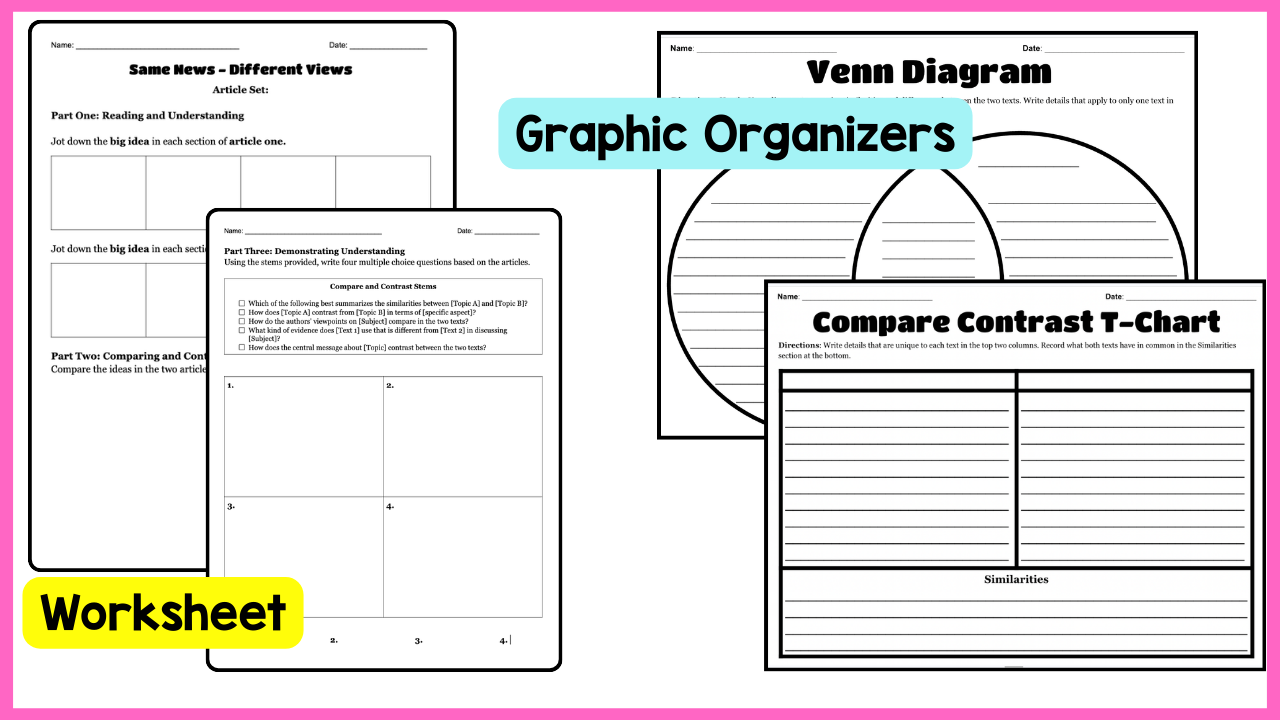
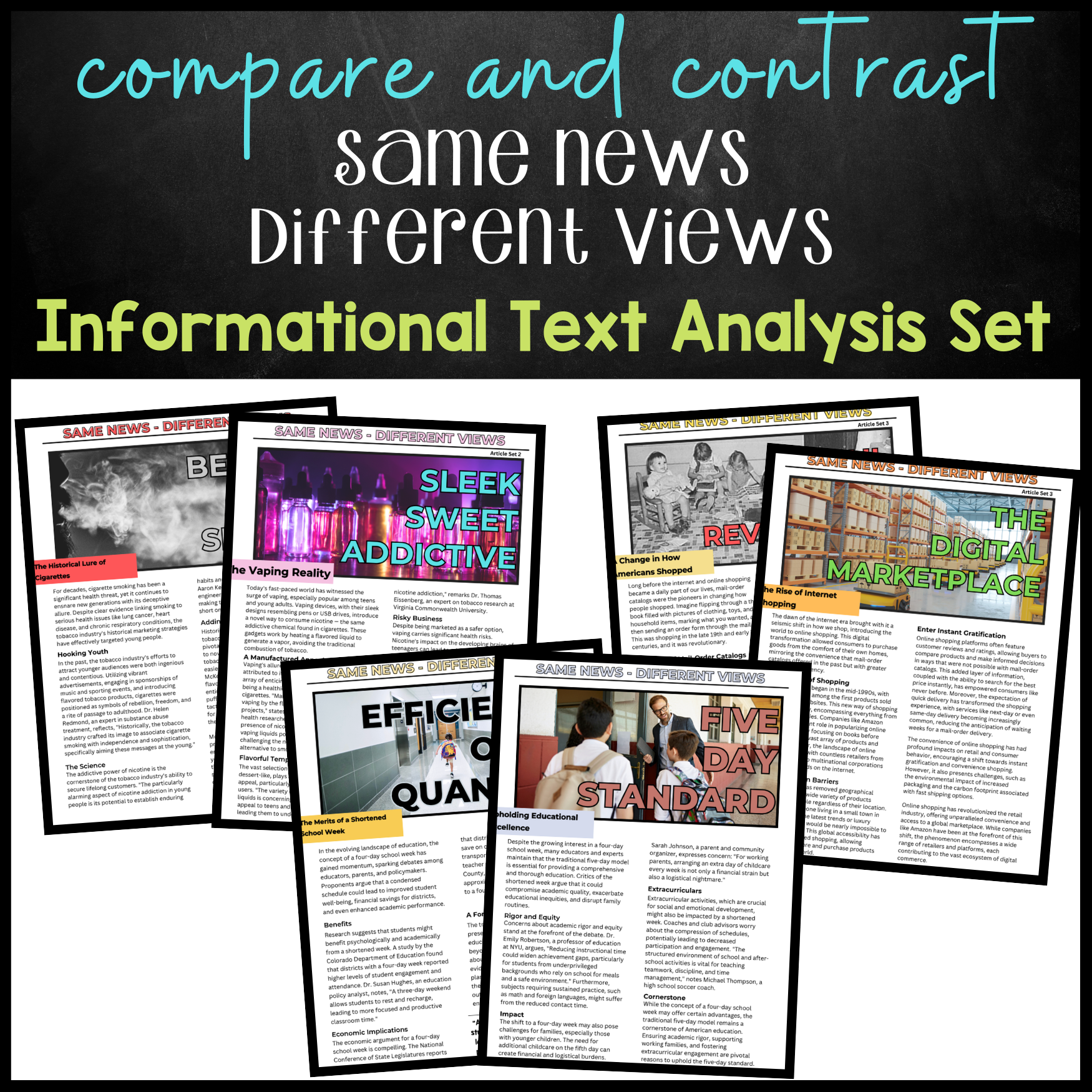
Side Note: If you're using my Same News – Different Views resource, the worksheet already has this built in! Students have a box for each section of both articles, so they're never staring at a blank page wondering where to start.
Step Three: Compare and Contrast
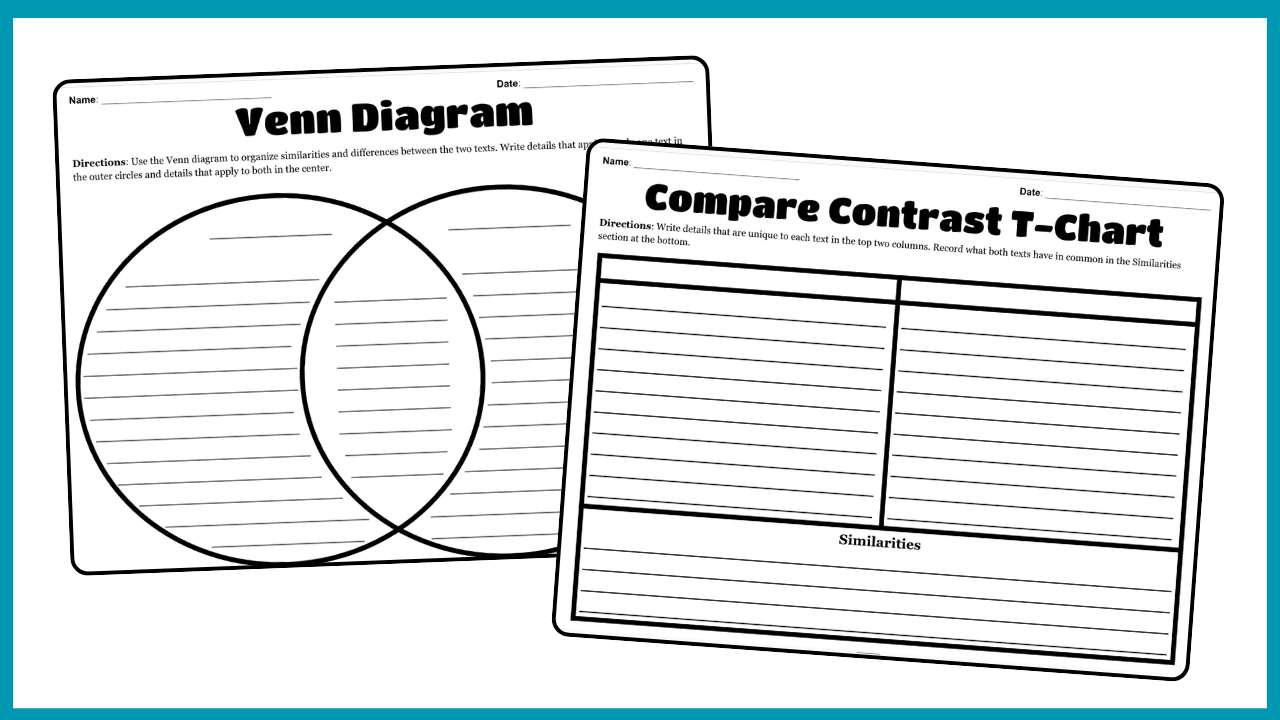
Use the Venn diagram or T-chart to compare the two perspectives side by side.
A T-chart works well for highlighting differences, while a Venn diagram is the better choice when you also want students to identify what the two texts have in common.
Whichever tool you choose, encourage students to think beyond just the facts. They should be comparing the author's tone, purpose, evidence, and overall message.
This is also a great stopping point for a class discussion or pair share before moving on. Let students talk through what they noticed; you might be surprised by what they pick up on.
For students who need more support, model filling in one section together before letting them work independently.
Step Four: Demonstrate Understanding
As a final challenge, have students write their own multiple choice questions using compare and contrast stems.
When students have to write the questions, they have to truly understand the material because you can't write a good question about something you don't understand.
The stems are important here because compare and contrast questions can feel really open-ended to students. Having a sentence starter gives them a framework so they're focused on the thinking, not staring at a blank page.
For example, stems like "How does [Topic A] contrast from [Topic B] in terms of..." or "What kind of evidence does [Text 1] use that is different from [Text 2]..." give students just enough structure to get started while still requiring them to do the heavy lifting.
You can grab the stems in the free sample below! They're ready to use as-is or you can adapt them for any two-text activity you already have in your classroom.
SO, want to try something similar with your students?
Resource to Help You
FREE Compare and Contrast Worksheet Pack
Want to try something similar?
The free sample includes the student worksheet with the compare and contrast stems and graphic organizers. This is everything you need get the ball rolling and try this activity with your own articles!