How to Teach an Overview of Personal Narratives
Every year, I reach the same point in the curriculum where I think, Okay. We’re ready to write.
And every year, if I say, “Today we’re going to write a true story about you and something you have experienced. I want it to be structured like one of the short stories we have read. Go ahead and start,”
I get the same responses:
“I don’t know what to write.”
“Nothing in my life is interesting.”
Or a full-on diary entry about friend drama, NBA dreams, or becoming a famous content creator.
Not because students don’t care,
but because they don’t know how to shape a story yet.
I love teaching literature, and my students spend a lot of time analyzing characters, tracing conflict, and talking about why authors make the choices they do. Watching students fall in love with stories fills me up.
So instead of treating writing like a separate thing, I started asking: What if personal narrative was the place students applied everything they already know about story elements and storytelling?
That’s when I shifted to personal narratives.
They focus on one meaningful moment. They’re thematic. And they give students a way to use everything we’ve learned about plot, conflict, and character—without asking them to invent a whole life story.
But here’s the key: I stopped telling students to “just write.”
After twenty years of teaching, I know middle schoolers need steps. They need structure. They need someone to say, This is what you do in this part. Great, now let’s move on to the next part.
That’s exactly why I created this personal narrative writing unit.
Instead of one big assignment, I started breaking it into small, intentional steps.
Each part had a purpose, and students knew exactly what they were supposed to focus on before moving on.
That structure makes the writing feel less overwhelming—for them and for me.
And it’s what finally helps students move from “I don’t know what to write” to “I know what I’m working on today.”
BUT...
before students ever write, we have to slow down and talk about what a personal narrative actually is.
Here's How I Do It:
Step One: Teach a Mini Lesson Explaining Personal Narratives
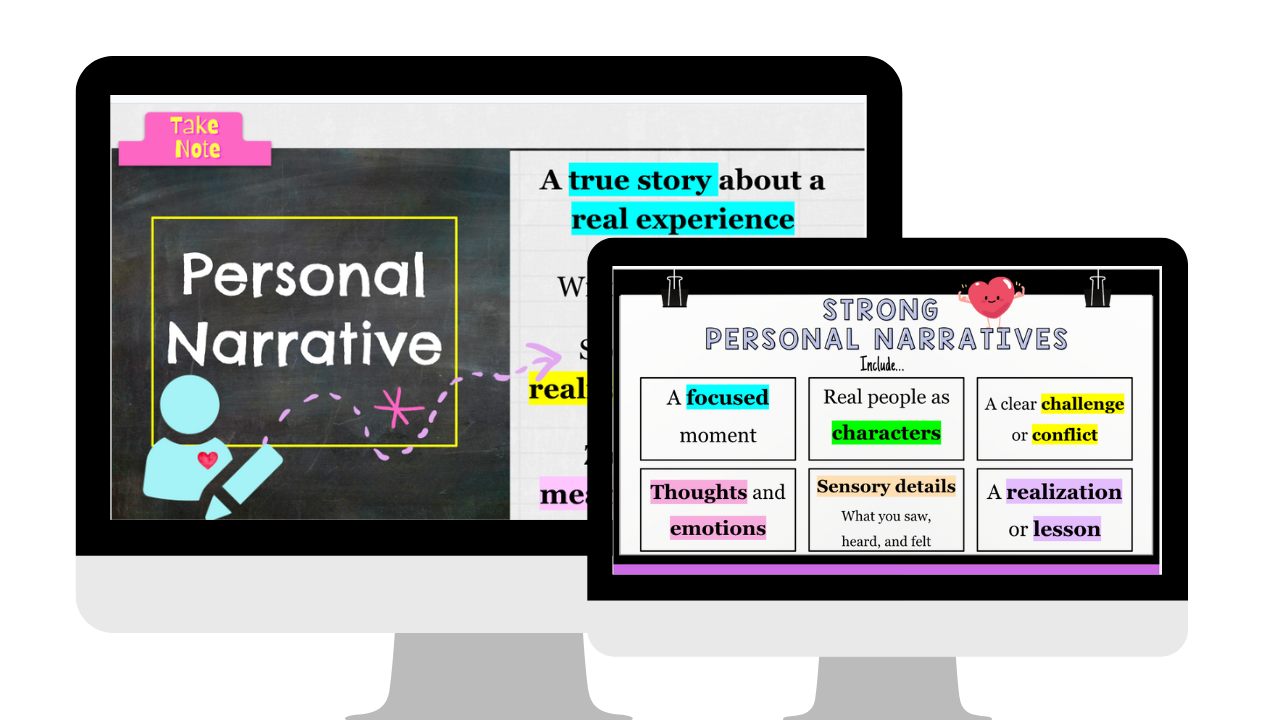
✅ A personal narrative focuses on one meaningful moment, not an entire life story
✅ It has a clear beginning, challenge, and change
✅ The goal isn’t to list what happened—it’s to show why the moment mattered
✅ Writers use thoughts, feelings, and details to develop meaning
Once students understand that, the writing feels less overwhelming.
Step Two: Provide Students with a Mentor Activities
Before students write, they need to see what strong personal narratives look like.
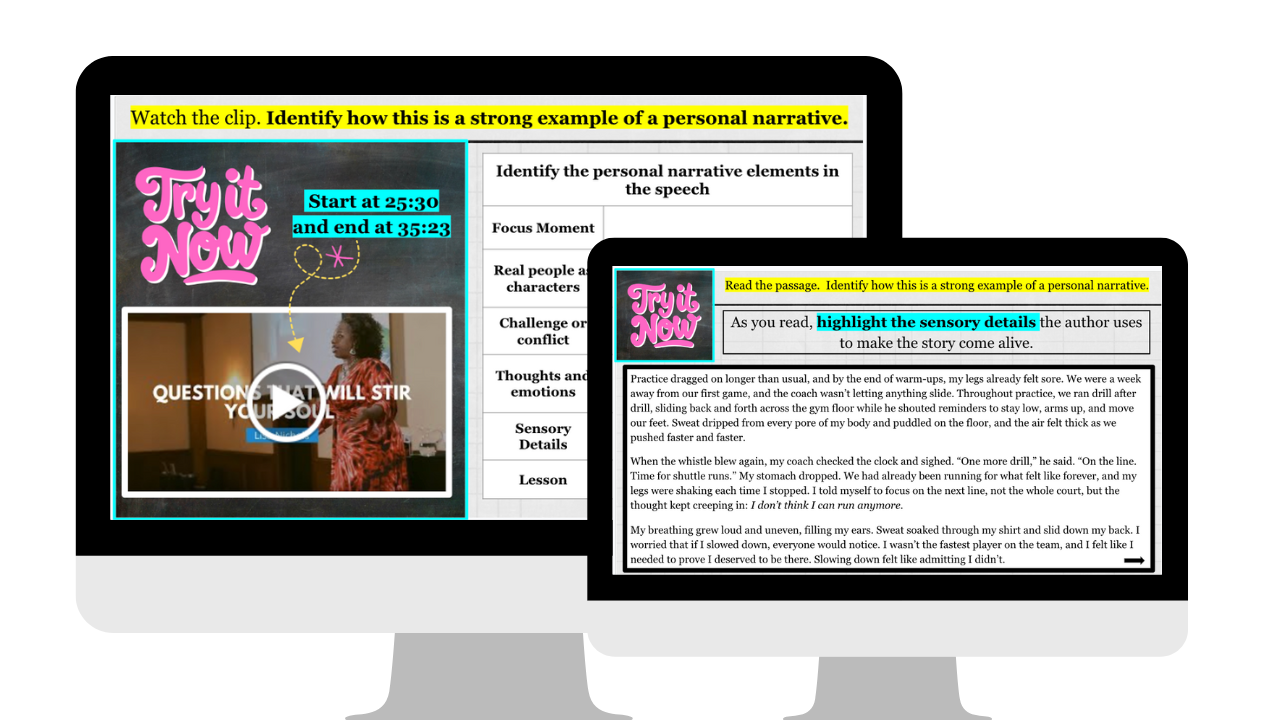
I use two mentor examples:
A short speech by Lisa Nichols (“Questions That Stir Your Soul”) to model oral storytelling
A simple written personal narrative that mirrors what students will write
As they read, students answer:
What moment does the author focus on?
What challenge or conflict do they face?
What thoughts or emotions show up throughout the story?
These activities help students start to recognize the structure and purpose of a personal narrative before they ever draft a sentence.
Step Three: Brainstorm Ideas for Their Personal Narrative
Only after that foundation is in place do we brainstorm ideas.
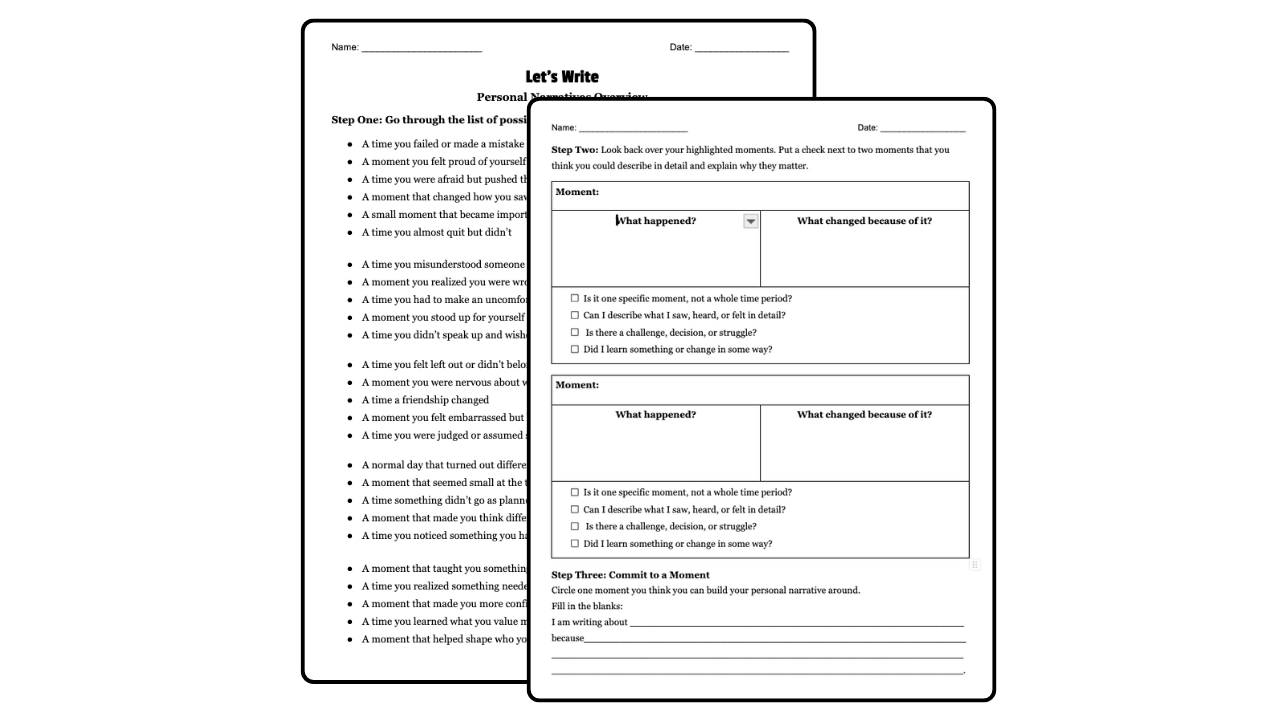
I give students a list of about 30 focused topic options, like:
A time you failed or made a mistake
A moment you felt proud of yourself
A time you misunderstood someone or were misunderstood
A time something didn’t go as planned
This keeps students from freezing up—or going straight into diary mode—and helps them choose a moment that actually works for narrative writing.
Take a peak inside how I teach this...
If you want to watch how I teach the personal narrative overview, I recorded a FREE instructional video here:
If you’re reading this thinking, “YES, this is exactly what my students need,” I’ve got you covered with two options.
Option One: TpT
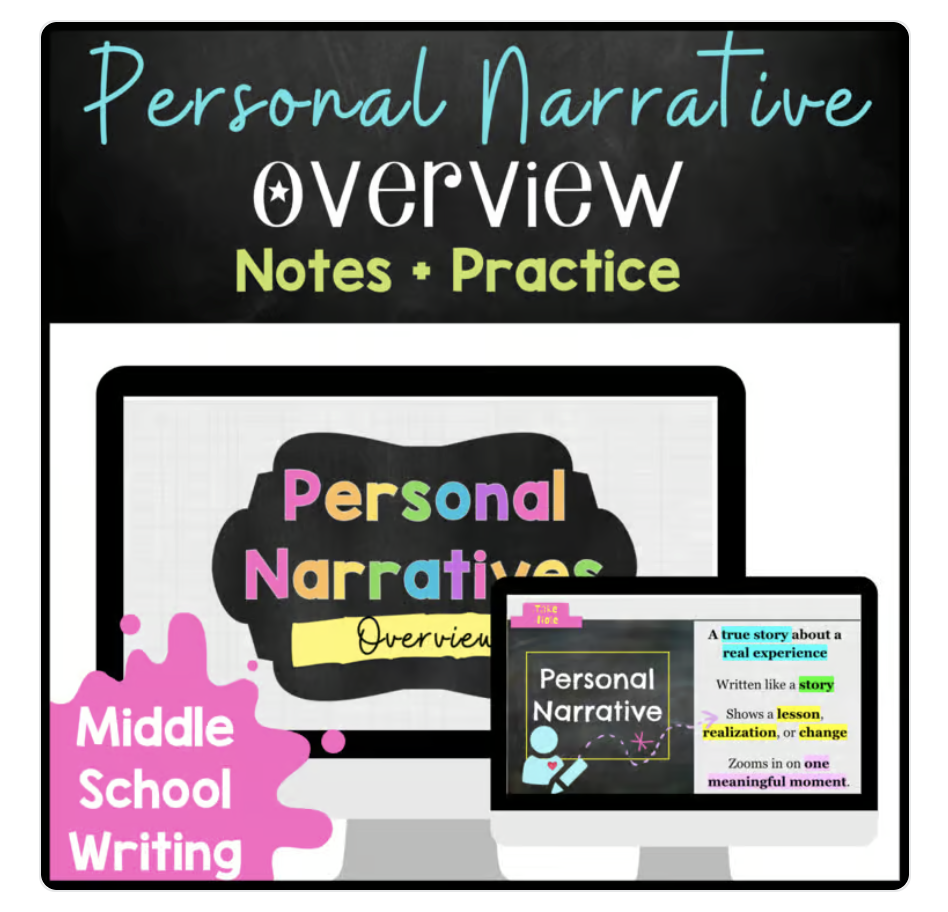
If you’re interested in just this lesson, check out the listing on Teachers pay Teachers. Click the image to access.
Option Two: ELA Unlimited
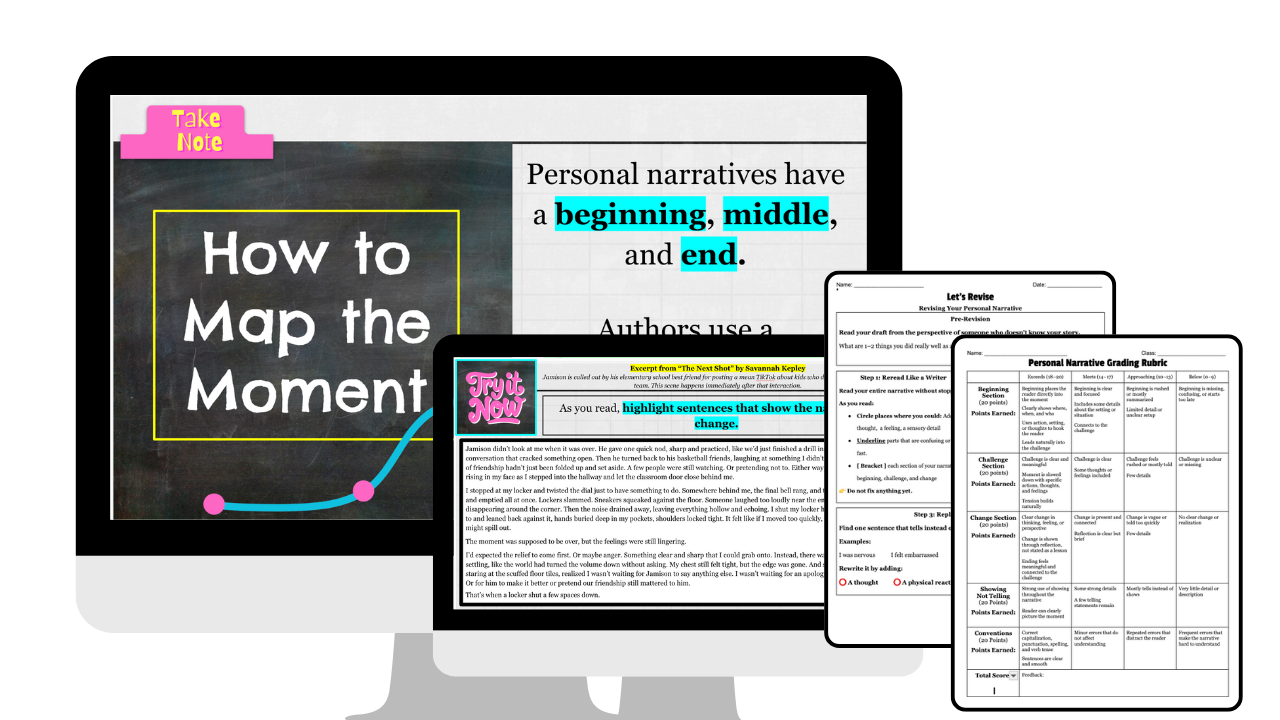
If you want the complete package, the full personal narrative unit is available inside ELA Unlimited.
This is the spot to go if you want to immediate access to unlimited downloads of creative and engaging resources for your middle school classroom.
I hope this makes narrative writing feel a little more doable for you and you students.
Happy Teaching,
Savannah