How to Teach Students to Plan for Their Personal Narrative
Every time we get to the planning stage of writing, the same thing happens.
One group of students plans like they’re creating a Netflix series.
Every detail. Every scene. Every line of dialogue. They’re planning plot twists that don’t even exist yet and making up crazy scenes that probably didn't happen… until they get completely overwhelmed or lost in the sauce that this miss the point.
Then I have the other group.
Their entire “plan” is one bullet that says something like: “I wanted to make the team. I didn't. I was embarrassed.”
That’s it. That’s the plan. And then they stare at the page, waiting for the rest of the story to magically appear.
Neither one actually helps them write.
Planning every detail overwhelms middle schoolers.
Planning nothing leaves them staring at a blank page.
That’s why I dedicate a day to explicitly teaching students how to plan.
Here’s what that looks like in my classroom:
Step One:
Teach the Structure of Personal Narratives
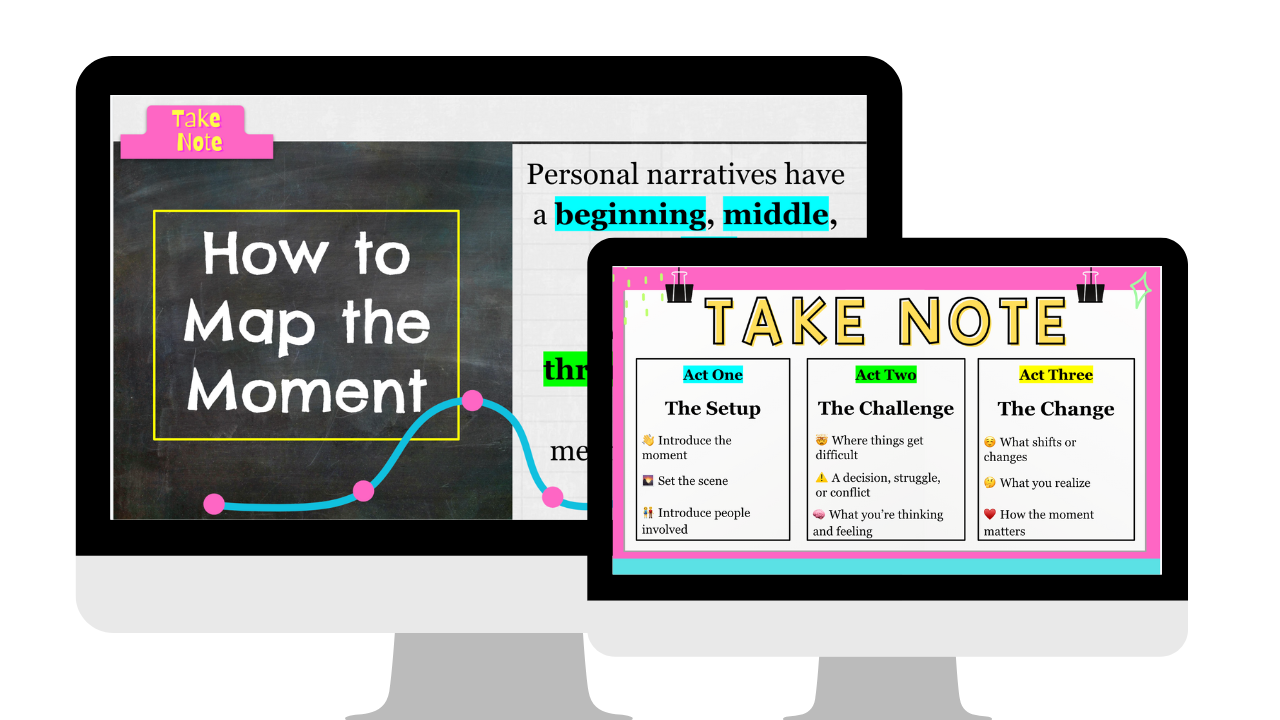
I use slides to teach how a personal narrative:
✴️ Zooms in on one meaningful moment, not an entire life story
✴️ Follows a clear structure
✴️ And can be broken into three manageable parts
The beginning (the setup)
The challenge (where something shifts or goes wrong)
The change (what the writer realizes or how they leave the moment)
Once students understand that they’re not writing everything, just one moment broken into three parts, the planning suddenly feels purposeful and manageable.
Step Two:
Study a Mentor Text (Fish Cheeks)
Next, we read “Fish Cheeks” by Amy Tan.
The purpose is not to analyze it like a test question, but to study structure.
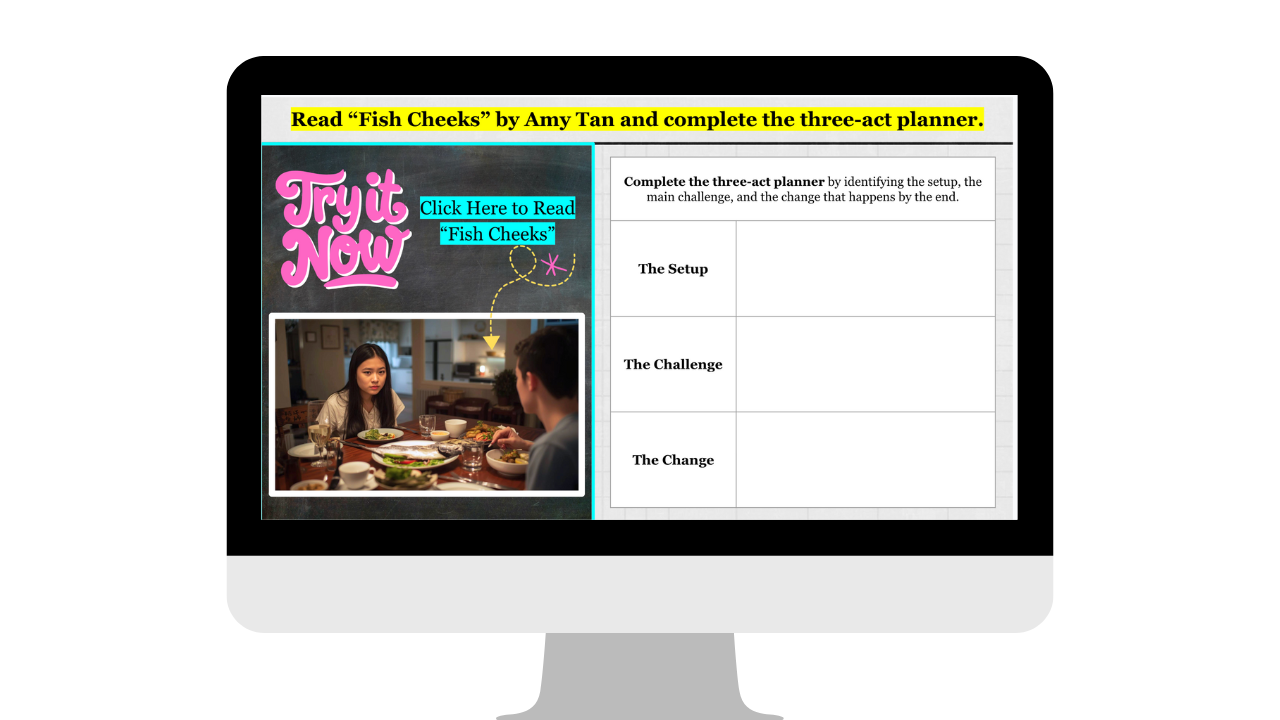
Students apply what they learned in the mini lesson and break the story into three parts:
The Setup – where the moment begins
The Challenge – where things get uncomfortable or tense
The Change – where the narrator’s thinking shifts
We talk about how short the story actually is and how much meaning it still holds. That’s a lightbulb moment for a lot of kids. Suddenly, the assignment feels manageable because they realize they don’t need pages and pages to tell a meaningful story.
Step Three: Time to Plan
Only after that do students plan their own narratives.
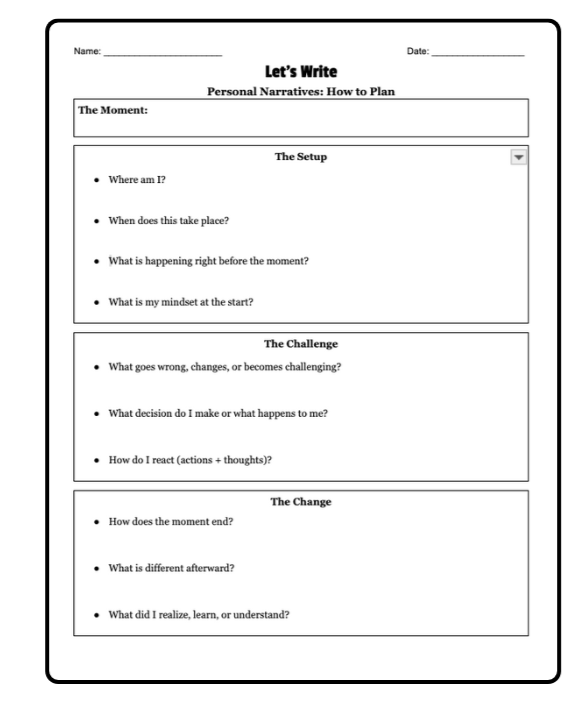
They use a simple “Let’s Write” graphic organizer that breaks their moment into:
Setup
Challenge
Change
The key is that this is not full sentences.
Not a brainstorm map.
Not every detail.
I provide them with questions like:
❓ When does this take place?
❓ What is happening right before the moment?
❓ What goes wrong, changes, or becomes challenging?
❓ What decision do I make or what happens to me?
❓ How does the moment end?
❓ What is different afterward?
We will plan each stage more in depth in future lessons. The goal of this is to get a general outline of the moment down on paper.
What I’ve found is this:
✅ When planning is clear, drafting goes faster.
✅ When drafting goes faster, students feel more confident.
✅ And when students feel confident, the writing actually improves.
If you want to see how I'm teaching it to my students, check out the FREE instructional video here:
If you’re reading this thinking, “Yes, my students need more help with planning,” I’ve got you covered.
You have two options if you want to access this ready to roll lesson:
Option One: Teachers Pay Teachers
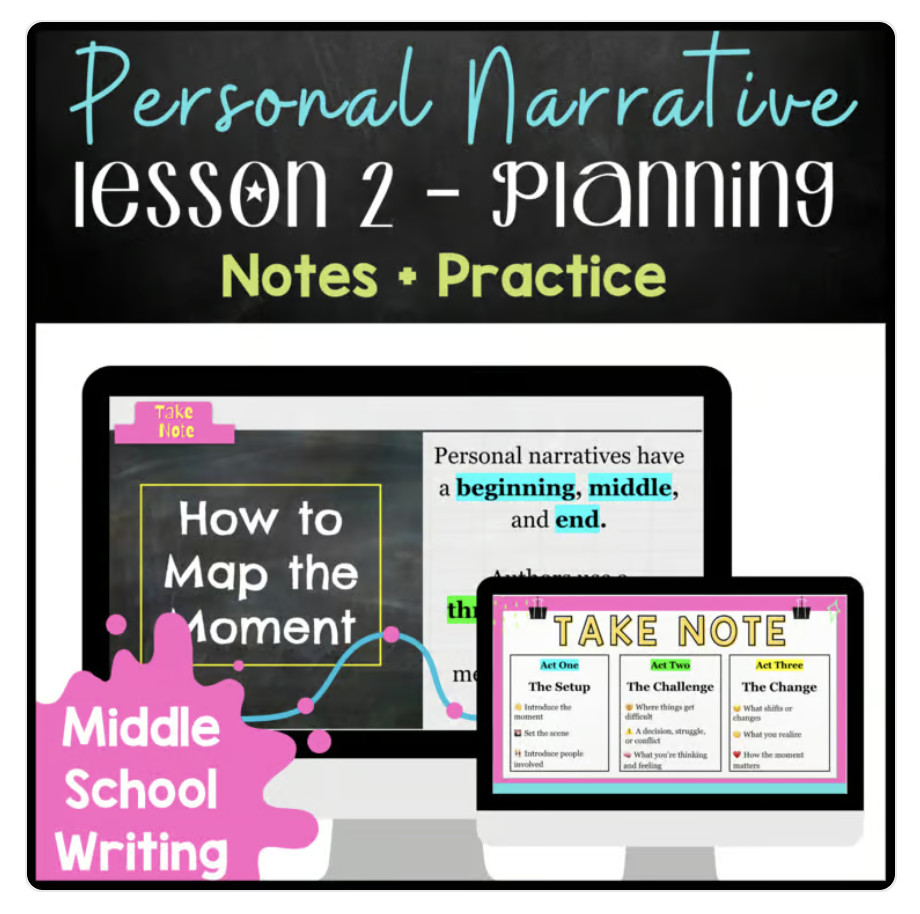
If you’re interested in just this lesson, check out the listing on Teachers pay Teachers. Click the image to access.
Option Two: ELA Unlimited
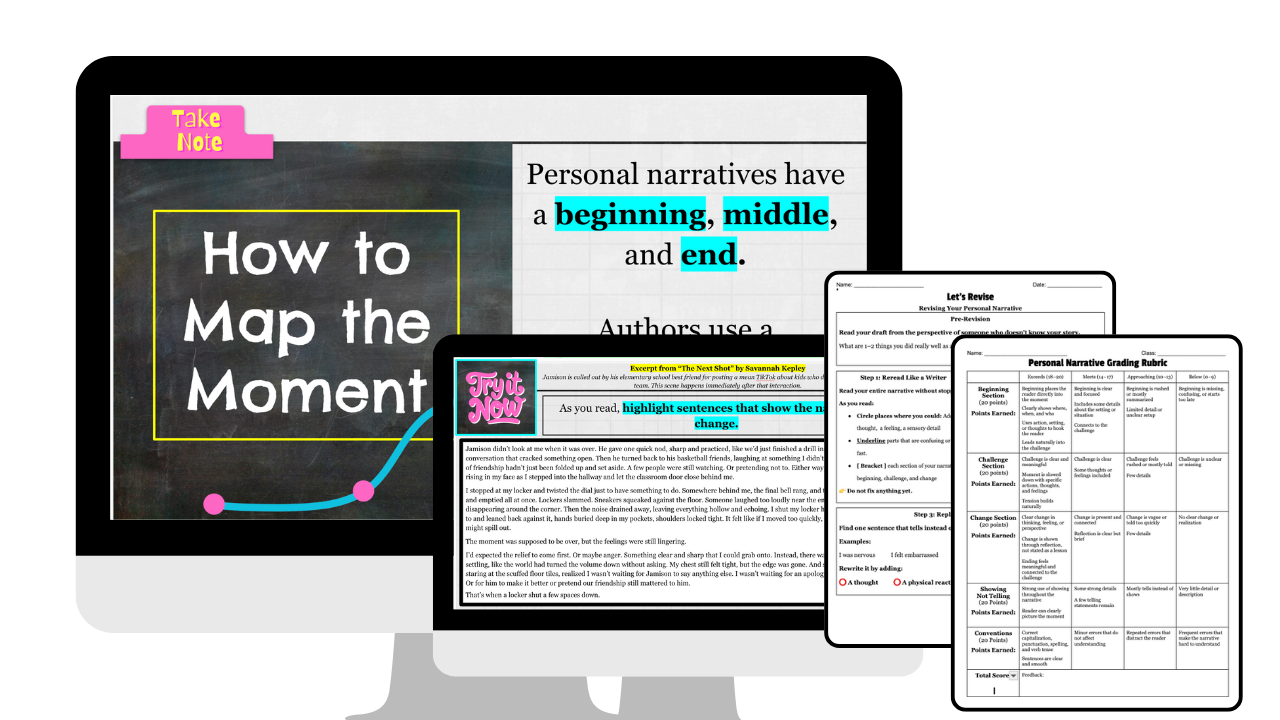
If you want the complete package, the full personal narrative unit is available inside ELA Unlimited.
This is the spot to go if you want to immediate access to unlimited downloads of creative and engaging resources for your middle school classroom.

I hope this makes narrative writing feel a little more doable for you and you students.
Happy Teaching,
Savannah