How to Teach the Beginning of a Personal Narrative
There are certain things in life that feel overwhelming before you even start.
🤯 Cleaning the whole house.
🤯 Organizing the my grandparents basement filled with 60 years of stuff.
🤯 Grading a stack of projects you’ve been avoiding all week.
You stand there, looking at everything at once, and your brain just… shuts down.
That’s exactly what I see happen when students are asked to start a personal narrative.
They stare at a blank page.
They know they’re supposed to write something meaningful.
And suddenly the pressure of “starting” feels bigger than the writing itself.
Not because they don’t have ideas, but because they don’t know where to begin.
That’s why I spend an entire mini lesson just on the beginning of a personal narrative.
Here's How to Do It:
Step One: Teach the Purpose of the Beginning
I tell students this upfront:
❌ The beginning’s job is not to summarize the whole story.
❌ It’s not to explain the lesson.
❌ And it’s definitely not to tell everything that ever happened.
The beginning only needs to do three things:
✅ Place the reader in the moment (this is key!)
✅ Show where and when the moment is happening
✅ Lead naturally into the challenge
To make this manageable, I give students three simple ways to start:
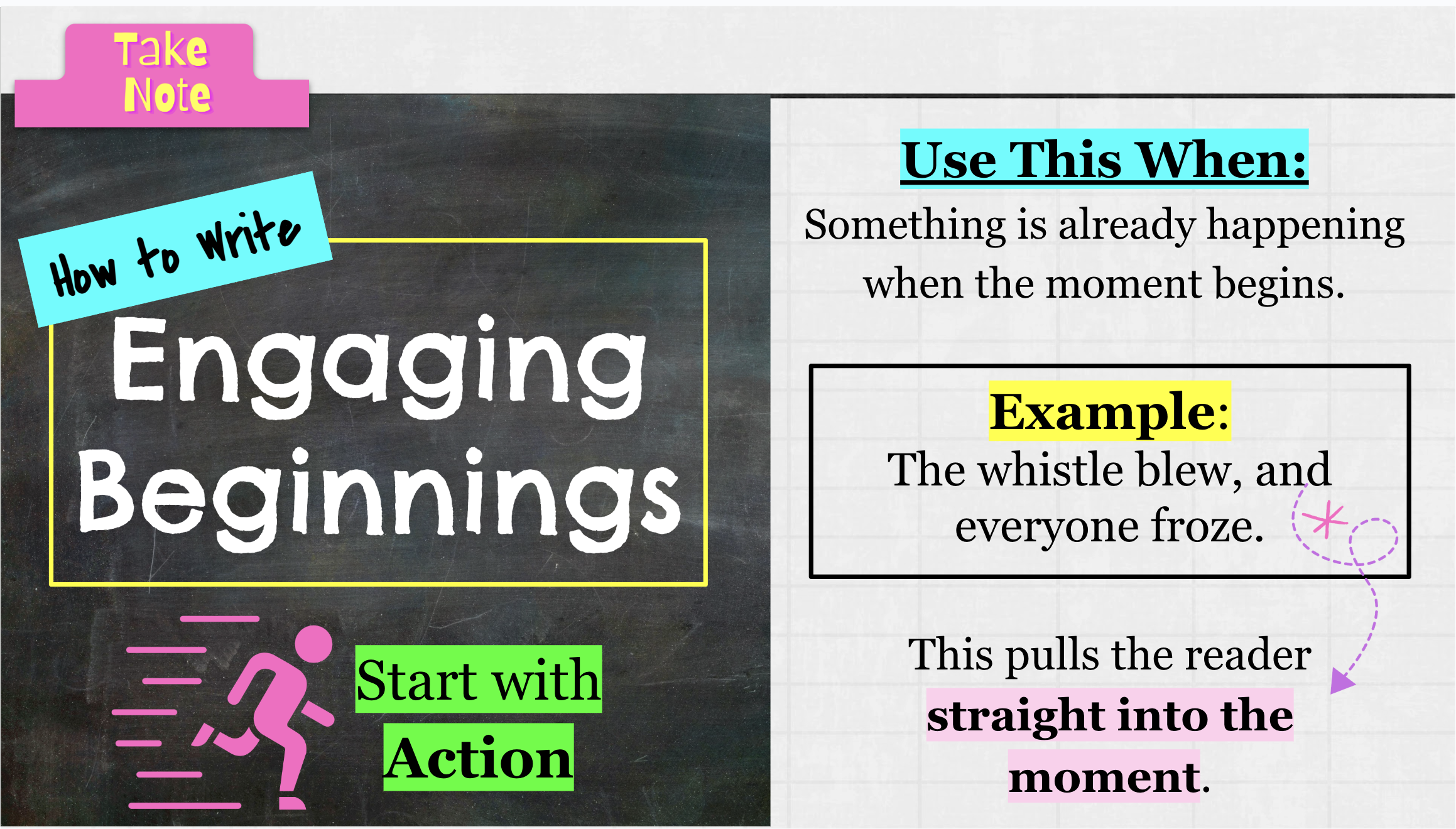
Option One: Start with an action
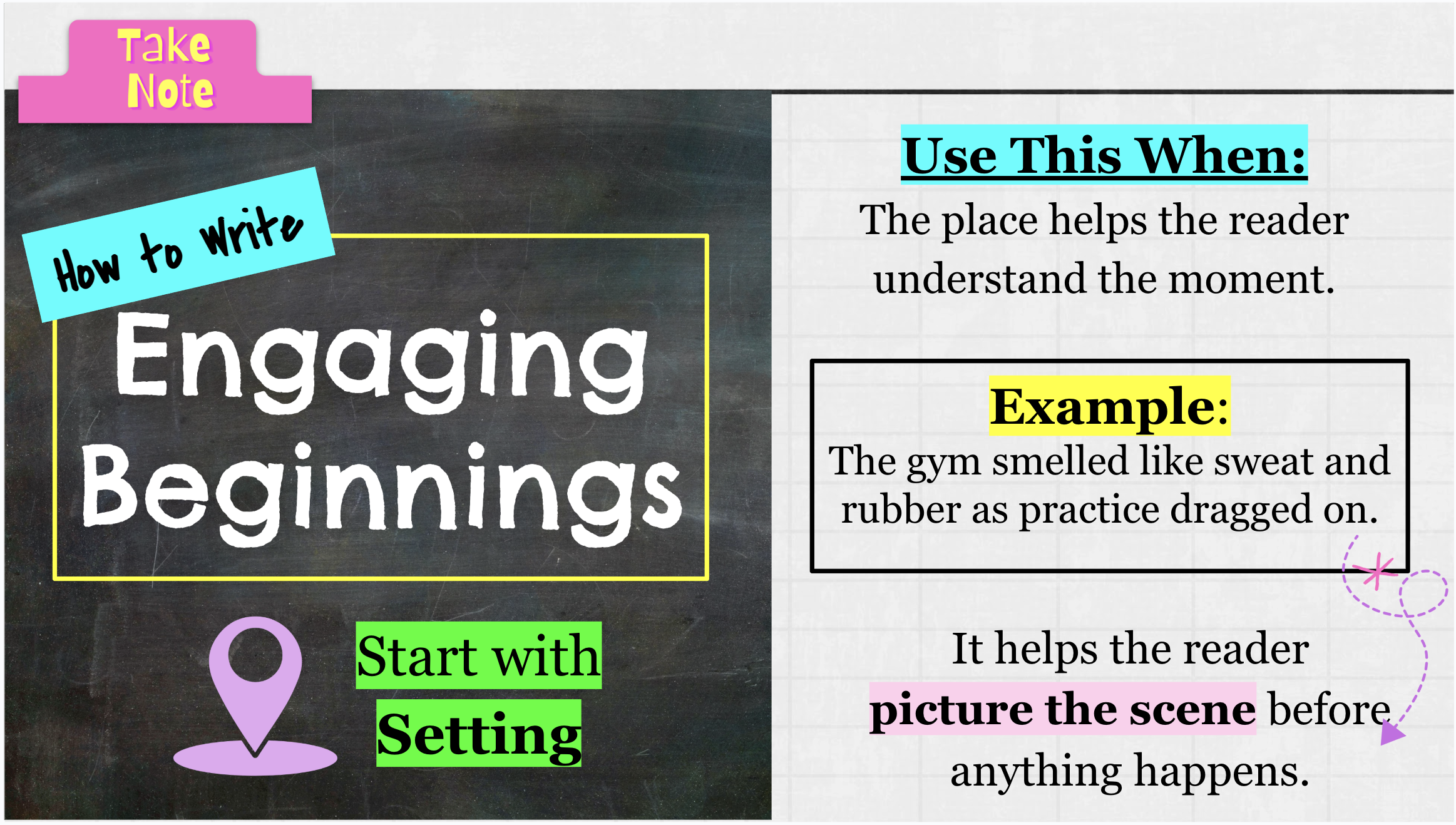
Option Two: Start with the setting
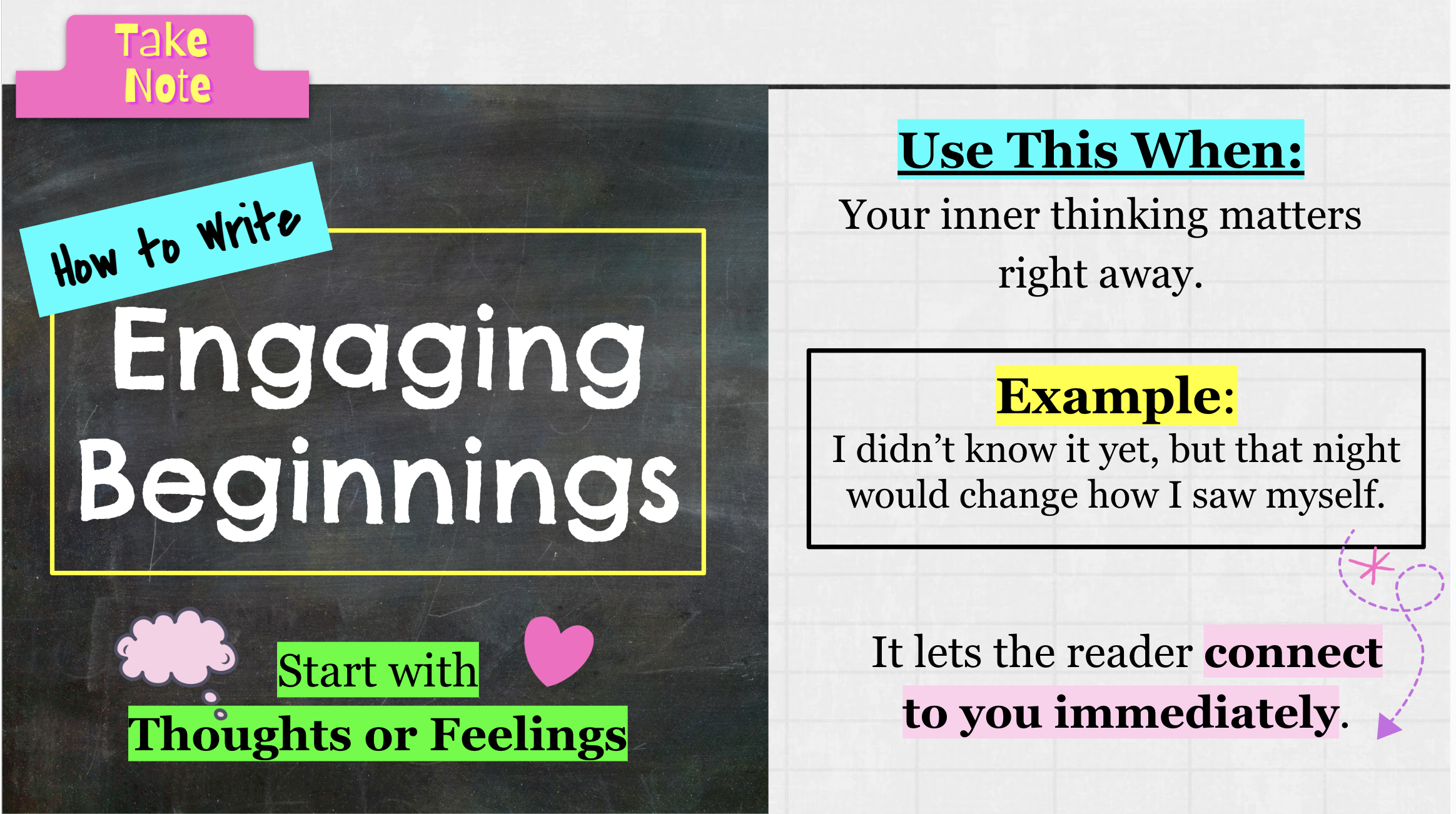
Option Three: Start with thoughts or feelings
That alone lowers the pressure. Suddenly, they’re choosing a doorway instead of inventing one.
Step Two: Analyze a Mentor Text (The Jacket)
One of the biggest misconceptions my students have about personal narratives is that the moment has to be dramatic.
Something life-changing.
Something intense.
Something that sounds like it belongs in a movie.
And then we read "The Jacket" by Gary Soto.
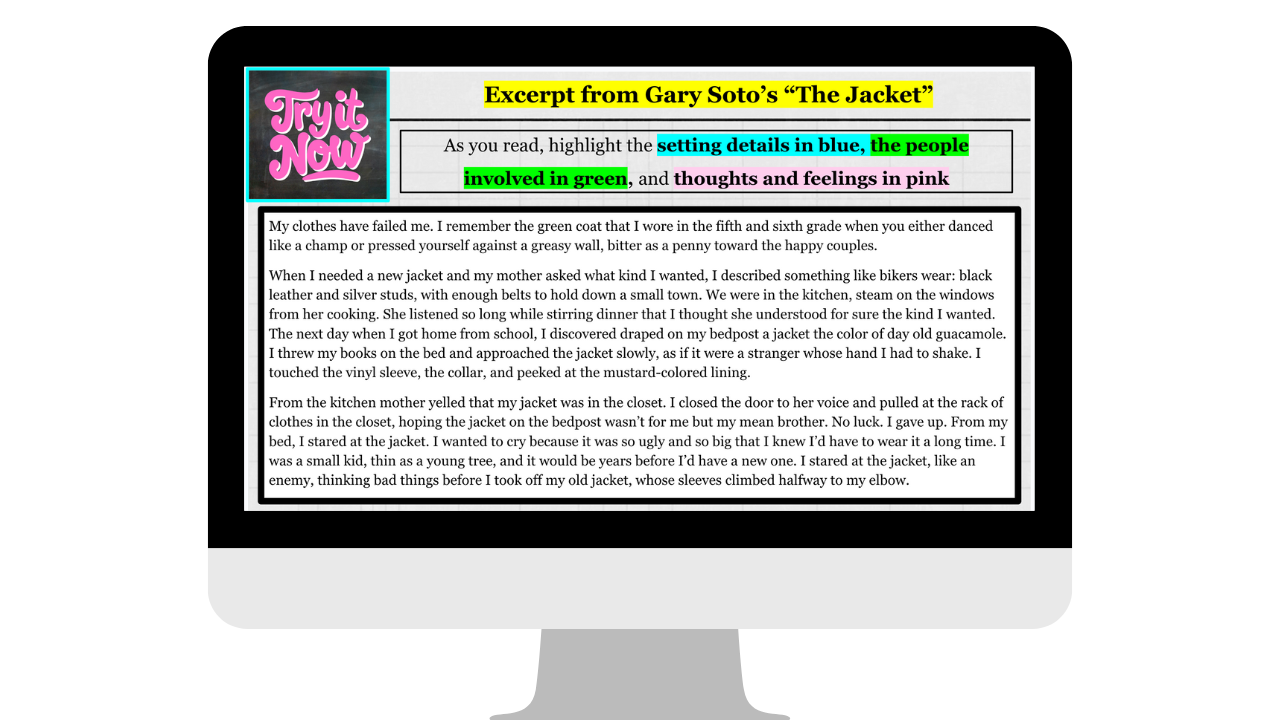
There’s no huge plot twist. No explosive conflict. Just a small, uncomfortable moment about an everyday item, a jacket.
That’s when it clicks for them.
A personal narrative doesn’t have to be dramatic and intense to matter.
We read this story like writers, not readers, and focus only on the beginning.
Students highlight:
Setting details
People involved
Thoughts and feelings
This helps them see that a strong beginning doesn’t summarize the story. It places the reader inside the moment.
Step Three: Let Them Write (With Structure)
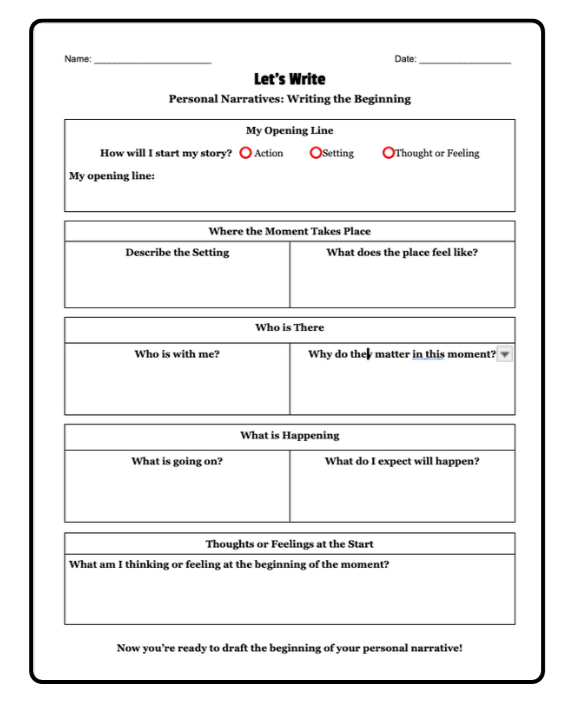
Only after that do students write their own beginning.
They use a Let’s Write graphic organizer that asks them to:
Choose how they’ll start (action, setting, or thoughts)
Identify where the moment is happening
Introduce the people involved
Lead directly into the challenge
No pressure to be perfect.
Just enough structure to get words on the page.
And once they finish?
They’re ready to write their beginning, and they do so with confidence!
What I’ve found is this:
✅ When the beginning is clear, students don’t get stuck.
✅ When they don’t get stuck, drafting feels manageable.
✅ And when writing feels manageable, the quality improves.
If you want to see how I'm teaching it to my students, check out the FREE instructional video here:
Resources that Can Help You
If you’re reading this thinking, “Yes, I need a way to help my students start their narratives,” I’ve got you covered!
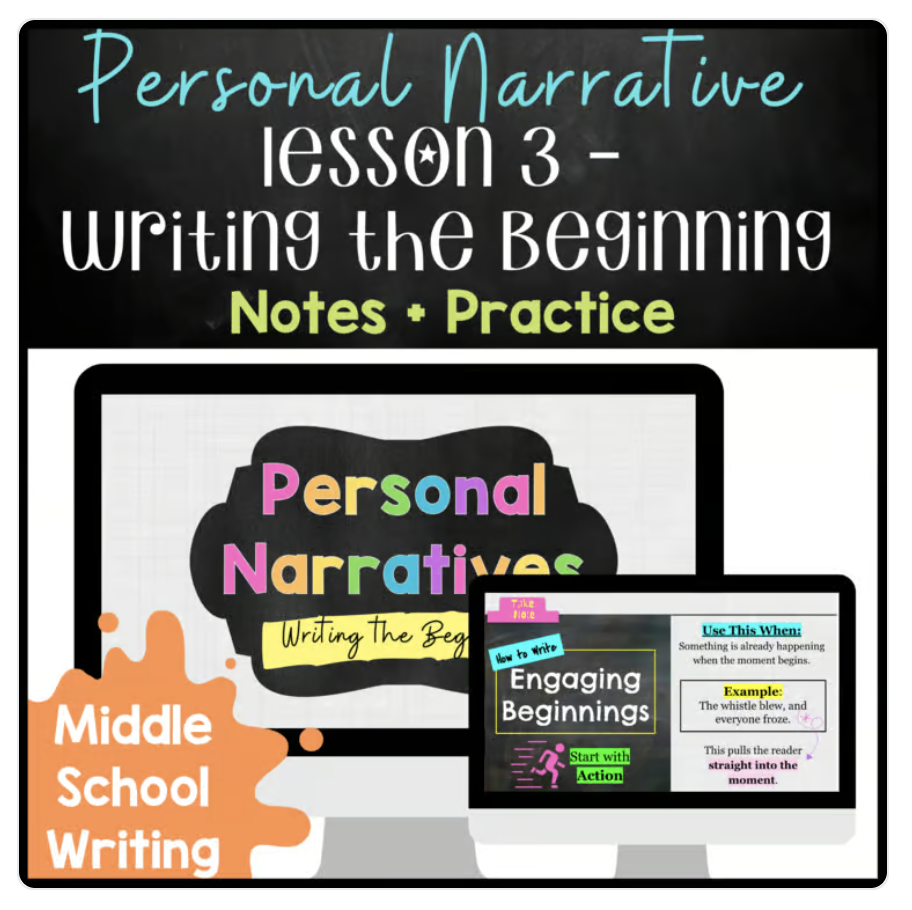
I turned this entire process into a ready-to-use lesson and you can find it in two places:
Option One: Teachers Pay Teachers
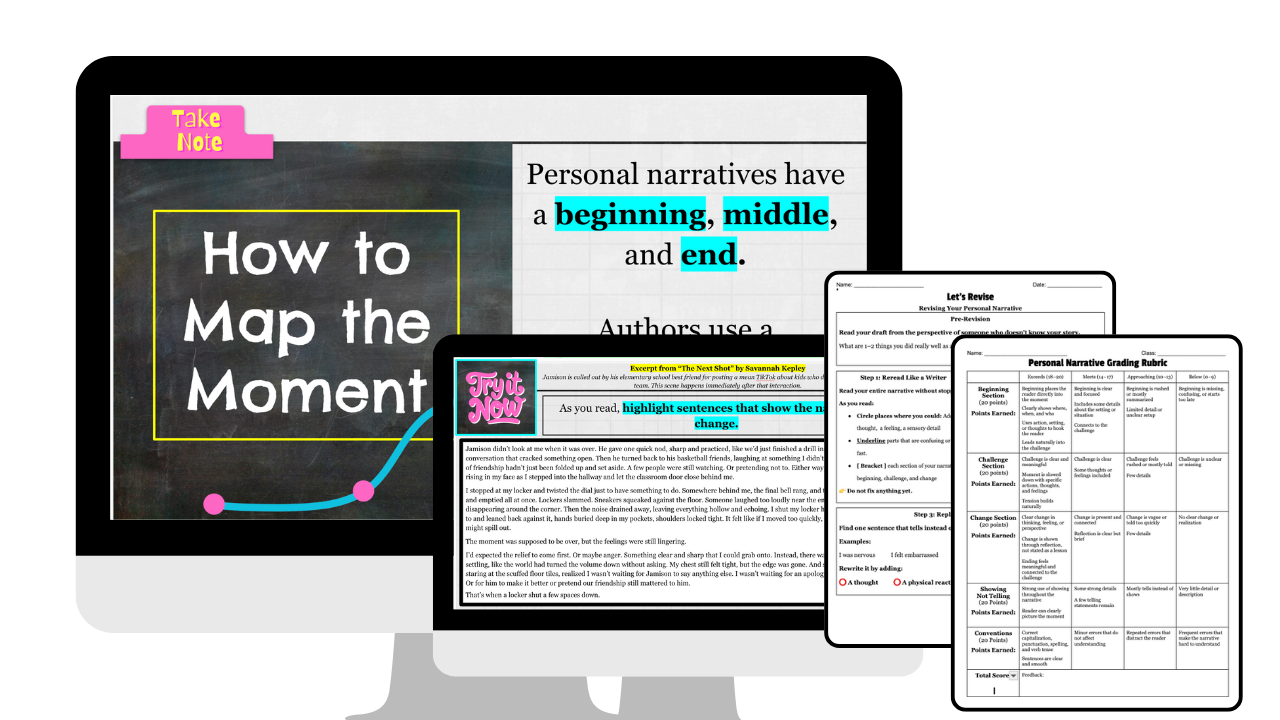
If you’re interested in just this lesson, check out the listing on Teachers pay Teachers. Click the image to access.
Option Two: ELA Unlimited
If you want the complete package, the full personal narrative unit is available inside ELA Unlimited.
This is the spot to go if you want to immediate access to unlimited downloads of creative and engaging resources for your middle school classroom.