Teaching Students How To Write the Challenge Section of a Personal Narrative
My oldest child was a “where is your work?” kind of student.
He would turn in his math homework and tests with just the answers, often the wrong answers (bless his little heart).
And almost every single time, there was a note on his paper: “Show your work.”
I used to tell him that if he showed his work, his teacher could see how he got there. She could follow his path and help course-correct him.
And I see the exact same thing happen in writing.
Teaching the challenge section in writing reminds me so much of that.
Students jump straight to the ending and skip all the work in between.
Personal narratives work the same way.
Students rush past the hardest part, the part that matters and moves their story forward, because they’re eager to be done.
So instead of asking students to “write the conflict,” I now teach them the purpose of the challenge section and give them concrete ways to stay inside the moment and fully explain it to the reader.
Instead of treating the challenge like one section students have to get through, I break it down and teach it step by step.
Step One: Teach the Purpose of the Challenge Section
Before students write a single sentence, we stop and talk about what the challenge section is actually supposed to do.
Students learn that the challenge:
✅ Is the moment where something goes wrong or feels uncomfortable
✅ Creates tension for the reader
✅ Slows the story down instead of speeding it up
We also talk about what the challenge is not:
❌ It’s not the ending
❌ It’s not the lesson
❌ And it’s not something to summarize in one sentence
I tell students to think of the challenge as the place where they need to show their work. It's the part of the story where the reader needs to see every step, thought, and reaction.
Students learn to:
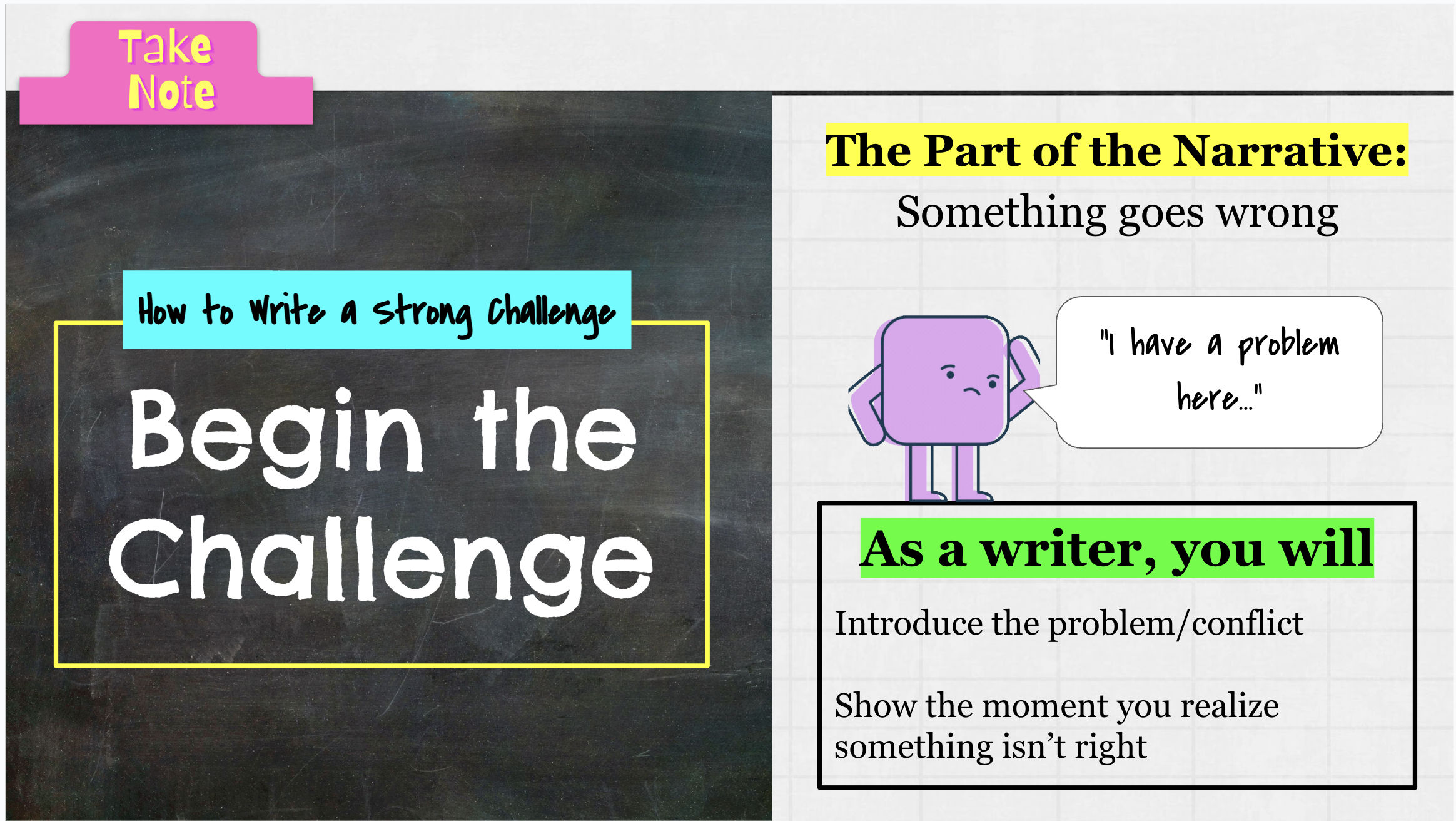
Begin the challenge moment
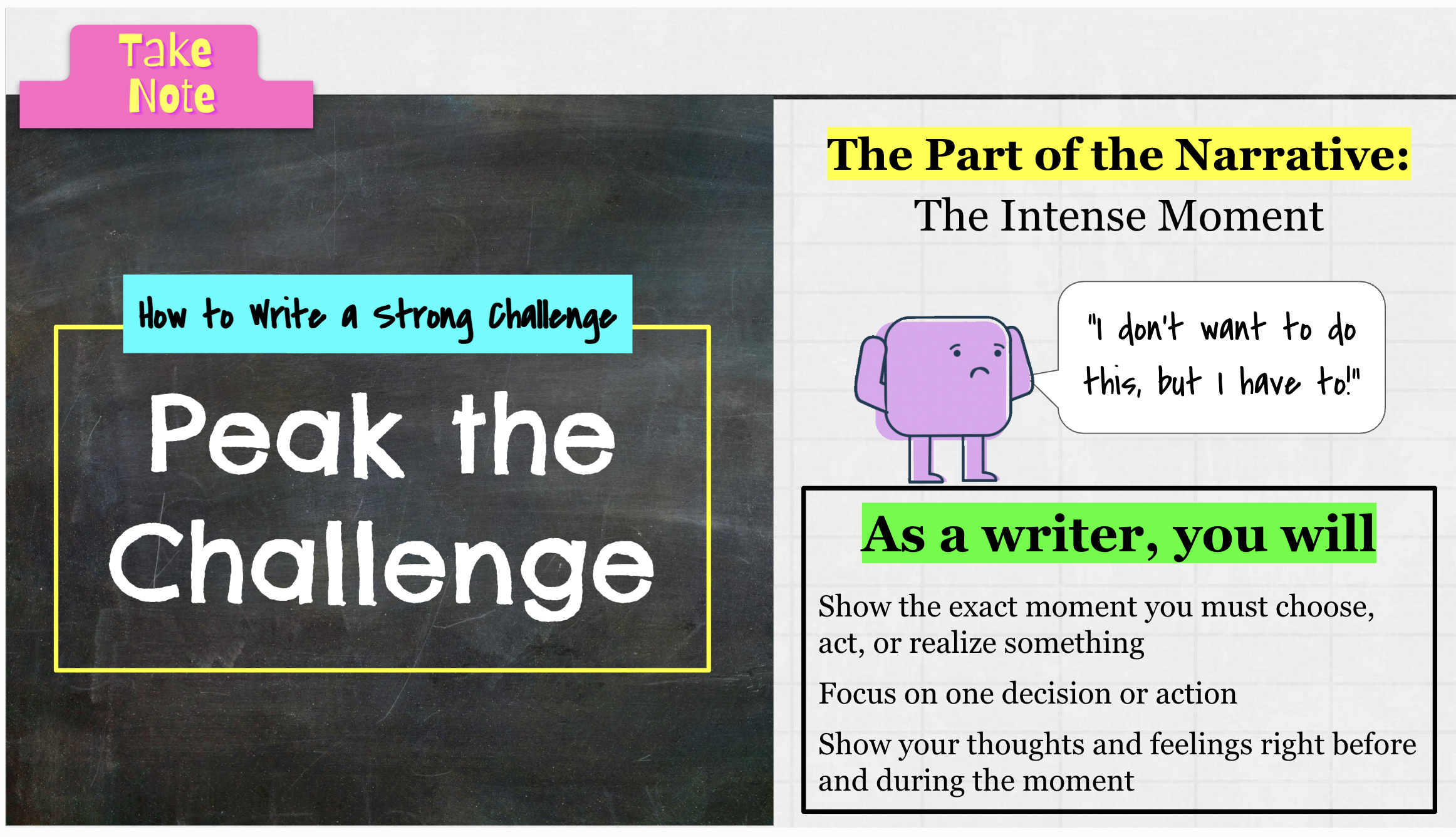
Peak the challenge moment
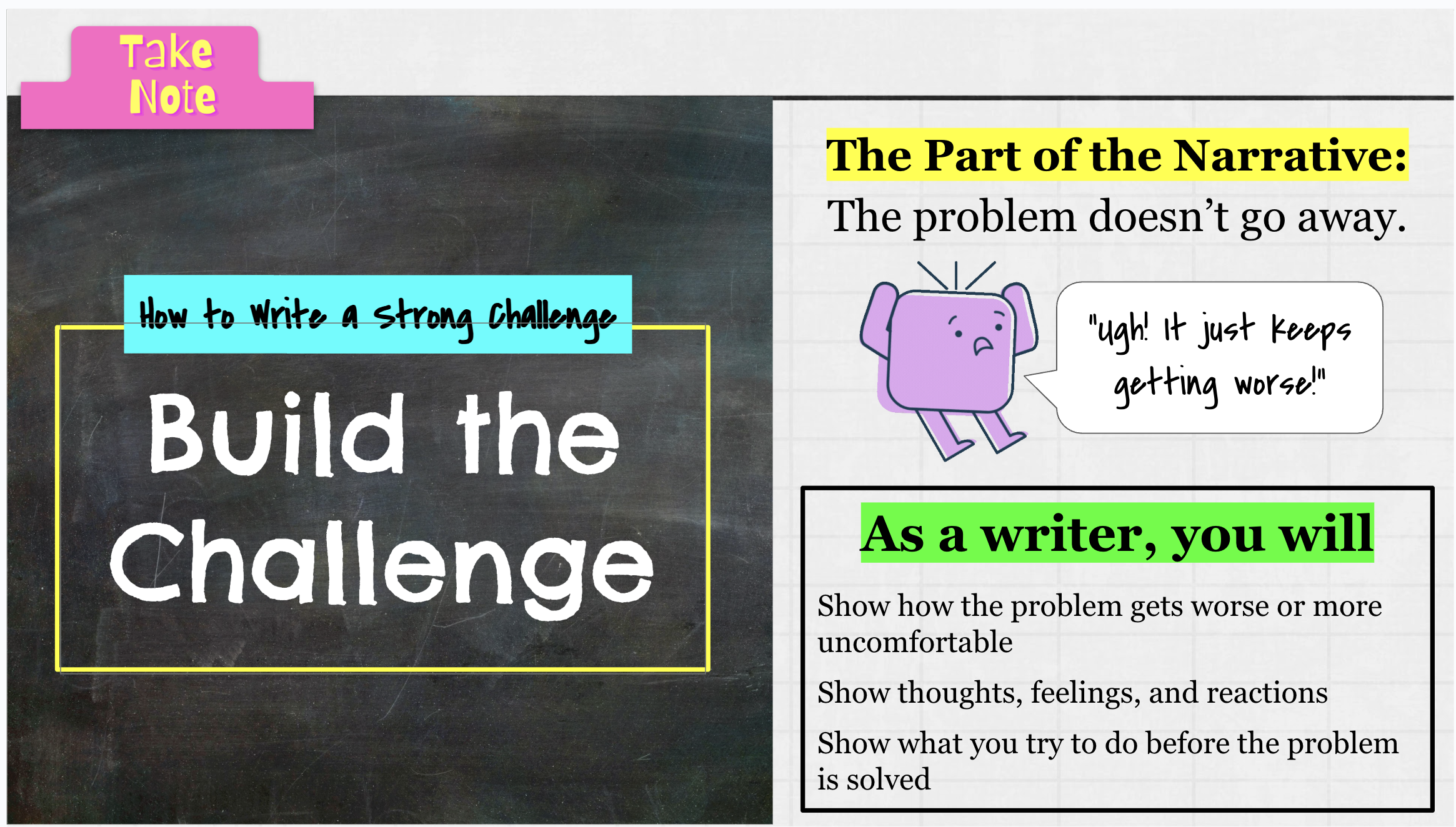
Build the challenge moment
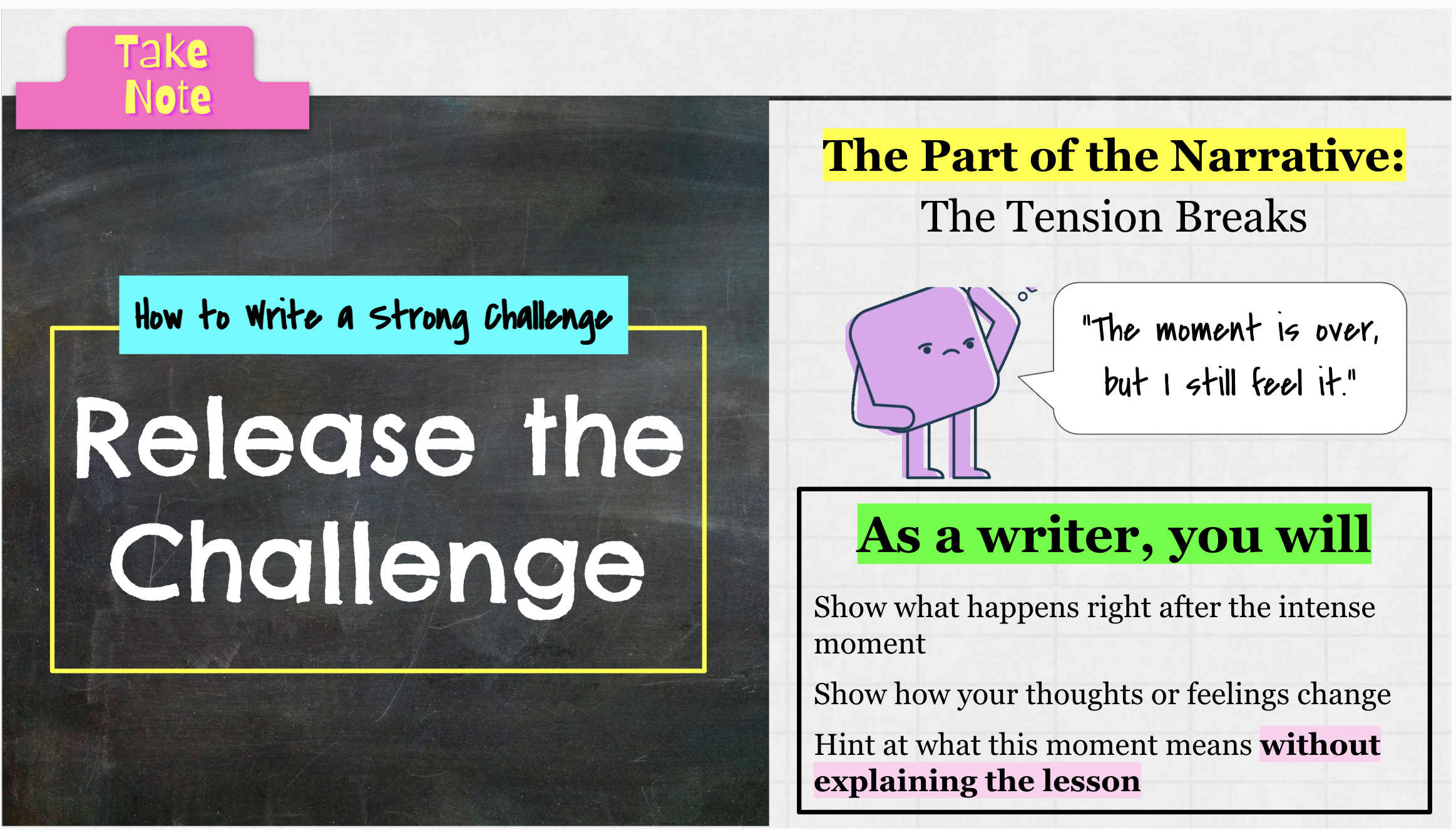
Release the challenge moment
Step Two: Study a Challenge That Shows the Work (Using Mentor Text, "Eleven")
Once students understand what the challenge section is supposed to do, we look at a mentor text that does it well.
We read “Eleven” by Sandra Cisneros, but only through the lens of the challenge.
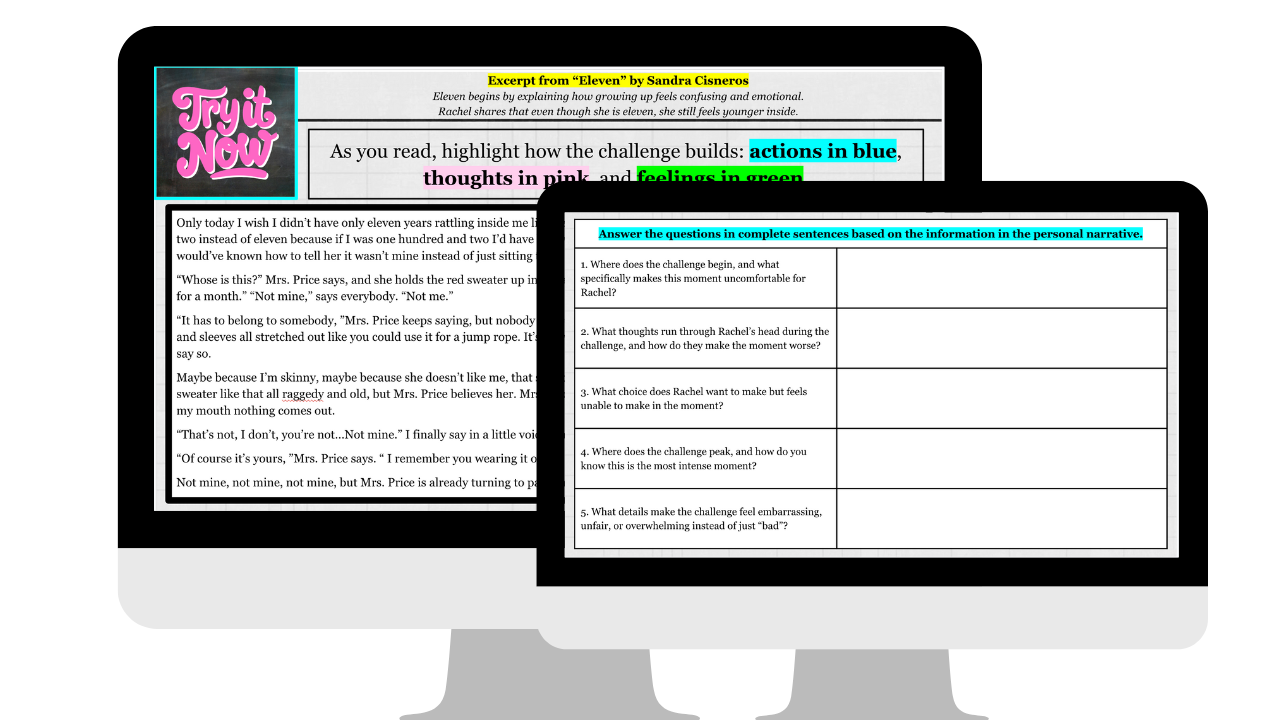
What I love about this story is that the challenge isn’t dramatic or over-the-top.
It’s small. It’s uncomfortable. And it stretches across several pages.
As we read, I ask students to notice how Cisneros doesn’t rush the moment. She stays inside it.
We look closely at:
The small actions that make the situation worse
The thoughts and feelings that repeat and build
How the moment peaks before it’s resolved
Students start to see that the challenge isn’t just what happened with the sweater.
It’s how Rachel experiences it thought by thought, feeling by feeling.
This activity is one of those light bulb moments. Students see that this is what “showing your work” looks like in writing.
Step Three: Write the Challenge With Structure
After we’ve studied what a strong challenge looks like, students are finally ready to write their own.
This is where the Let’s Write: Challenge graphic organizer comes in.
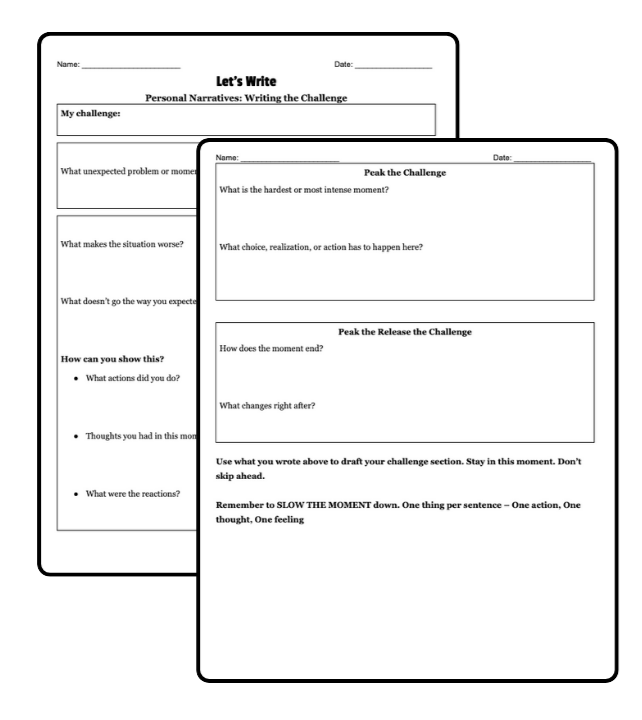
Instead of asking students to write one big paragraph, the organizer breaks the challenge into clear, manageable parts:
How the problem begins
What makes it worse
The most uncomfortable or intense moment
What shifts right after
Each section prompts students to show the moment using:
Actions
Thoughts
Feelings
I remind them that this isn’t about getting to the ending quickly.
It’s about slowing the moment down so the reader can follow their thinking, step by step.
By the time students finish the organizer, they’re not guessing what to write next. They have a clear path, and that makes drafting the challenge section feel much more doable.
If you want to see how I'm teaching it to my students,
check out the FREE instructional video here:
Resources that Can Help You
If you’re reading this and thinking, Yes! My students need some major help with this section of their writing!
I get it!
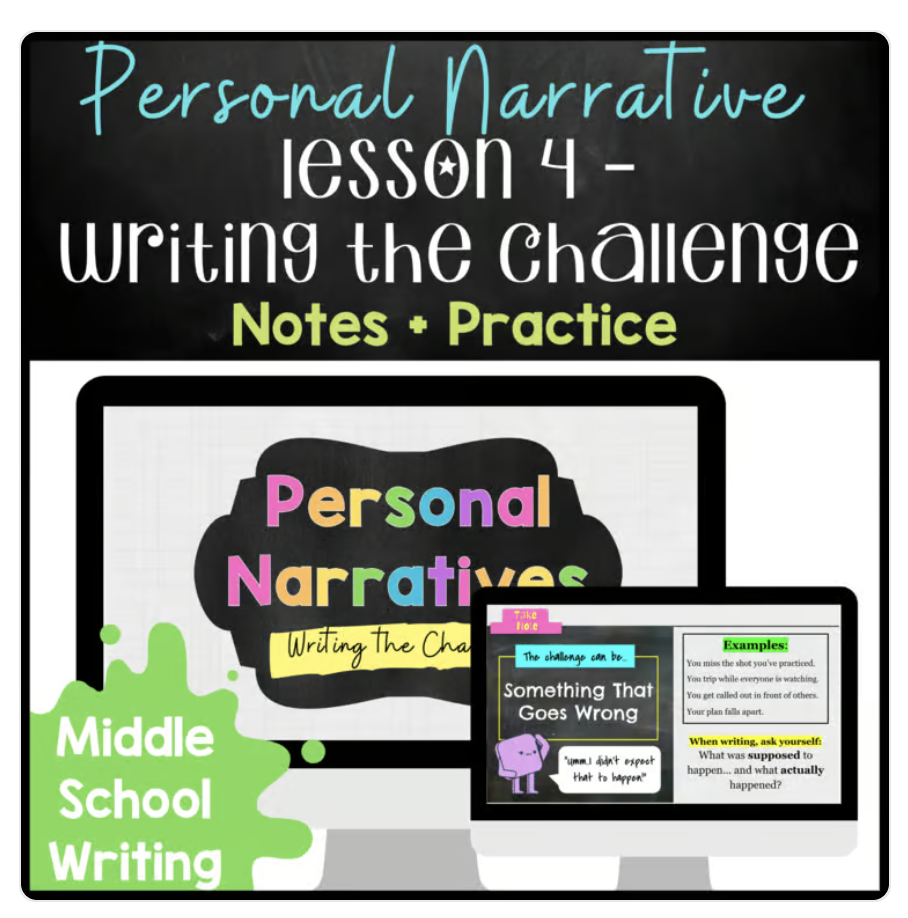
This is exactly why I turned this process into a ready-to-use lesson.
✅ The slides walk students through the purpose of the challenge section.
✅ The mentor text shows them what it looks like when a writer slows down.
✅ And the graphic organizer gives them a clear way to show their thinking instead of skipping ahead.
You have two ways to download this lesson:
Option One: Teachers Pay Teachers
If you’re interested in just this lesson, check out the listing on Teachers pay Teachers. Click the image to access.
Option Two: ELA Unlimited
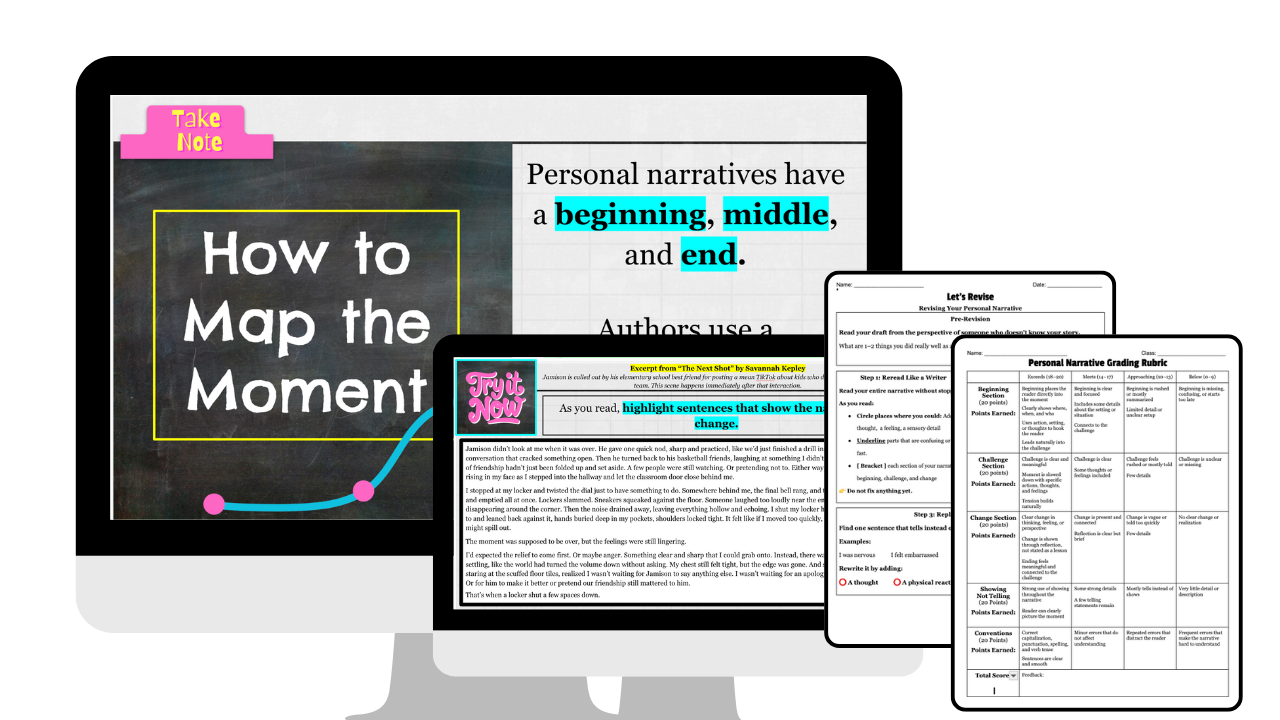
If you want the complete package, the full personal narrative unit is available inside ELA Unlimited.
This is the spot to go if you want to immediate access to unlimited downloads of creative and engaging resources for your middle school classroom.

I’ll be back tomorrow with the next step in the process. Until then, I hope this helps narrative writing feel a little more manageable for you and your students.
Savannah
Other Posts You Might Be Interested In:
Overview of Personal Narratives