How to Teach the Change Section of a Personal Narrative
I’ve always believed there is real value in reading other people’s stories.
When I read When Stars Are Scattered, I became more aware of what it means to be a refugee.
When I read Mindy Kaling’s Why Not Me?, I learned that trying too hard to be liked usually does the opposite, and that your people find you when you’re being yourself.
And when I read Mel Robbins’ The 5 Second Rule, I was reminded that everyone hits slumps, but we still have the power to take small steps forward.
Stories change how we see the world.
And just because our students are in middle school doesn’t mean their stories don’t matter, or that we can’t learn from them.
They have experiences.
They have realizations.
They have moments that shape how they think, feel, and act next.
That’s what the change section of a personal narrative is really about.
Not teaching a lesson.
Not summarizing what happened.
But sharing how the moment changed them, and what someone else might take away from it.
So before my students ever write the change in their own stories, I make sure they understand what the change section actually does
And what it does not do.
That’s where we start.
Step One: Teach the Purpose of the Change Section
The first thing we do is break down what the change section is really for.
I tell students that the change section is not:
❌ A summary of the whole story
❌ A moral or “life lesson” sentence
❌ A quick wrap-up just to be done
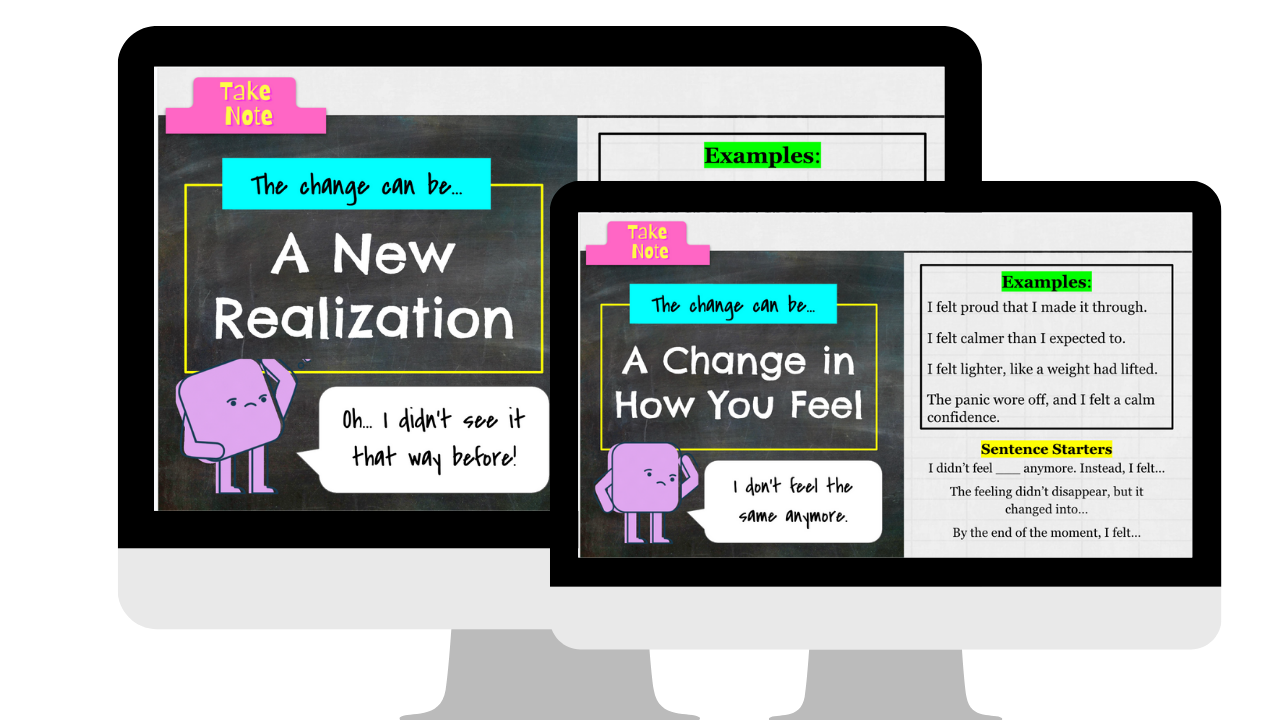
Instead, the change section shows how the moment affected them.
We talk about how a strong change might look like:
✅ A new realization
✅ A shift in how they see themselves or someone else
✅ A change in how they feel
✅ A small decision they’ll make differently next time
I also emphasize this part:
The change does not have to be big.
It doesn’t have to be dramatic.
It doesn’t have to be perfect.
And it doesn’t have to explain everything.
It just needs to stay connected to the challenge and show how the moment still matters after it’s over.
If it's meaningful to them, it will be meaningful to someone else.
Step Two: Analyze a Mentor Text (“The Next Shot”)
Once students understand what the change section is meant to do, we look at a mentor text written specifically for this assignment: “The Next Shot.”
We read the ending of the narrative and students highlight sentences that show the narrator’s change.
❌ Not the plot.
❌ Not what happened.
✅ But what’s different by the end.
As they read, students start noticing things like:
The narrator isn’t waiting for an apology anymore
The emotions are quieter, not dramatic
The moment ends with a sense of acceptance instead of resolution
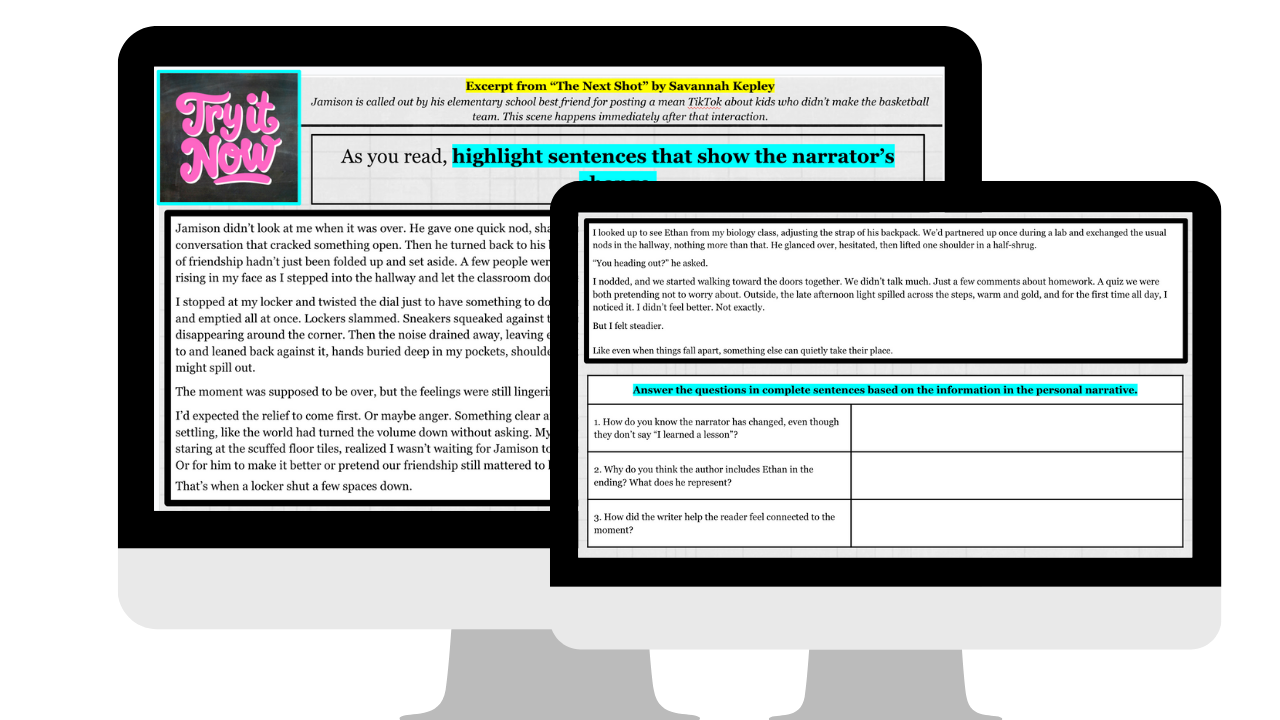
Reading and analyzing this text helps the purpose of this section click into place.
They see that the change isn’t spelled out as a lesson like, "The lesson I learned was..."
It’s shown through thoughts, actions, and what the narrator chooses to focus on in the final moment.
We then discuss questions like:
How do you know the narrator has changed, even without a lesson statement?
Why does the author include Ethan at the end?
How does this ending help the reader feel connected to the moment?
This step helps students internalize what a strong change section sounds like and look like before they ever try to write one themselves.
Step Three: Write the Change Using a Structured Organizer
After students see what a strong change section looks like, it’s time for them to write their own.
This is where the Let’s Write: Writing the Change organizer comes in.
Instead of asking students to “write the ending,” this organizer slows them down and keeps them grounded in the moment that just happened.
We start by anchoring them back to the challenge:
Students briefly remind themselves what just happened (1–2 sentences, no details)
They name the hardest part of the moment
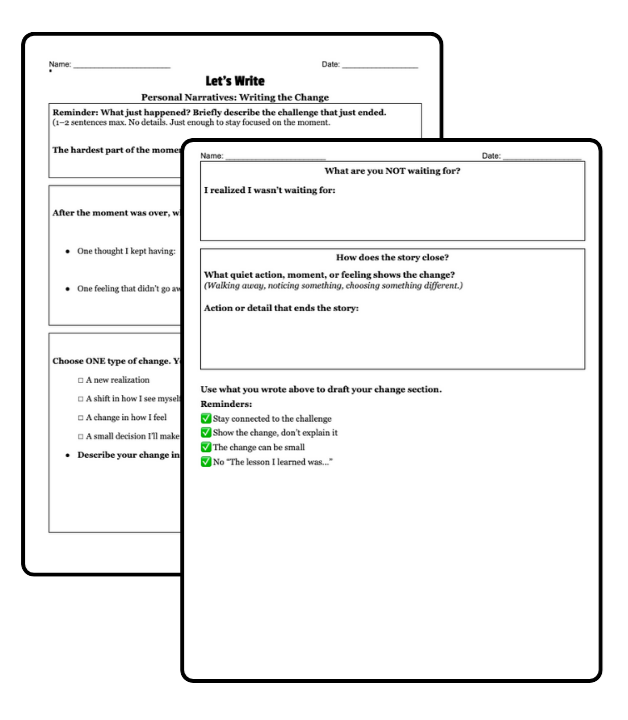
Then we shift to what lingered after the moment ended.
❌ Not the lesson.
❌ Not the summary.
✅ But the thought or feeling that wouldn’t let go.
Students answer:
One thought I kept having
One feeling that didn’t go away right away
From there, they choose one type of change:
A new realization
A shift in how they see themselves
A change in how they feel
A small decision they’ll make differently next time
They don’t need all of them. Just one.
One of my favorite prompts on this page is:
“I realized I wasn’t waiting for…”
It naturally leads students away from forced lesson statements and toward quiet, meaningful change.
Finally, students decide how the story closes.
Not with an explanation of the lessong, but with a small action, moment, or detail that shows the change:
walking away
noticing something new
choosing something different
Thanks to this graphic organizer, by the time students draft this section, the thinking is already done.
They’re not guessing what to write. They’re translating their thinking into sentences.
This is how you don’t let the change section turn into a summary or a lesson statement.
I want students to understand that this part is what makes their story worth reading to someone else.
It’s the moment where a reader might recognize themselves, rethink something, or feel a little less alone.
Just like the stories we read as adults do for us.
If you want to see how I'm teaching it to my students,
check out the FREE instructional video here:
Resources to Help You
If you’re nodding along thinking, Yes… this is exactly what I need to help my students dial in their endings!
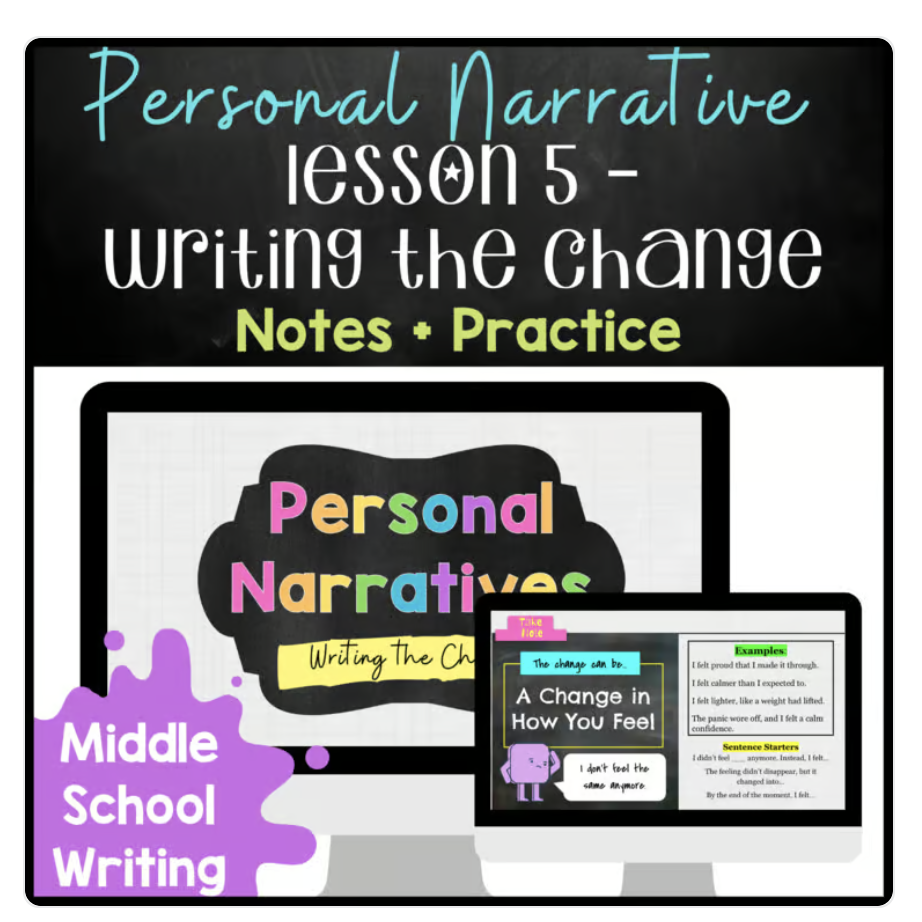
I turned this part of the process into a ready-to-use lesson that walks students through it step by step:
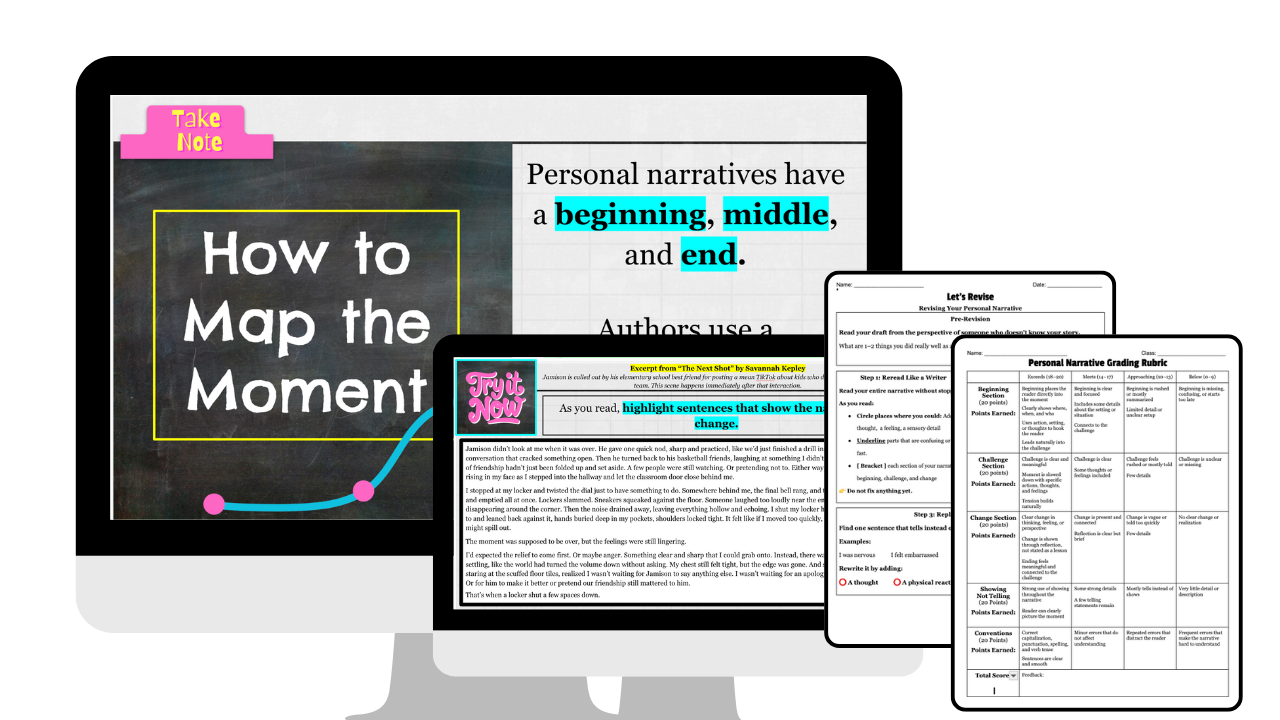
✅ The slides clarify what the challenge section is supposed to do
✅ The mentor text models what it looks like when a writer slows down and stays in the moment
✅ And the graphic organizer helps students show their thinking instead of skipping to the end
Everything’s laid out for you so you can focus on teaching and not recreating the lesson from scratch. #moretime
There are two options for downloading this activity:
Option One: Teachers Pay Teachers
If you’re interested in just this lesson, check out the listing on Teachers pay Teachers. Click the image to access.
Option Two: ELA Unlimited
If you want the complete package, the full personal narrative unit is available inside ELA Unlimited.
This is the spot to go if you want to immediate access to unlimited downloads of creative and engaging resources for your middle school classroom.

I hope this helps your students slow down, stay in the moment, and realize that the change doesn’t have to be big to matter.
Happy Teaching,
Savannah 💗
Other Posts You Might Be Interested In:
Overview of Personal Narratives
How to Plan for Writing a Personal Narrative